Think in listening moments, not pictures
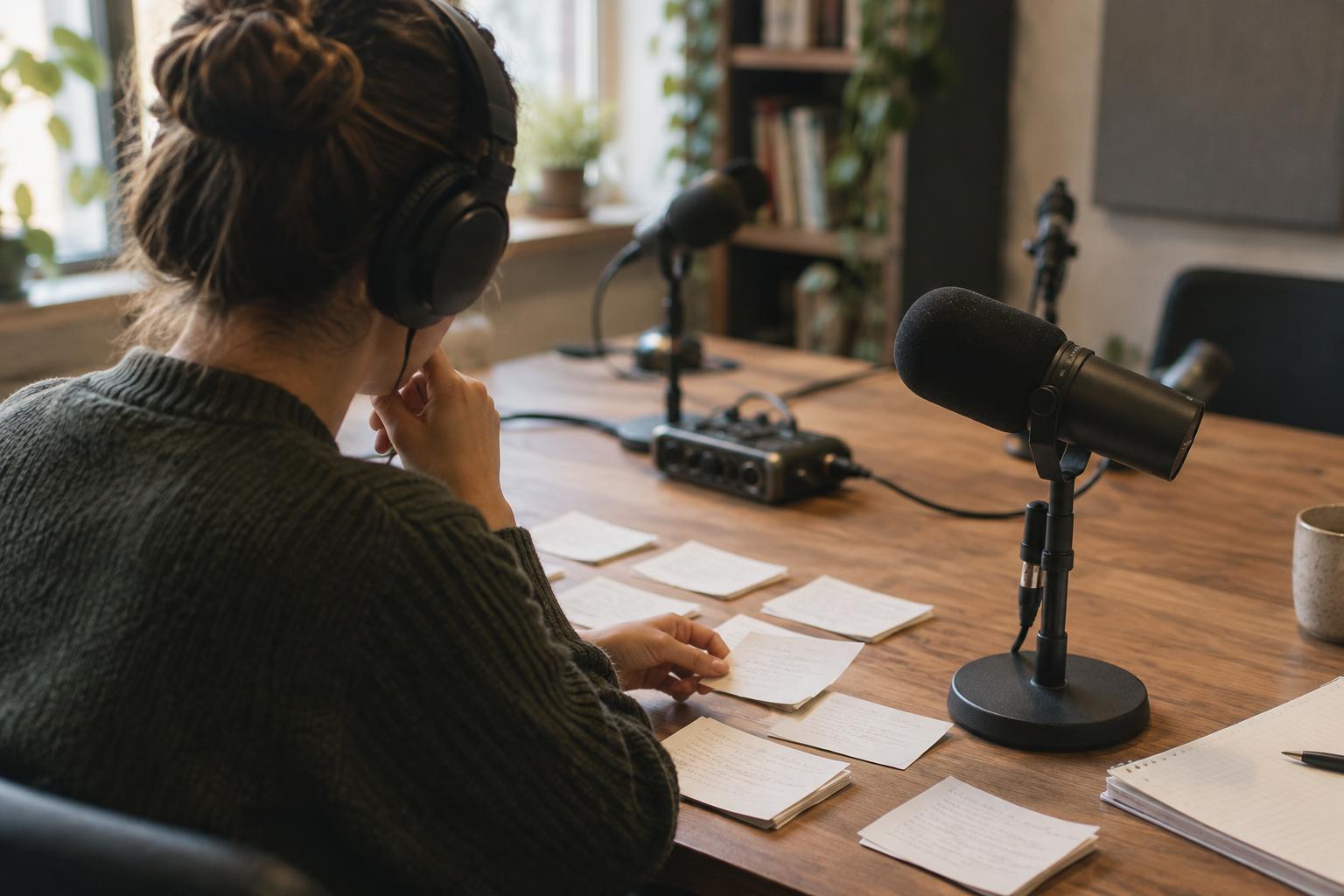
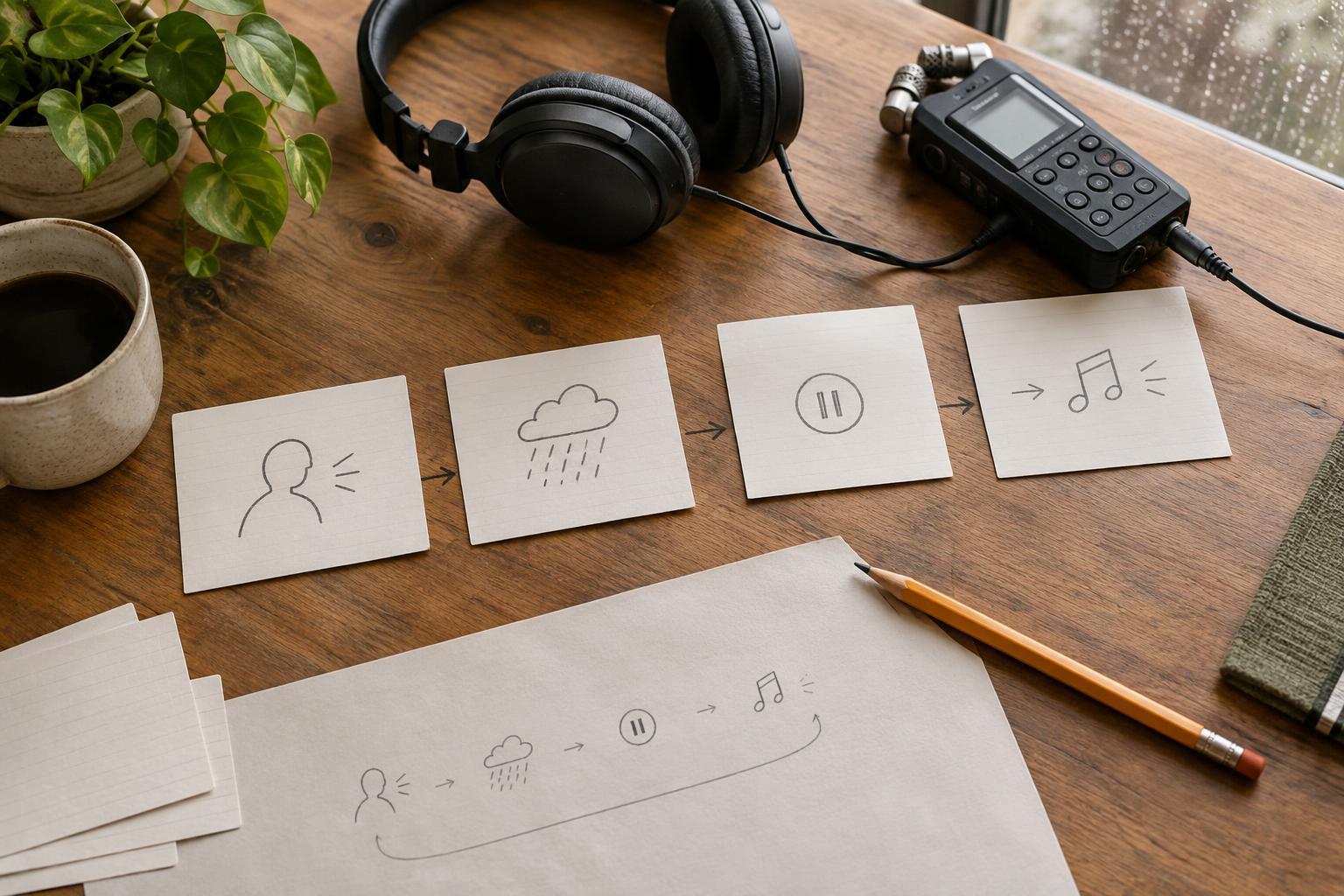
A storyboard is a plan for how a story unfolds. In film, it often takes the form of drawings. For an audio narrative, it can be a list of moments the listener will hear: a voice entering, a question being raised, a scene changing, or a sound returning with new meaning. You do not need illustration skills or special software. A page divided into rows is enough.
Begin with one sentence describing what the story is about and another describing what the listener should understand or feel by the end. Keep these sentences modest and specific. “A neighbor explains why she repairs old bicycles” gives you more to work with than “a story about community.” The broader theme may emerge, but the storyboard needs concrete people, actions, and sounds.
Build a sequence of story beats
Divide your idea into beats: small steps that move the listener forward. A simple starting sequence is opening, context, development, turning point, and ending. The opening offers a reason to keep listening. Context answers essential questions without explaining everything at once. Development lets the situation become more interesting or complicated. A turning point changes what the listener understands. The ending gives the journey a sense of arrival.
For each beat, write down one question the listener may have. If the opening features the clatter of bicycle tools, the question might be, “Who is working, and why?” The next beat should answer enough to orient the listener, then invite a more useful question. This approach helps you avoid a common beginner problem: arranging material in the order you gathered it rather than the order in which someone can understand it.
Treat the sequence as a proposal, not a promise. An interview answer may reveal a better opening, and a scene that looked strong on paper may not be clear when heard. The storyboard gives you a structure to test, not a reason to ignore what the recordings actually contain.
Give every beat a sound plan
Add a few practical columns beside your beats: what we hear, whose perspective we follow, what new information arrives, and what material you still need. “What we hear” might include an interview clip, narration, room tone, an action recorded in the scene, or a deliberate pause. If a sound matters to the story, note what it communicates. A repair-shop door opening could establish a new place; the repeated click of a wheel could draw attention to a task.
Sound should do more than decorate the words. Ask whether it helps listeners locate a scene, understand an action, notice a change, or feel the pace of a moment. If the answer is no, you may not need it. Equally, do not assume listeners will recognize an unfamiliar sound on its own. A short line of narration or a natural comment from someone in the scene can provide the missing context.
Mark material that is confirmed separately from material you hope to capture. For example, “recorded interview about first repair” is different from “need sound of workshop opening.” This distinction keeps your plan honest and shows where you may need another recording or a simpler approach. Do not imply that a sound was recorded during an event if it was not.
Plan transitions and breathing room
A listener cannot scan back over an audio scene as easily as a reader can glance at a paragraph. Your storyboard should therefore show how each beat connects to the next. A transition might be a question, a change in speaker, a brief explanation, or a sound that carries across a scene change. Write a few words about why the next moment follows. If you cannot explain the connection, you may need to reorder the beats or add context.
Pace deserves its own notes. A dense stretch of information may need a quieter moment afterward; a long reflective answer may need a clear point of focus. Silence and room tone can give an idea space to land, but they work best when their purpose is clear. Read your sequence aloud, including descriptions of the sounds you plan to use. Notice where you feel rushed, lost, or ready to hear what comes next.
Use the storyboard as a working checklist
Before editing, compare the plan with your recordings. Does each beat have enough material to make sense without an image? Are speakers introduced clearly? Does the ending answer the story’s central question, even if it leaves room for thought? For an interview-led piece, identify the clips that carry the story rather than trying to include every interesting answer. Keep a separate space for material you like but cannot yet place.
A storyboard can be as simple as five rows on paper. For the bicycle story, those rows might move from the sound of a wheel spinning, to an introduction to the repairer, to a customer’s problem, to an unexpected difficulty in fixing it, and finally to the bicycle leaving the shop. The details will depend on what was genuinely recorded. Revise the rows as you listen: the best audio plan is one that helps you find a clear path through real material while leaving room for surprise.