Design participation before pressing record
A lively conversation is not necessarily a balanced one. Some people think aloud, while others need a moment to form an answer. In a group recording, confident speakers may fill every pause without intending to exclude anyone. The facilitator’s job is not to make everyone speak for the same number of minutes. It is to create clear, low-pressure opportunities for each person to contribute.
Share the topic and a few sample questions ahead of time. Tell participants how long the session will last, what the recording is for, who may hear it and whether it will be edited. Offer more than one way to take part: someone might speak in the group, prepare a short thought in advance or choose not to answer a particular question. Knowing that passing is welcome can make participation feel less like a test.
Set expectations the group can use
At the start, explain a few simple recording habits: let a speaker finish, leave a beat before responding and avoid talking over someone whose voice is harder to hear. Ask people to address one another rather than perform for the microphone. These agreements work best when they apply to everyone, not when they single out participants who have been quiet.
Choose an opening question that is specific and easy to enter, such as asking each person to name one sound they associate with the place being discussed. A brief first round lets everyone hear their voice in the room before the conversation becomes more open. Make clear that a participant may pass and return later. That option matters more than completing a perfect round.
Facilitate without putting people on the spot
During the conversation, notice both who is speaking and how openings arise. After a response, allow a little silence before moving on; a quick follow-up from the facilitator can close the space someone else was about to use. If a few voices keep leading, try a question for the whole group before directing one to an individual: “What have we not covered yet?” or “Does anyone see it differently?”
An invitation can be more comfortable than a demand. You might say, “We have heard a couple of experiences with this; there is room for another, if anyone wants to add one.” If you invite a particular person, give them an easy exit: “Would you like to speak to that, or shall we come back?” Do not treat a quiet participant as the representative of a whole community. They may be listening closely, disagreeing privately or simply choosing not to share.
Make the recording setup support the conversation
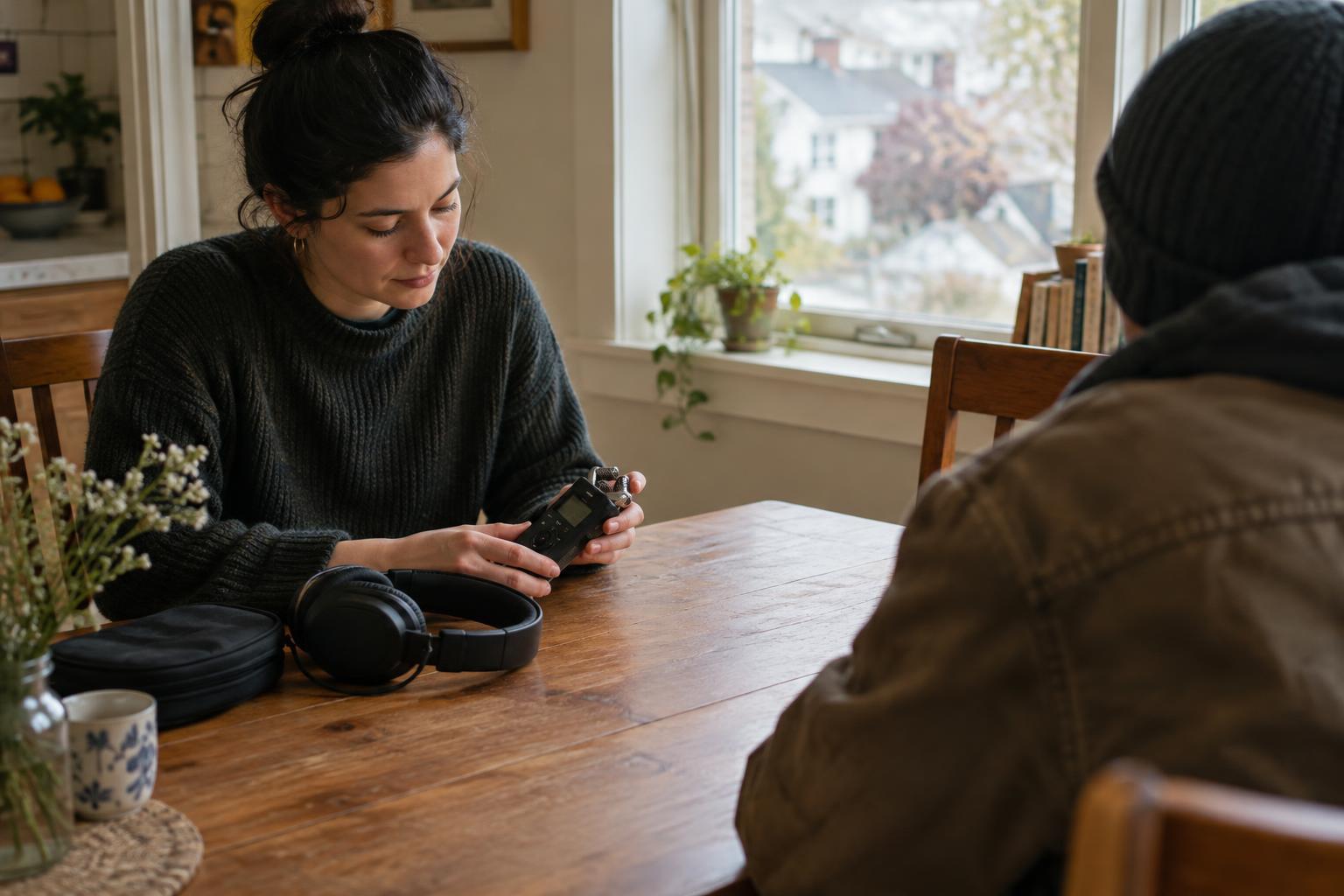
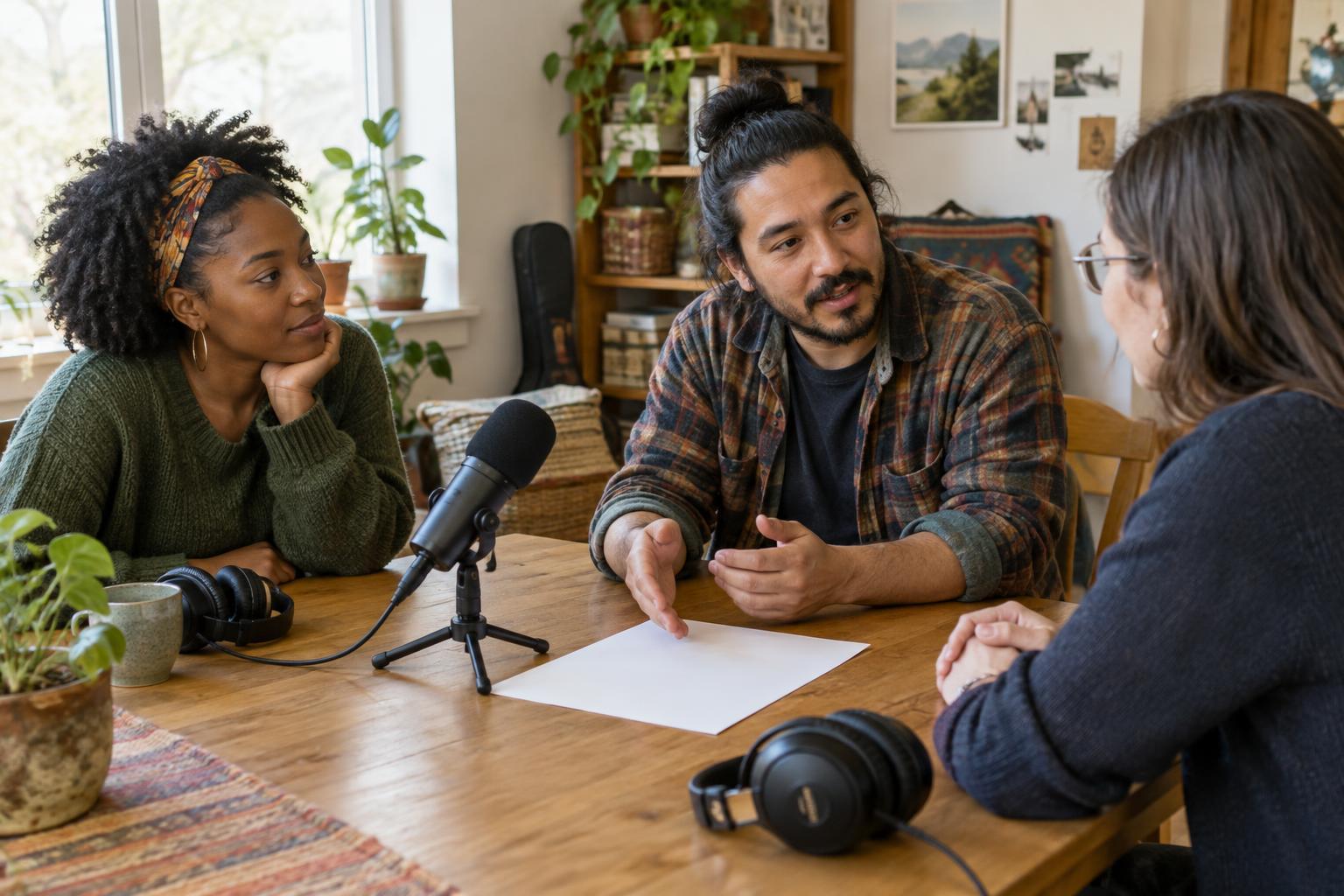
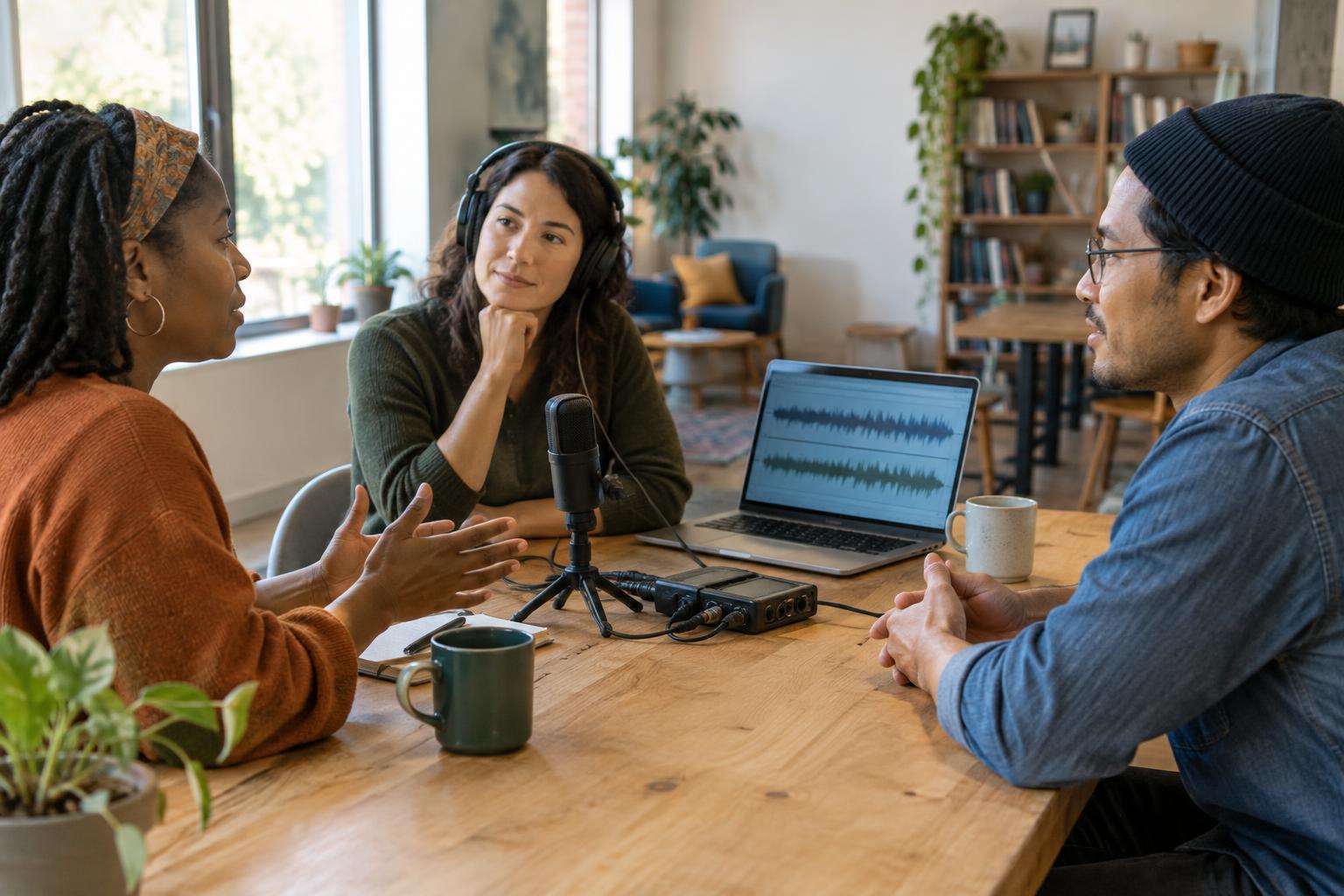
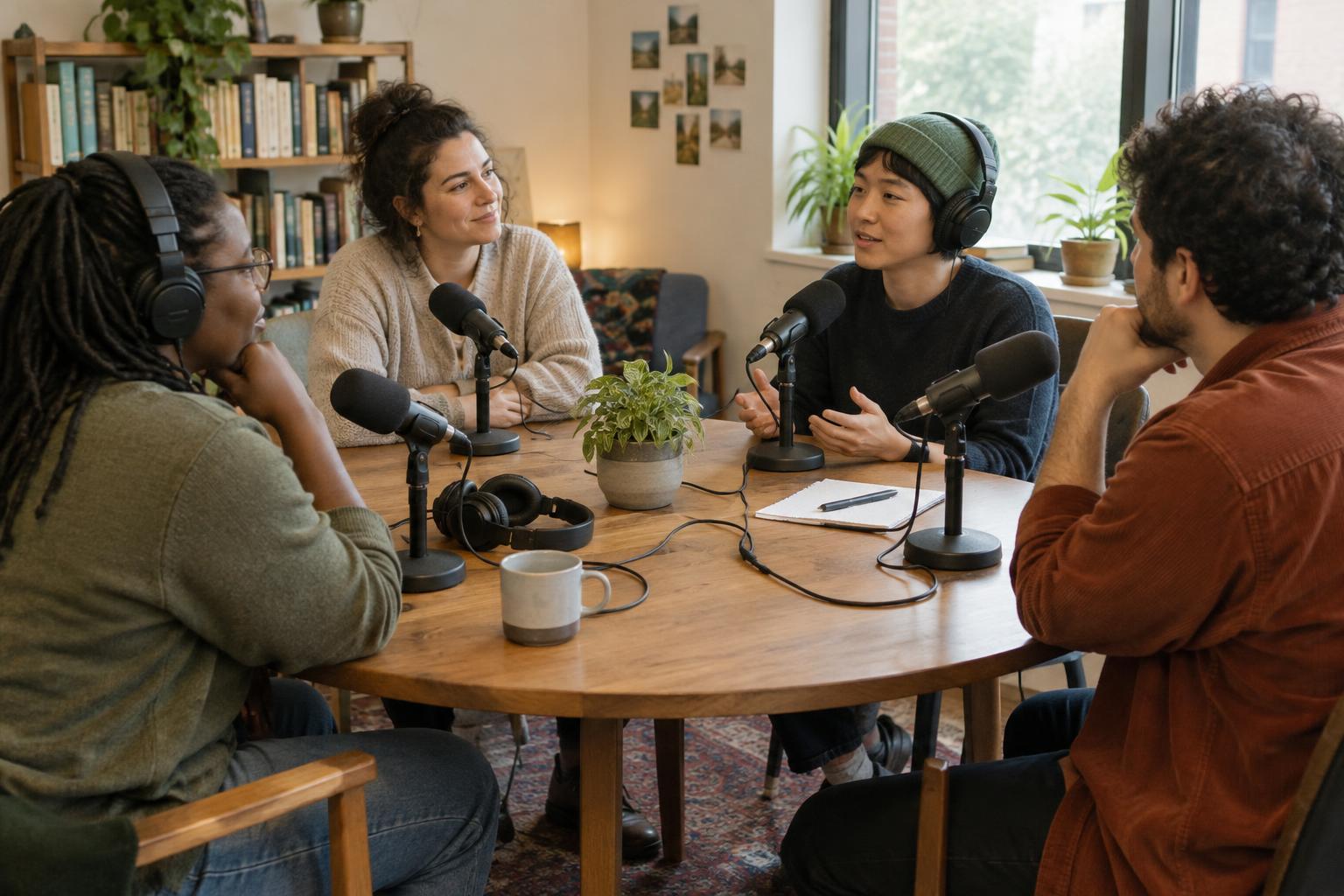
A person cannot be heard in the finished piece if their voice barely reaches the microphone. Arrange seats so participants can face one another and speak at a comfortable distance from the recording equipment. Before the discussion, record a short check with everyone speaking at their usual volume, then listen back. This is more useful than asking quieter people to project throughout the session.
Where possible, reduce background noise and use a setup that can capture each participant clearly. If there is only one microphone, explain where its useful range is and pause to reposition it when needed. Keep water and breaks available, and make it easy for someone to ask for a question to be repeated. Good sound practices should remove barriers, not turn the conversation into a technical performance.
Carry the same care into editing
After recording, check whether the edit preserves the range of perspectives that were actually shared. It is reasonable to remove repetition or long pauses, but cutting every hesitation from one speaker while leaving others expansive can change how the group sounds. Avoid assembling fragments in a way that suggests someone agreed with a point they did not answer.
Tell participants in advance how concerns about sensitive material can be raised after the session, and follow through on any review process you promised. If a voice is faint, try careful level adjustment before deciding a contribution cannot be used; avoid making it sound unnaturally loud or noisy. Finally, listen to the piece as a whole. The aim is not an equal-time tally, but an honest recording in which people had room to speak, room to pass and a fair chance to be heard.