Start with a purpose, not a playlist
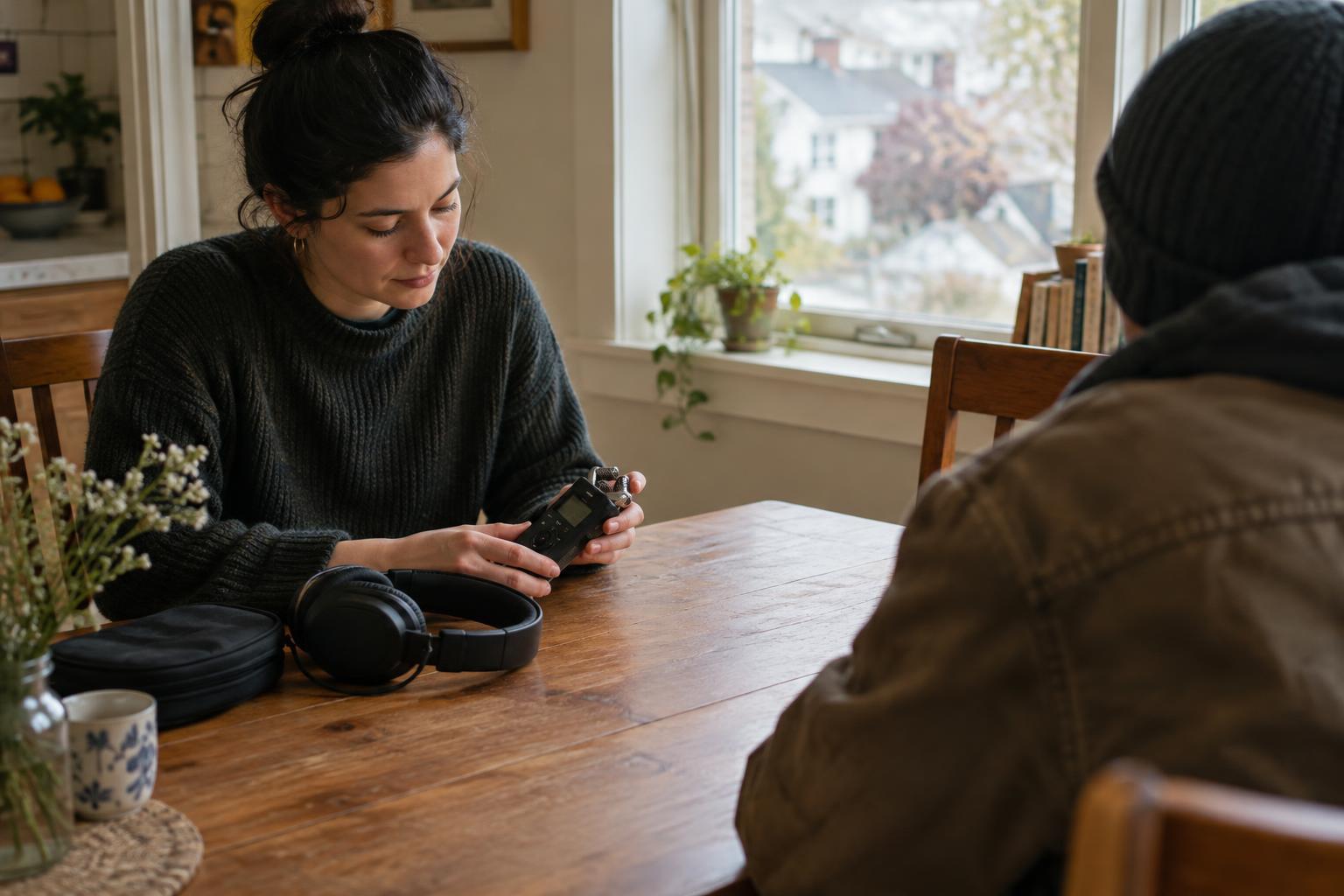
A community listening session is more than playing audio for an audience. It creates a shared moment around a recording and gives people space to notice, remember, question, or connect. The audio might be a short oral history, a neighborhood soundscape, a local musician’s demo, or a work-in-progress podcast episode. Before choosing it, decide what you hope the gathering will make possible: feedback for a creator, conversation about a place, appreciation of a tradition, or simply the pleasure of listening together.
Keep the purpose narrow enough to guide your choices. If the goal is thoughtful discussion, one ten-minute piece may serve the group better than an hour of varied clips. If you want to introduce several voices, choose short excerpts linked by a clear theme. Tell invitees what they will hear and whether they will be asked to speak. Knowing the shape of the event helps people decide how they want to participate.
Choose audio with its contributors in mind
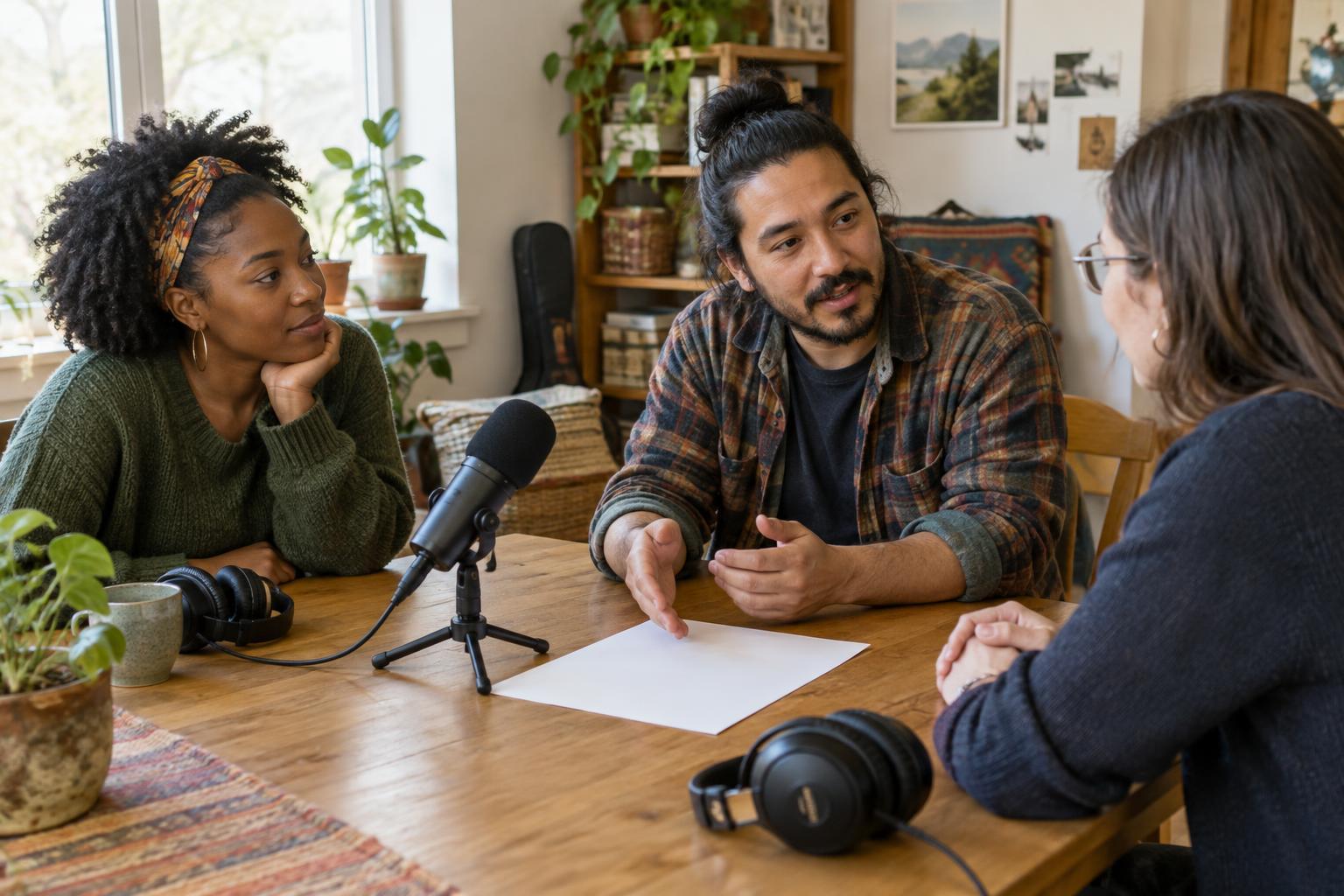
Ask the people who made or appear in a recording whether they are comfortable with it being played at this gathering. Explain who is likely to attend and how the session will work. A person may be happy for neighbors to hear their story but not want a clip posted online afterward. Treat permission to play audio in the room as separate from permission to record the discussion, share excerpts, or publish reactions.
Listen to every selection in advance. Note any strong language, distressing material, or references that may need a brief introduction. Give listeners enough context to follow the piece without telling them what to think about it. If a recording concerns a community represented in the room, leave space for differing experiences rather than presenting one voice as definitive. Have a shorter backup selection ready in case time runs tight.
Make the room comfortable for listening
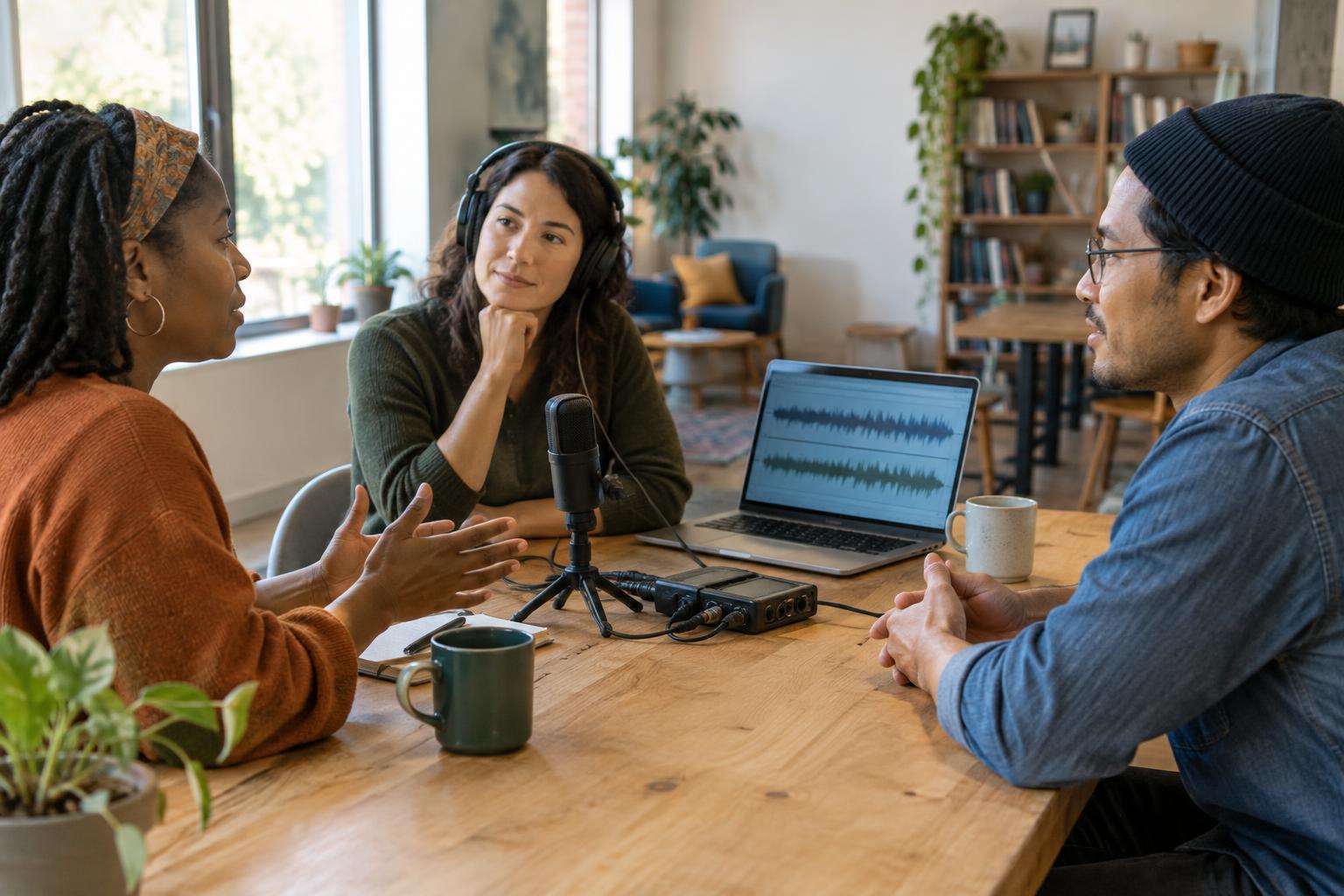
Choose a space with as little competing noise as practical, and test the playback equipment before anyone arrives. Listen from the back of the room, not just beside the speaker. Volume should make speech clear without being uncomfortable; a simple sound check with a few volunteers can help. Bring the audio file on a device you can use offline, along with any cables or adapters you need. Avoid relying on an unfamiliar streaming setup as your only option.
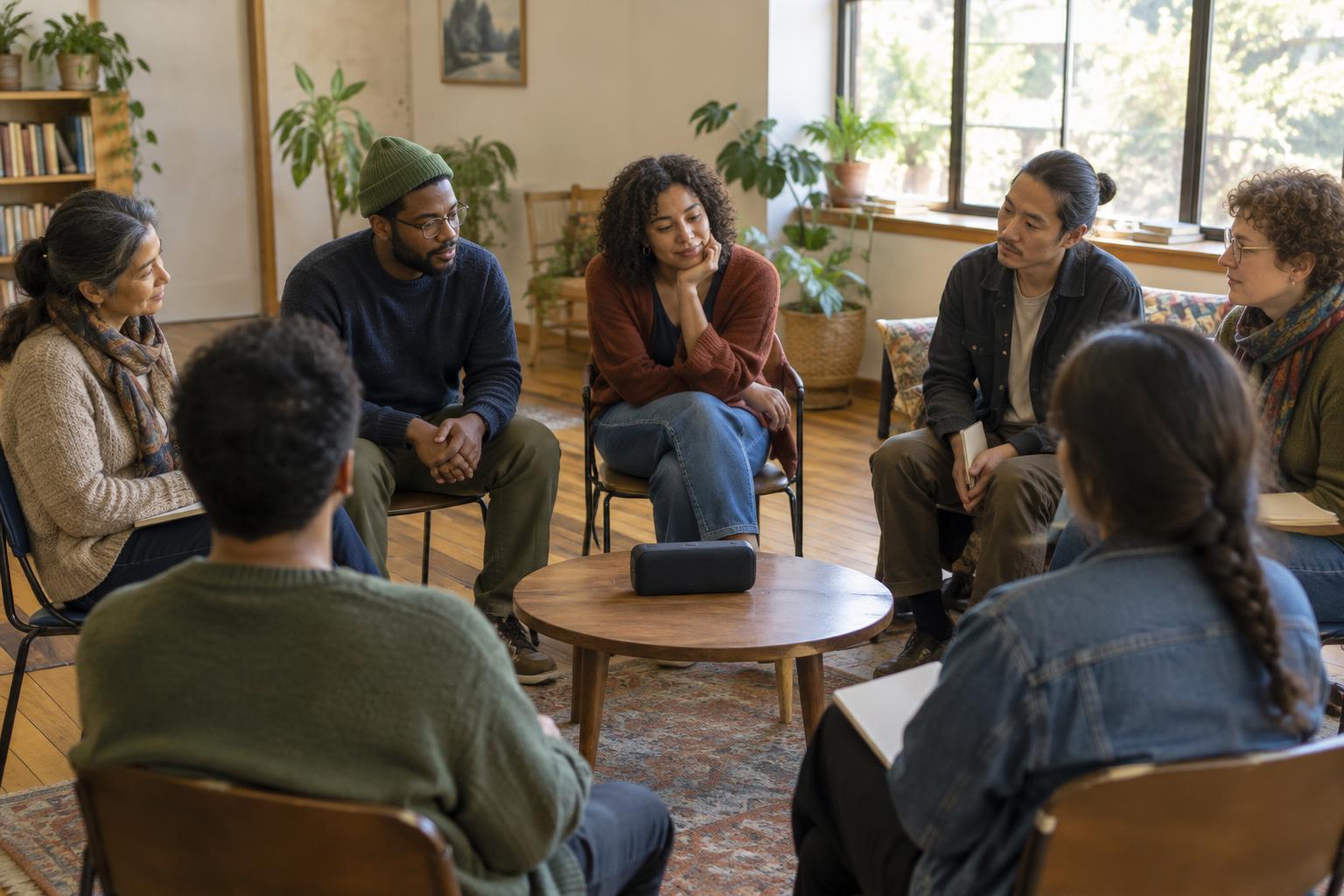
Think about how people will take part. A transcript or brief written description can make spoken-word audio easier to follow, while seating that allows people to see one another can support discussion. Let attendees know they may step out, listen without speaking, or respond in writing if you can accommodate that. If the group includes people who do not know one another, name tags may help, but they need not be required. Small choices like these make participation less dependent on confidence or familiarity.
Guide conversation without controlling it
Open with a short welcome, the purpose of the session, and a simple plan: introduction, playback, a quiet pause, discussion, and closing. Set a few expectations before pressing play. People can speak from their own experience, leave room for others, and disagree without making assumptions about someone else’s intentions. Say whether comments will remain within the group or whether you hope to share a summary later.
After playback, allow a moment of silence. Then begin with an open question such as “What stayed with you?” or “What did you notice on a second listen?” Questions about specific sounds, voices, or moments often produce richer responses than asking whether everyone liked the piece. You can invite quieter participants in without putting them on the spot: offer a chance to speak, rather than calling on individuals. If one person dominates, thank them and ask to hear from someone who has not spoken yet.
End with care and a clear next step
Leave a few minutes to close rather than letting the conversation stop abruptly. Thank the contributors and listeners, and explain what, if anything, will happen with their feedback. If the creator wants notes, ask what kind would be useful and provide a way to submit them privately. Do not assume that a lively discussion grants permission to quote participants or distribute a recording of the event.
Afterward, reflect on what helped people listen and what got in the way. Was the piece the right length? Could everyone hear it? Did the questions open conversation or narrow it? Those observations can shape the next gathering. A successful session need not produce agreement or a polished outcome. It can simply give shared audio the attention it deserves and make room for people to hear one another.