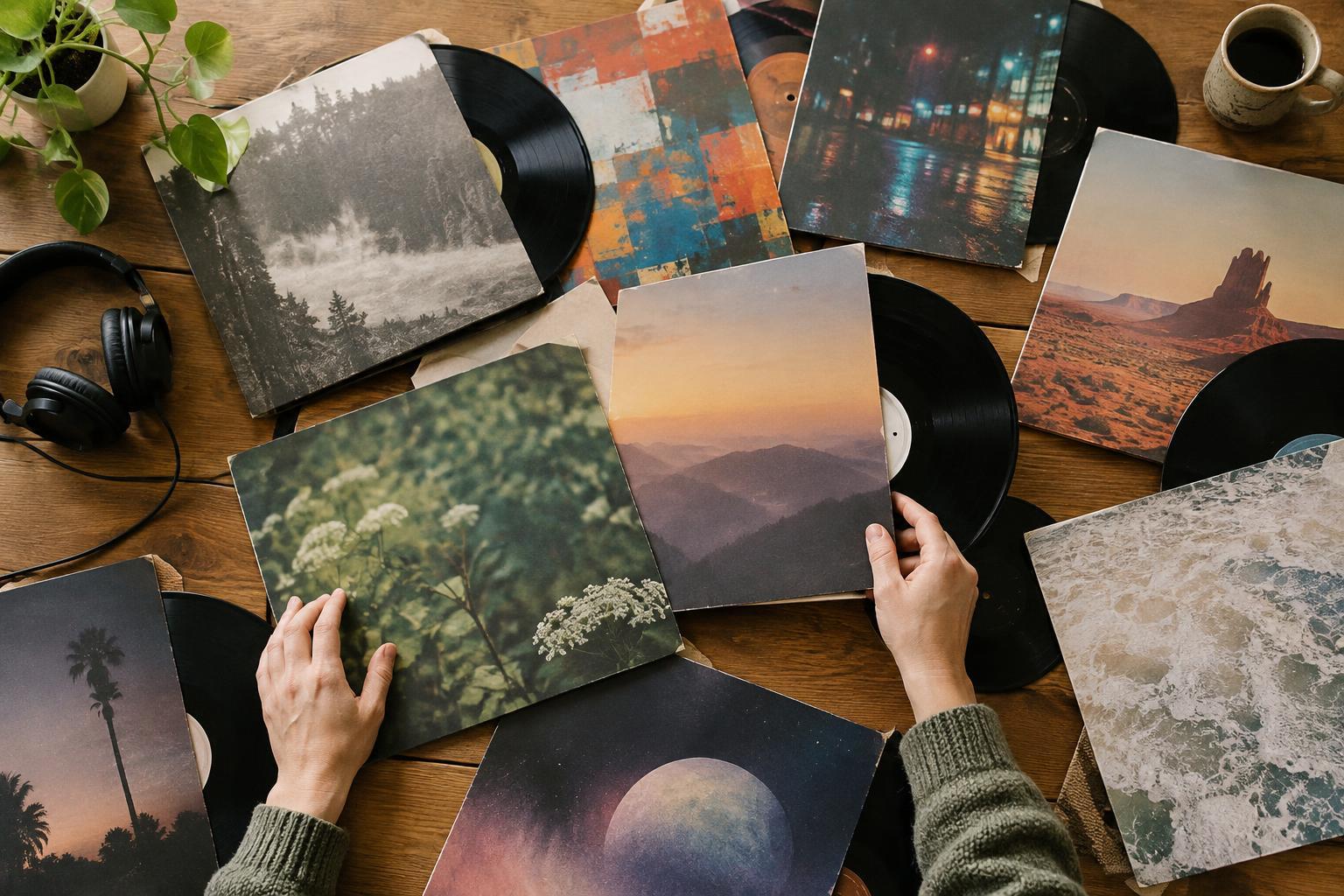
Two paths into unfamiliar music
Finding new music can start with a playlist assembled around a theme or with a message from a friend saying, “Try this.” Both can lead to a favorite track, but they ask you to listen in different ways. An editorial playlist gives you a route through selections made for a particular mood, genre, scene or idea. A personal recommendation starts with a relationship: someone has thought about a piece of music and why you, specifically, might enjoy it.
Neither approach guarantees a match. A playlist can introduce sounds you would not have searched for, yet its theme may be broader than your taste. A friend may know your favorite artists well, yet keep suggesting songs that resemble what you already play. Understanding the strengths of each makes discovery less about finding a perfect source and more about choosing a useful starting point.
Use editorial playlists to explore a wider field
An editorial playlist is useful when you want an overview rather than a single answer. If you are curious about an unfamiliar style, a thoughtfully assembled list can put several artists and approaches side by side. Listening across the list helps you notice differences: which rhythms hold your attention, which voices draw you in and which tracks make you want to hear the full release.
The sequence can also do some of the work for you. A playlist built around a setting or feeling offers a way to listen without deciding on every next song. That makes it handy for a commute, a focused work session or a first pass through an area of music you do not yet know how to search. Still, a playlist title is only a frame. Skip what does not connect, and save individual tracks that do; you do not need to enjoy the whole selection for it to be worthwhile.
For a more active listen, choose one track that stands out and follow it beyond the playlist. Try another song by the same artist, listen to its album or make a note of a collaborator whose name catches your eye. That small step turns a curated introduction into your own line of inquiry.
Use personal recommendations for context and connection
A recommendation from someone you know can be most helpful when it comes with a reason. “The chorus reminds me of that band you love” gives you a different way in than “You should hear this.” The person may remember your taste, a shared concert or a conversation about lyrics. That context can make a song worth trying even when its genre label would not have caught your attention.
Personal recommendations also invite a conversation after you listen. You can ask what the other person hears in a track, mention the moment that stood out or request something quite different. If a suggestion misses, that response still helps them understand your taste. Be specific and kind: “I liked the quiet opening more than the louder second half” is more useful than a simple yes or no.
The trade-off is that one person’s suggestions reflect one person’s listening habits. Ask different people, especially those whose tastes overlap with yours in different ways, and you may find more variety. And if a friend sends an entire album, it is fine to ask which track they would start with.
Match the method to the moment
Choose an editorial playlist when your question is broad: “What might this style sound like?” or “What could fit this afternoon?” Choose a personal recommendation when your question is more particular: “I like this artist’s storytelling; what else has that quality?” The first gives you a range to sample. The second can offer a more tailored lead and an explanation you can respond to.
You can combine the two. After hearing a promising track on a playlist, send it to a friend and ask what it brings to mind. Or use a friend’s suggestion as a starting point, then explore a playlist organized around an element you liked, such as sparse arrangements or energetic vocals. Moving between the methods keeps your listening from depending entirely on a curator’s theme or one person’s taste.
Make discoveries your own
Whatever starts the search, give yourself a simple way to keep track of what resonates. Save a track with a short note such as “great bass line” or “lyrics to revisit.” Those details are more helpful later than a long collection of songs you barely remember. Return to a few favorites after the initial surprise has worn off; some music opens up gradually, while other tracks are best enjoyed as one-time discoveries.
The goal is not to find the most efficient source of new songs. It is to develop a listening habit that stays curious. Editorial playlists can widen the map, and personal recommendations can add conversation and care. Use each for what it does well, then let your own attention decide where to go next.