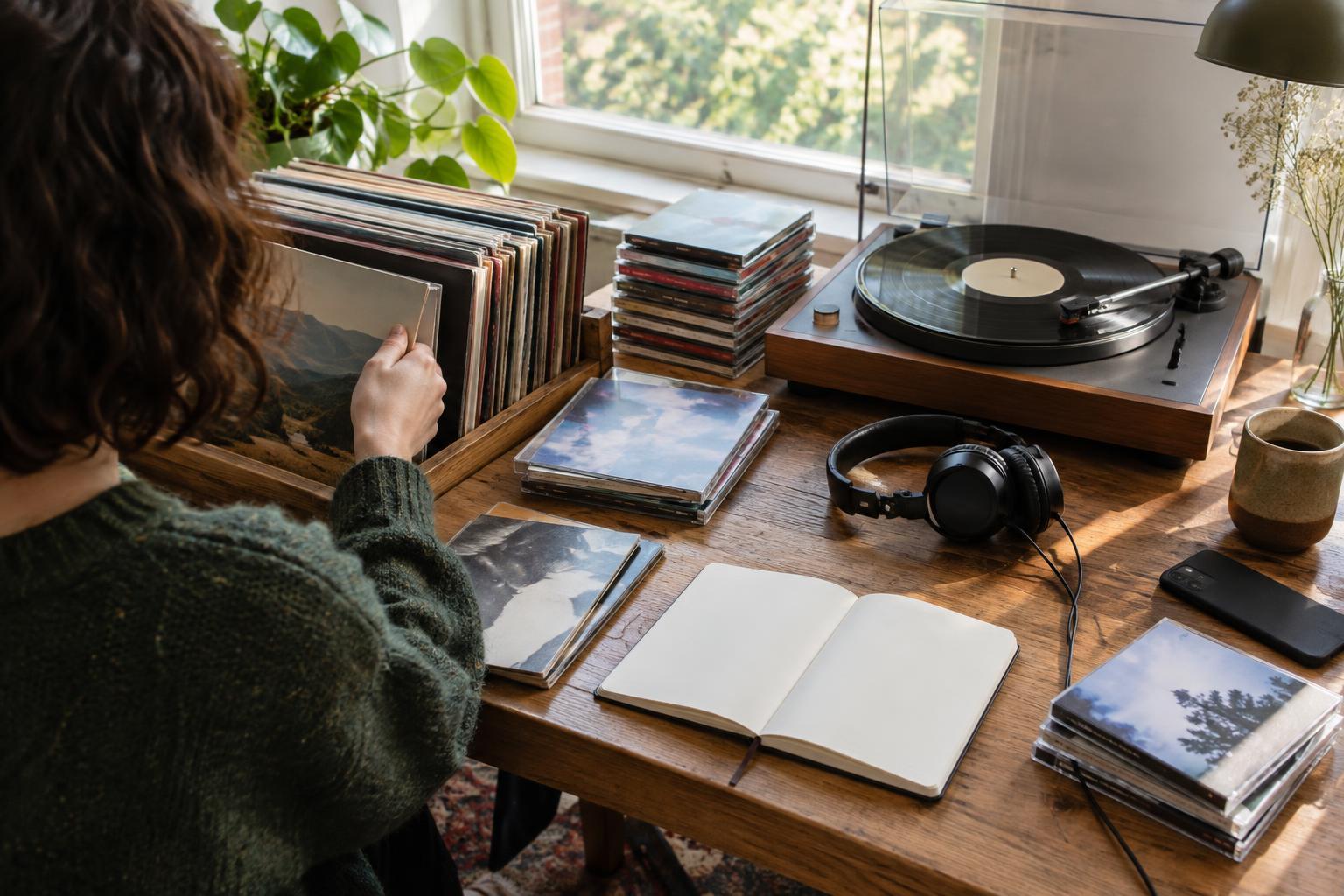
Start with the scene, but write down the clues
A soundtrack can make an unfamiliar song feel instantly familiar. The scene supplies a mood, a setting, and sometimes a memorable line of dialogue alongside the music. That makes films, series, and games inviting places to discover artists. It can also make a track surprisingly hard to find later: the version you heard may differ from the one that appears first in a search.
When a piece catches your ear, note where you heard it and what stood out. Was there a lyric you can remember? Did the music play over the opening, during a quiet conversation, or under the closing credits? Was it a full song, a short instrumental passage, or something a character played within the story? A few plain notes give you better leads than a vague memory of the mood alone.
Find the recording, not just a familiar title
Begin with the credits or an official soundtrack listing when one is available, then compare what you find with the audio you remember. A title match is only a first step. The scene might use a cover, a live performance, a remix, an alternate mix, or a shortened edit. Even when the song is the same, a different recording can change the voice, tempo, instrumentation, and emotional effect.
Listen for distinguishing details: the opening sound, the singer’s phrasing, a particular drum pattern, or the way the track ends. If you find several plausible versions, keep their performers and release details separate in your notes. It is fine to leave a discovery marked “version uncertain” until you can compare them. Guessing too early can send you down an interesting path, but not necessarily toward the artist you intended to find.
Read credits as a map of people
Once you have a likely match, look beyond the track title. The performing artist is an obvious next stop, but the songwriter, composer, featured musician, producer, or remixer may offer a different route into related music. These roles are not interchangeable: someone who wrote a song may not be the person singing the recording used in the scene. Keeping those distinctions clear helps you follow the contribution that caught your attention.
Try choosing one thread rather than opening every name at once. If it was the vocal melody, explore another recording by the singer or songwriter. If it was the texture, look for more work by the performer or producer. For instrumental score, follow the composer to another project and listen for recurring choices in rhythm, instrumentation, or space. Credits become more useful when they guide a question you actually want to answer.
Step outside the soundtrack
Soundtracks place songs in carefully chosen surroundings. To hear what an artist does on their own terms, play the track without the scene, then sample a few neighboring songs from the same release or period of their work. The contrast can be revealing: a song that felt ominous on screen might sit among playful tracks, while a brief cue may belong to a longer musical idea.
Give unfamiliar work more than a few seconds before deciding whether it belongs in your listening rotation. You do not need to enjoy an artist’s whole catalog to value one discovery. If you do find a connection, branch outward gradually: an album, a collaboration, or another recording of the same composition is enough for a productive next step. This keeps discovery enjoyable instead of turning it into an obligation to be comprehensive.
Keep a listening trail you can return to
A simple note can preserve the path from scene to artist. Record the production you watched or played, the scene or moment, the track title, the performer, and any version detail you confirmed. Add a short sentence about why you saved it: “restrained vocals,” “warm bass sound,” or “unexpected shift halfway through.” Those observations are often more useful later than a broad genre label.
If you make a playlist, consider pairing soundtrack finds with songs you discovered by following their credits. You might name the recording accurately and keep covers or remixes as separate entries. Over time, the list becomes more than a collection of recognizable scenes. It shows which voices, instruments, and musical approaches keep drawing you in—and gives the artists behind those sounds room to be heard beyond the story that introduced them.