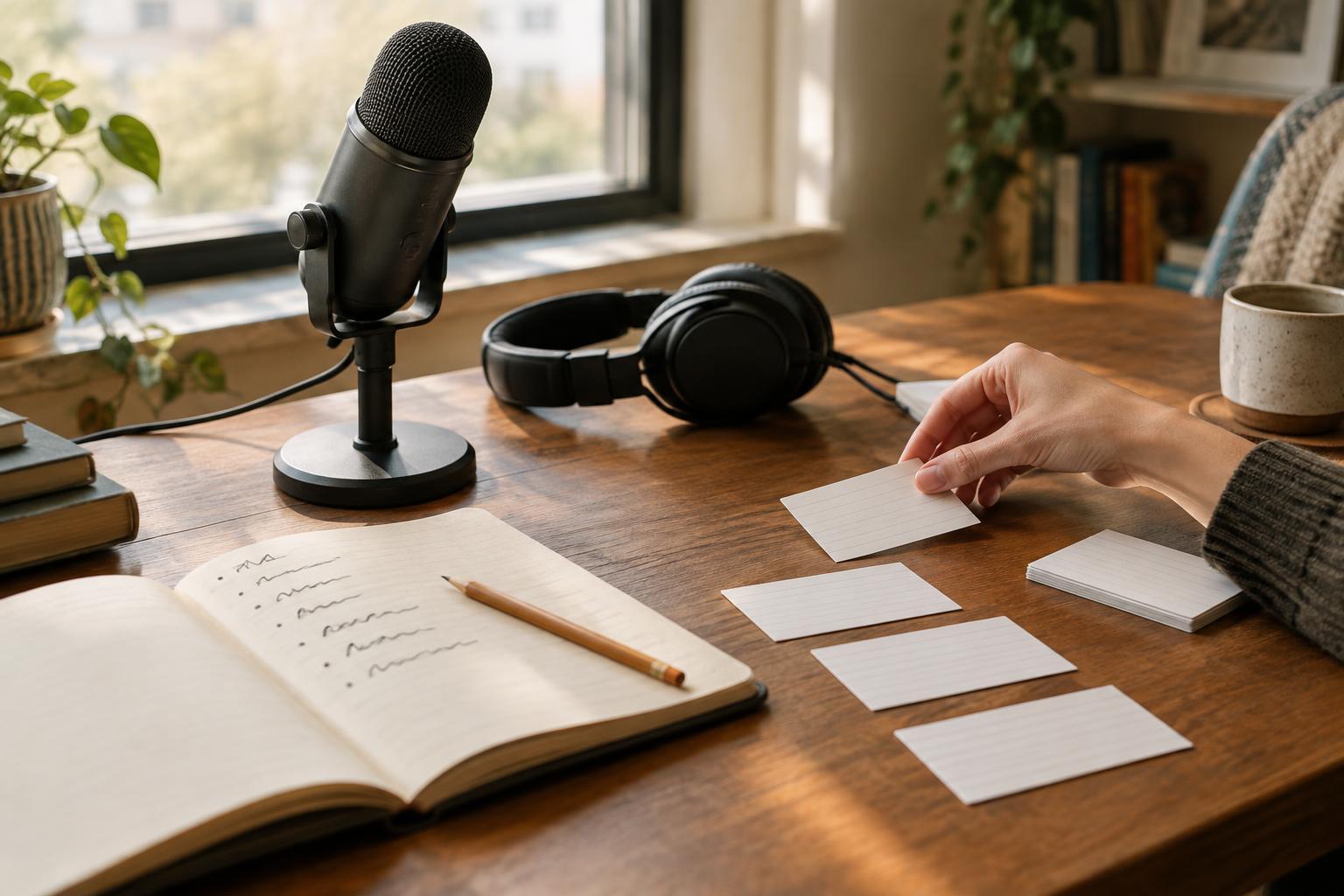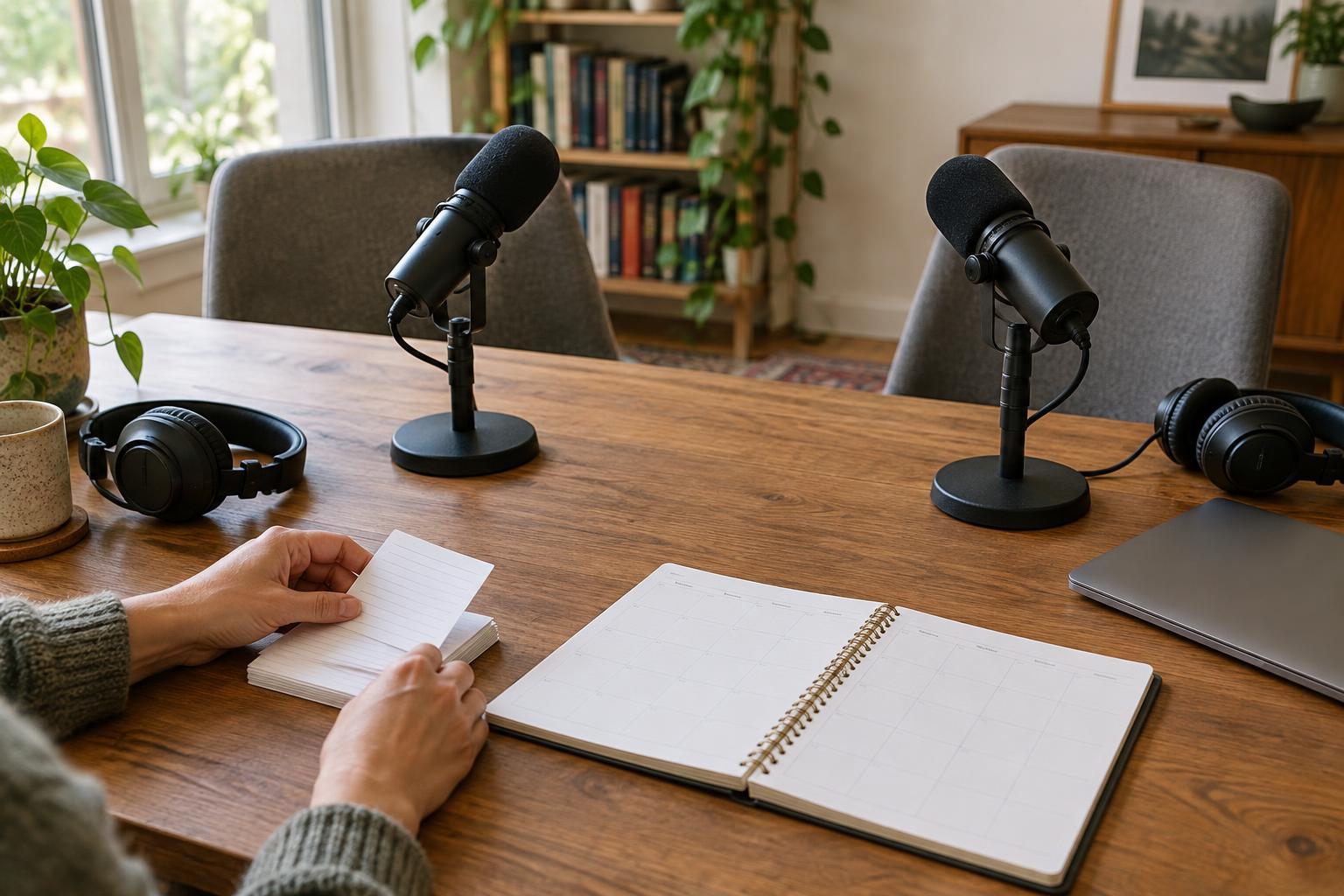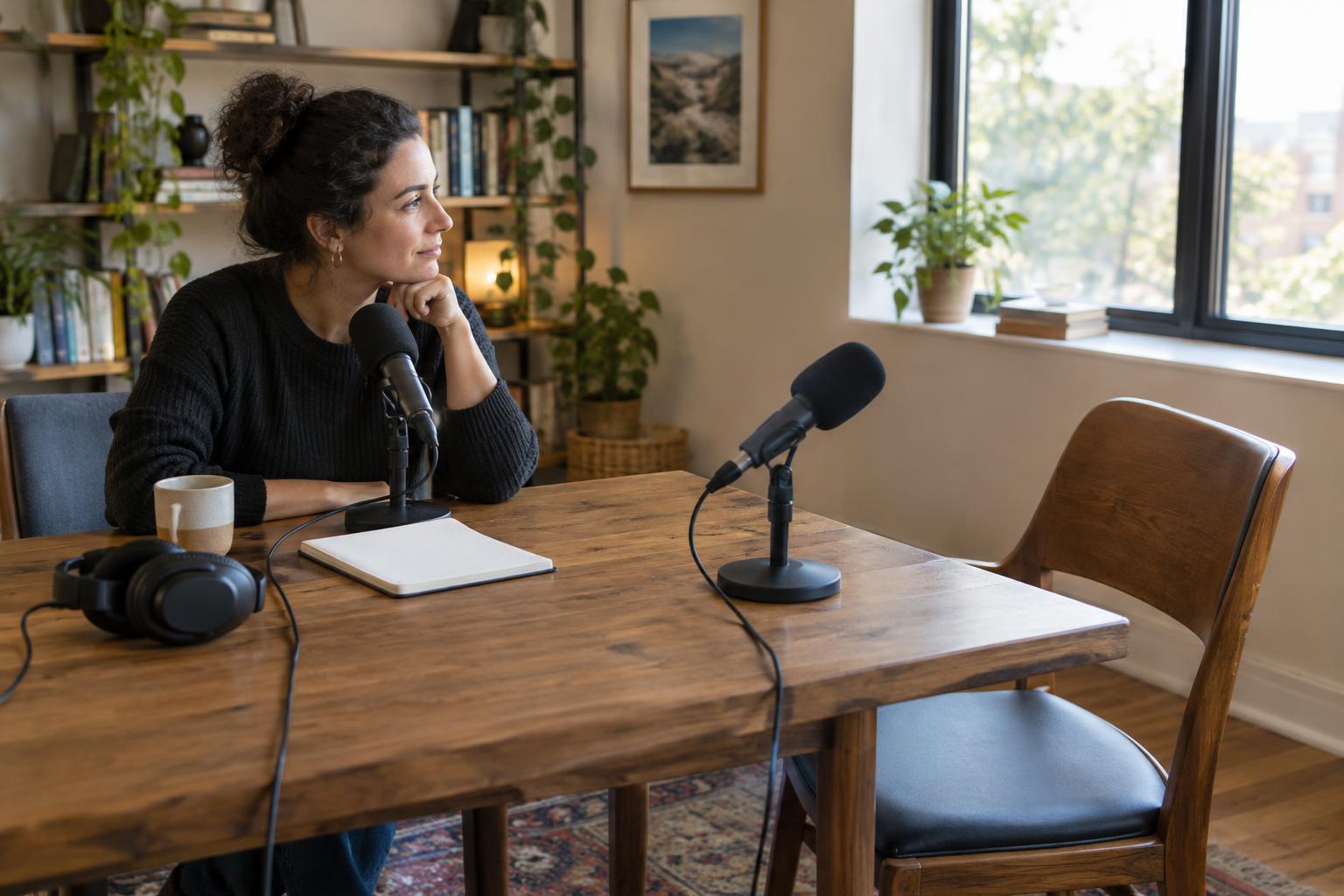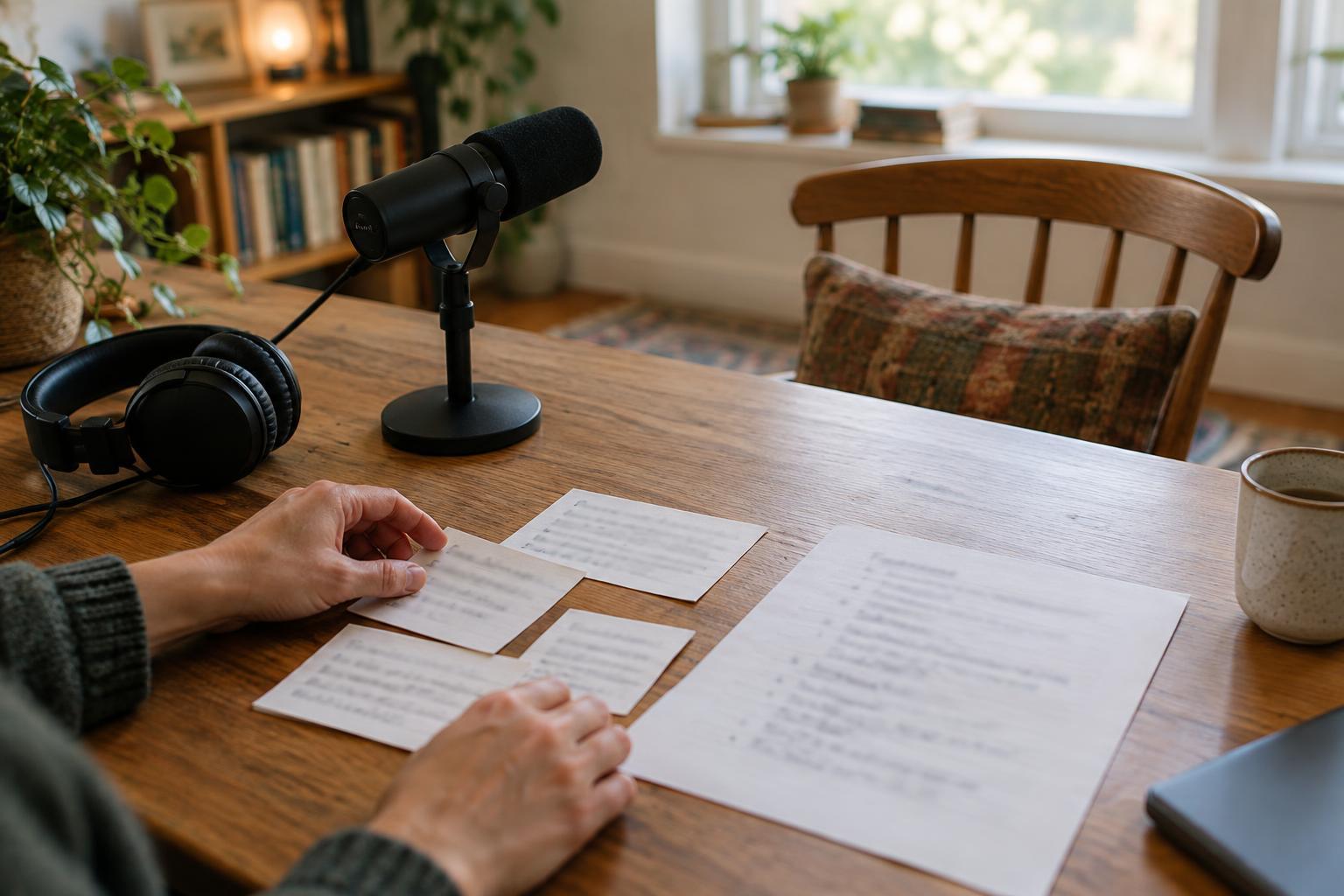
Start with the conversation you want listeners to hear
Before researching questions, write down the purpose of the episode in one or two sentences. What should a listener understand, feel or be able to try by the end? A conversation with a musician about a new recording process needs a different shape from one about the songs that influenced them. This small decision helps you choose what belongs in the interview and what can wait for another episode.
Next, identify the guest’s connection to that purpose. Note the experiences they can describe firsthand rather than asking them to speak for an entire profession or community. Choose two or three themes that connect their experience to the listener’s curiosity. These themes form the backbone of both your brief and your questions; they are not a promise that every minute will follow a fixed plan.
Make the guest brief short and useful
A guest brief should help someone arrive prepared, not feel as though they have homework. Include the show’s premise, the intended audience, the episode’s focus, the approximate recording length and how the conversation will be recorded. Say whether it is audio-only or whether video is involved. If there are practical steps, such as using headphones or finding a quiet room, put them in a separate, easy-to-scan note.
Outline the main themes and offer a few sample questions, especially ones that call for reflection or a specific memory. You need not send every possible follow-up: leaving some room for discovery often makes the exchange more conversational. Invite the guest to flag names, terms or details you should verify before recording. If you hope to discuss a sensitive experience, tell them in advance and ask whether they are comfortable approaching it. Be clear about any relevant boundaries or agreements, including whether they can request a pause during recording.
Build questions that invite scenes, choices and meaning
Arrange your questions as a path rather than a checklist. Begin with something the guest can answer comfortably, move toward the episode’s central ideas, then close with a question that helps listeners carry the conversation forward. For a guest who makes spoken-word pieces, you might start by asking what draws them to a subject, then explore a difficult production choice, and finish by asking what they listen for when deciding a piece is complete.
Favor questions that ask for a moment, decision or example. “What happened when you first tried that approach?” is more likely to produce a story than “Was that process interesting?” Keep each question focused on one idea. If a prompt contains a long introduction and three separate questions, the guest may answer only the last part. Also check your wording for assumptions: “What challenges did your community face?” may suggest a story you have already decided to tell. A more open question asks what the guest thinks listeners should understand about that experience.
Prepare follow-ups, not just opening questions
A strong interview often depends on what you ask after the first answer. Beside each main question, jot down one or two possible follow-ups: “Can you take me into that moment?”, “What changed your mind?” or “How did that sound to you?” These are prompts to listen for, not lines to deliver regardless of what the guest says. If they introduce an unexpected but relevant detail, let your next question follow it.
Mark the few answers you truly need for the episode to make sense. That might include a plain-language explanation of a technique or the context behind a song the guest mentions. You can then stay flexible elsewhere without losing the thread. During recording, give the guest time to finish a thought. A brief pause may lead to a more precise answer than an immediate new question.
Review the plan before you press record
Read the brief as though you were receiving it from a stranger. Is the invitation clear? Does it explain what the guest is being asked to prepare, without implying they need polished answers? Then read the questions aloud. Replace jargon you would have to explain, shorten prompts that are hard to say in one breath, and remove questions that repeat the same idea.
Finally, separate your materials into a guest-facing brief and a host-facing interview map. The guest gets a reassuring overview; you keep your question order, optional follow-ups and notes on details to clarify. That division gives both people enough preparation to feel comfortable while protecting the most valuable part of an interview: the chance to listen closely and go somewhere neither of you planned.