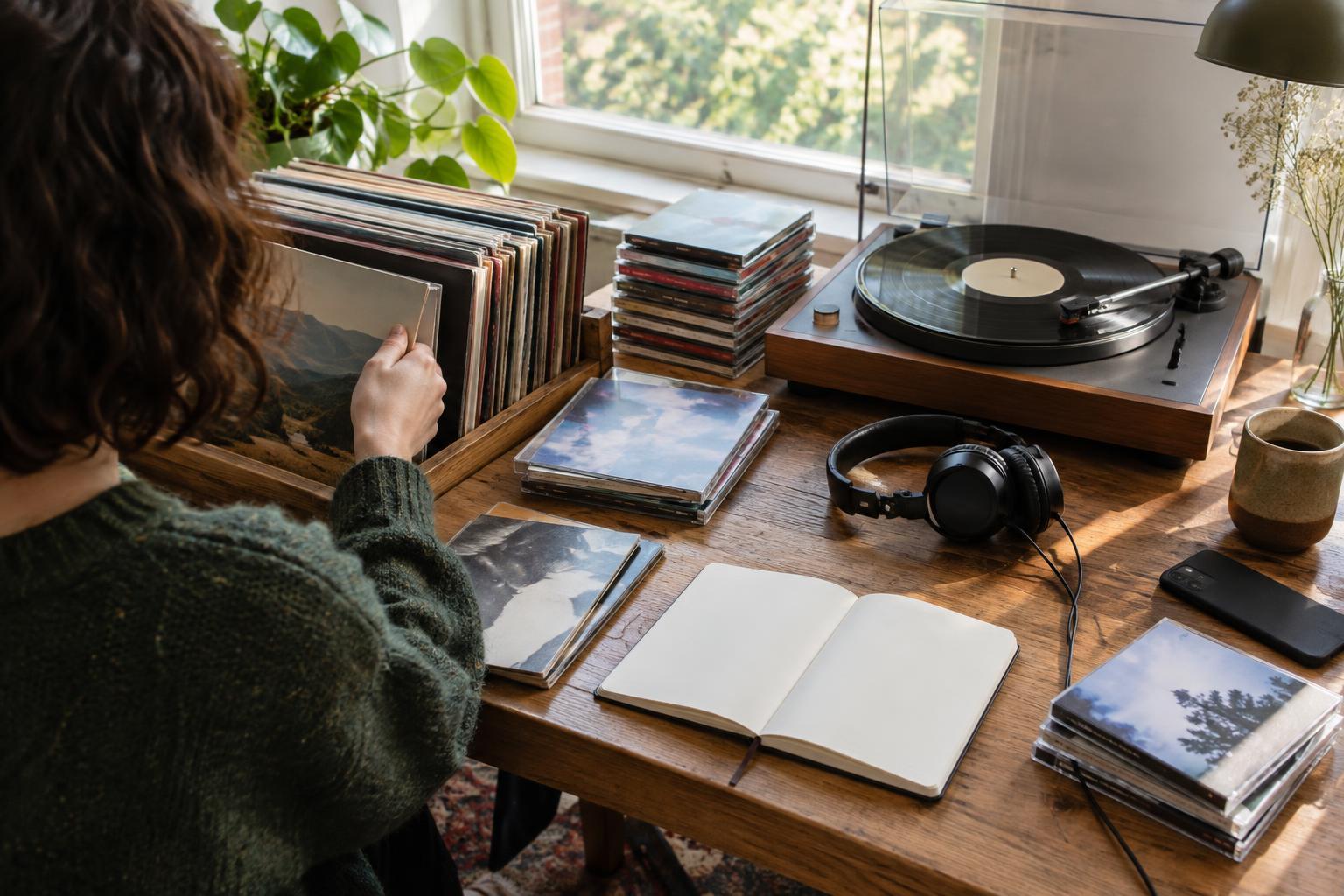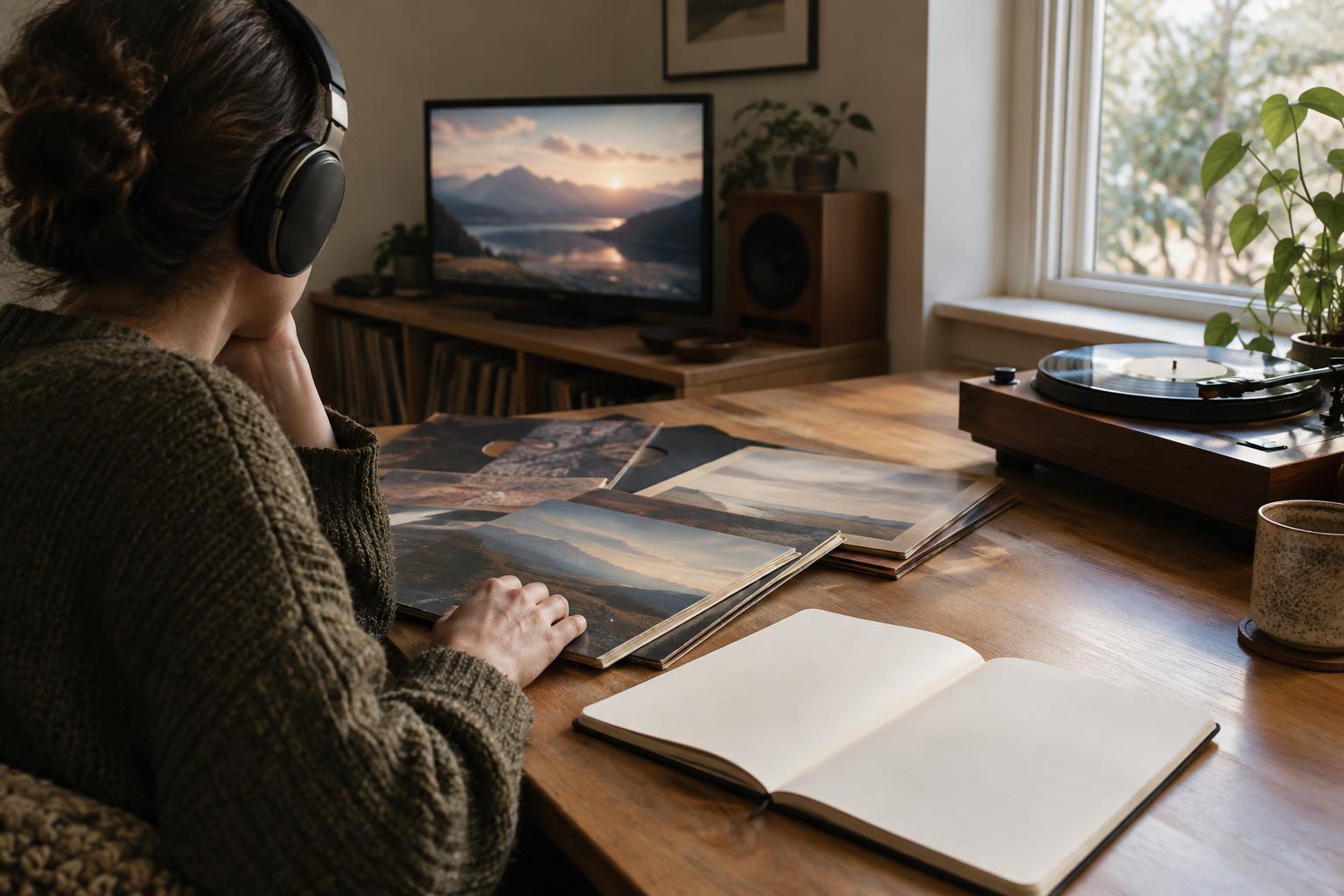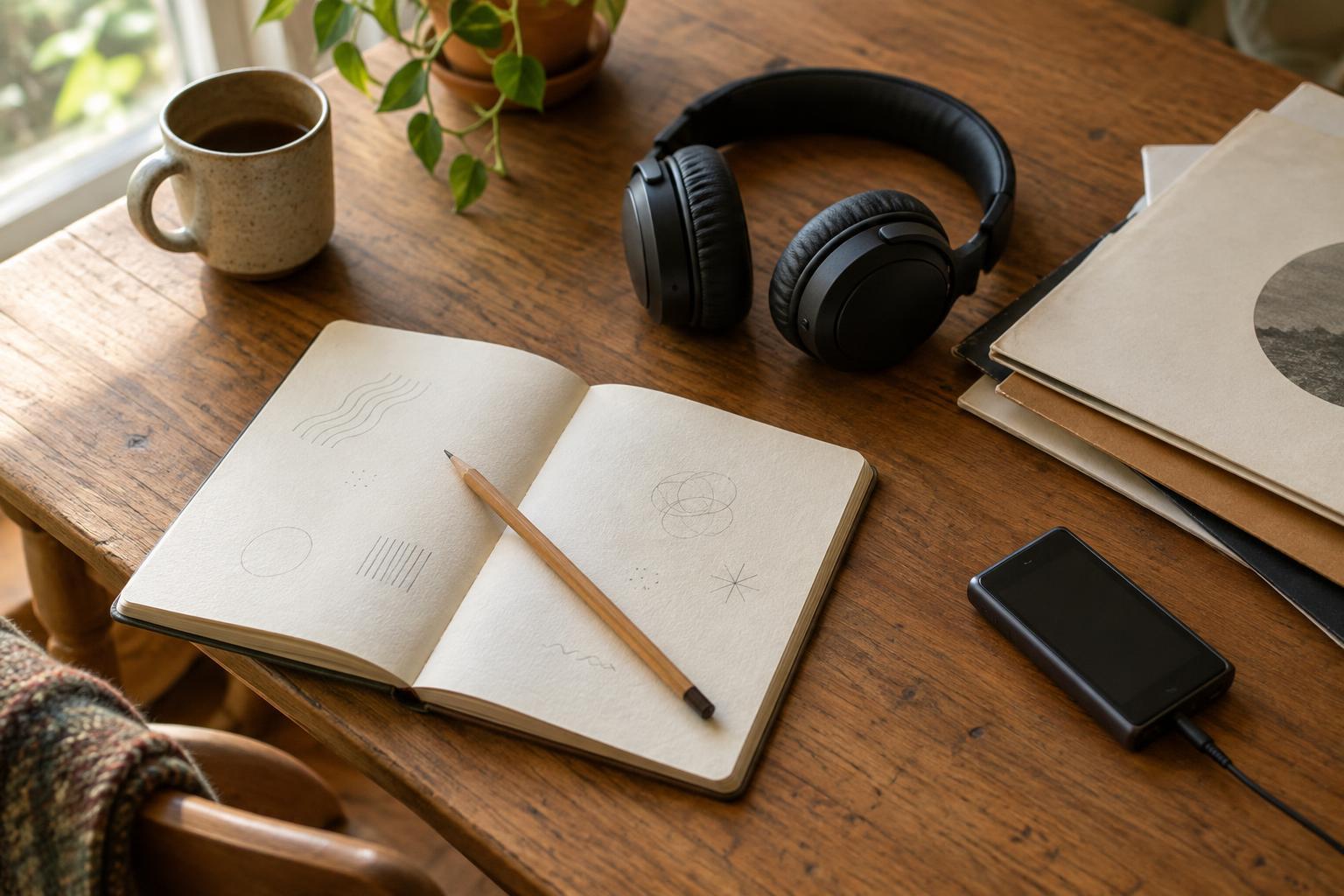
Start with a question, not a rating
A listening journal does not need to be a catalogue of everything you hear. Its most useful job is to preserve the moment when a piece of music catches your attention. What made you stop, replay it, or send it to someone? A few specific words about that moment will help you find your way back to it more readily than a score out of ten.
Choose a format you can open while listening: a small notebook, a notes app, or a plain document. Give each entry the artist, track or release title, and one observation. You might write, “The bass enters halfway through and changes the mood,” or “The singer’s phrasing reminds me of a conversation.” If you know where you found it, add that too. A friend’s recommendation, a film scene, or a record shop shelf can become a useful trail to follow later.
Describe the sound in your own language
Genre labels can help organize a collection, but they rarely explain why you connected with a particular track. Try noting details you can hear: the pace, the space around the instruments, the texture of a voice, or the way a song builds and releases tension. You do not need technical vocabulary. “Sounds like a crowded room suddenly going quiet” is a useful note if it helps you remember the music.
Separate what you notice from how you feel about it. An entry might say, “Short, clipped guitar notes; restless drums; I wanted to hear it again on a walk.” That gives you several possible paths: look for more work by the guitarist, explore music with a similar rhythmic feel, or build a walking playlist. It also leaves room for your reaction to change. A song that feels too busy today may make sense in a different setting.
Leave yourself a next step
The journal becomes a discovery tool when entries point beyond the track in front of you. At the end of a promising note, add one small action: listen to the full album, find another release by the artist, check who contributed to the recording, or ask the person who recommended it what they hear in it. Keep the action small enough that you might actually do it.
You can also record questions instead of tasks. “What other songs use this kind of vocal harmony?” or “Does this artist always write such sparse arrangements?” Questions make browsing more purposeful without deciding in advance what you should like. If one path leads nowhere interesting, you can let it go. Discovery works better when a journal holds possibilities rather than assignments.
Make room for surprises and second listens
Familiarity can shape what you notice first. If you only journal about music you already enjoy, your notes may keep sending you toward the same sounds. Occasionally choose something outside your usual listening: a different era, a local compilation, a style you know mostly by reputation, or an album suggested by someone with different tastes. Write down one detail that interests you even if the whole track is not for you.
Revisit a few entries after some time has passed. Rather than asking whether your first opinion was right, ask what you hear now that you missed before. Perhaps the melody stands out once the production feels familiar, or an initially exciting track has less to offer on repeat. Both outcomes teach you something about your listening habits. Add a brief follow-up beneath the original note so you can see that change without erasing your first impression.
Review the trails, not just the tracks
Every so often, scan your notes for recurring details. Are you drawn to intimate vocals, unusual percussion, long introductions, or songs that change direction midway through? Look for connections across artists and genres, then use one of those connections to guide your next listening session. A journal can reveal that you enjoy a musical quality you had never thought to search for.
Keep the process light. You can leave entries unfinished, skip days, and ignore music that makes no impression. One vivid sentence and one possible next step are enough. The point is not to prove that you listened carefully; it is to give your curiosity a memory. Over time, those small notes can turn a scattered set of recommendations into a more personal route through new music.