Give listeners a new point of reference
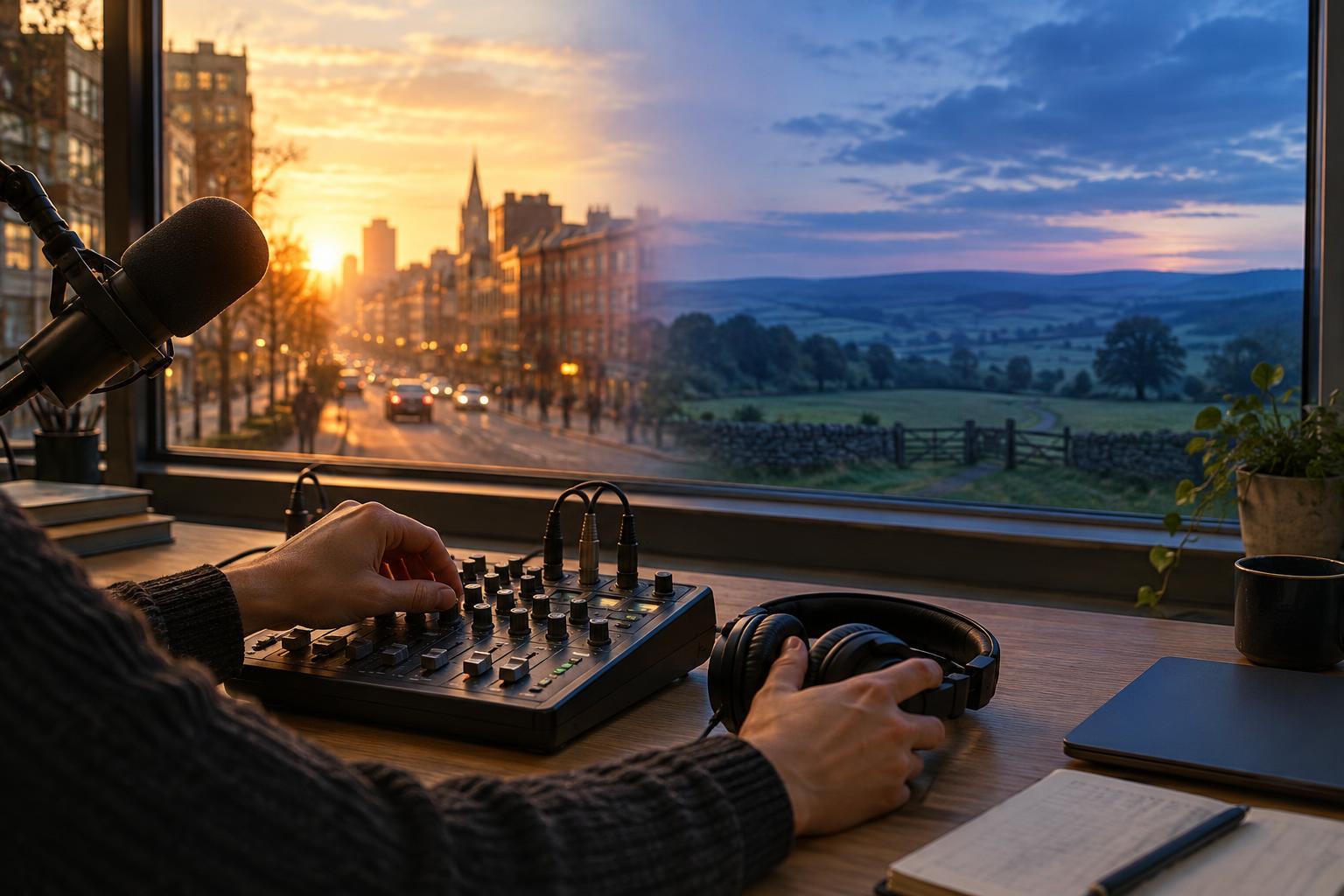
In an audio story, a change of scene can happen instantly in the edit, but listeners need a moment to catch up. If one voice is recorded in a kitchen and the next in a crowded hall, the difference in sound may signal that something has changed. It may not tell the listener where they are, when the second recording took place or why the move matters. A good transition answers enough of those questions for the story to keep moving.
Before editing a scene change, write down three things: where the listener is leaving, where they are going and what connects the two. Then decide which details must be stated and which can be heard. A brief line such as “The next morning, we met outside the rehearsal space” can do more work than a long explanation. It establishes both time and place, leaving the sounds of the street and the opening door to bring the new scene to life.
Separate time shifts from changes of place
A transition may move the story forward in time, move it to another location or do both at once. Treating those as separate decisions helps you avoid vague bridges. “Later” might be enough when the same conversation resumes after a short break. If the story jumps from an interview recorded today to a memory of an earlier event, listeners may need a fuller cue: “Years before that conversation, she had faced the same question onstage.” The wording should make clear whether they are hearing an archival recording, a present-day recollection or a narrated account.
Location changes can often start with a recognizable sound, but sound alone may be ambiguous. Footsteps, traffic or applause can suggest a setting without identifying it. Pair a short cue with a precise phrase when the place affects the meaning of the scene: “Across town, at the community center, the choir is warming up.” When time and location change together, name the change early. Do not make listeners wait through several voices to discover that the story has moved to a different day and room.
Use sound as a bridge, not a disguise
Ambient sound can make a transition feel continuous. You might let the hum of a room fade beneath a closing sentence, hold a short pause, then introduce the sound of the next place before anyone speaks. That gives the ear a clear departure and arrival. A sound that appears in both scenes can also make a useful bridge: the click of a microphone being switched on in one room can lead into a microphone check in another. The connection should serve the story rather than simply show off the edit.
Keep the provenance of important sounds clear. A door, crowd or train recorded elsewhere may create a convincing atmosphere while giving listeners the wrong impression about what happened at the scene. When a specific sound is presented as part of an event, use the recording from that event if you have it. Otherwise, consider leaving the transition to narration, room tone or a clearly nonliteral musical cue. Clarity is more valuable than a seamless effect that changes the listener’s understanding.
Let pacing signal a new chapter
A pause can mark a shift without adding another sentence. After a revealing moment, a short stretch of quiet gives listeners time to absorb it before the next scene begins. Music can provide a similar boundary, especially when the story moves between broader chapters. Use these tools consistently enough that listeners learn their purpose, but not so often that every cut feels ceremonial. A quick exchange may need only a clean edit; a leap across several months may need a firmer break and an explicit time cue.
Listen closely to the first words after each transition. Pronouns such as “she” or “there” can become confusing when the speaker or setting has changed. Starting the new scene with a name, place or action gives the listener a fresh foothold. It also helps to avoid placing essential information beneath loud music or a busy sound bed. The transition should support comprehension even for someone listening while walking, cooking or doing another task.
Test the edit without a visual guide
Once a draft is assembled, listen from the scene before a transition through the scene after it, without looking at your script or track labels. Ask yourself: Could I tell when the change happened? Do I know where and when I am now? Do I understand why these two moments sit next to each other? If an answer depends on information visible only in your editing session, add a spoken cue or adjust the order of sounds.
A second listener can be especially useful because they do not know what you intended. Ask them to describe the sequence of places and events in their own words rather than asking whether a transition “works.” If they misplace a scene, make the smallest change that fixes it: an earlier location name, a more specific time phrase or a little more space between recordings. The best transition rarely calls attention to itself. It gives listeners the bearings they need, then lets them stay with the story.