Begin with people, not a list of languages
A multilingual project is more than an episode that contains several languages. Participation also means being able to understand an invitation, ask questions, choose how to contribute and recognize your meaning in the finished piece. Before choosing a format, talk with potential contributors about the languages they use in different settings. Someone may prefer one language for an informal conversation and another for reading a prepared statement. Avoid assuming that a person wants to represent everyone who speaks the same language.
Set a specific purpose for the project, such as collecting neighborhood memories or sharing local creative work. Then ask which decisions contributors can help make: choosing themes, interviewing, translating, selecting clips or reviewing a draft. A short planning conversation in a participant’s preferred language, when feasible, can reveal barriers that a general invitation misses. Be honest about what the project can support, including its time, equipment and translation budget.
Make the invitation easy to understand and answer
Write invitations in direct language: explain what will be recorded, where it may be shared, how long participation might take and whom to contact. If you translate an invitation, have someone familiar with the intended audience check whether it sounds natural and whether key details remain clear. Offer more than one way to respond when possible, such as a voice message, a written reply or an in-person conversation. That helps people take part without having to draft a polished message in a language they do not usually write.
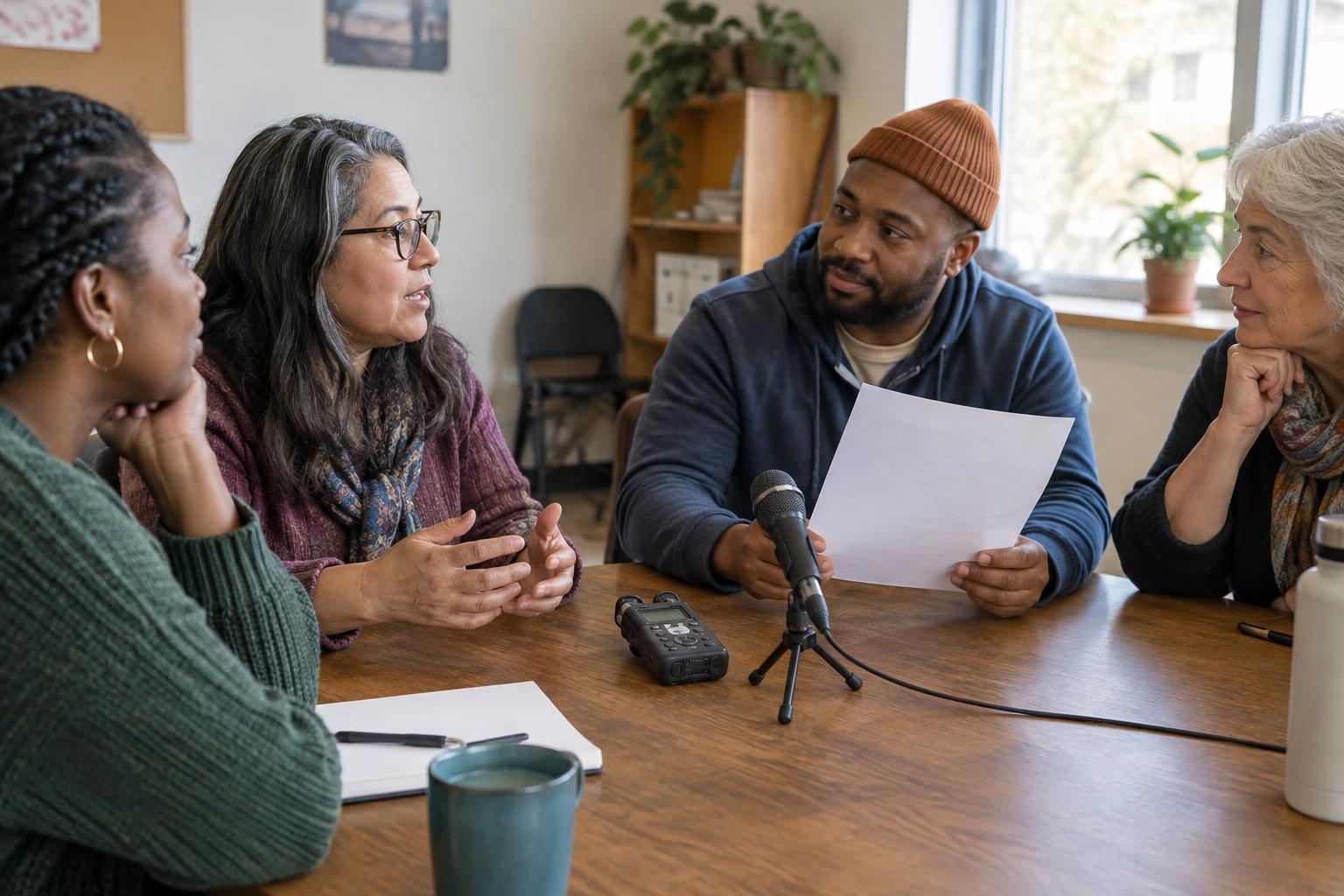
Plan for interpretation during meetings rather than relying on a bilingual attendee to volunteer on the spot. Interpreting takes attention and can make it hard for that person to contribute their own ideas. Share discussion topics ahead of time, pause often and let people finish their thoughts before moving on. If resources are limited, smaller conversations may work better than one fast-moving group meeting. Ask participants which approach feels useful instead of treating one format as suitable for everyone.
Record in ways that protect a speaker’s voice
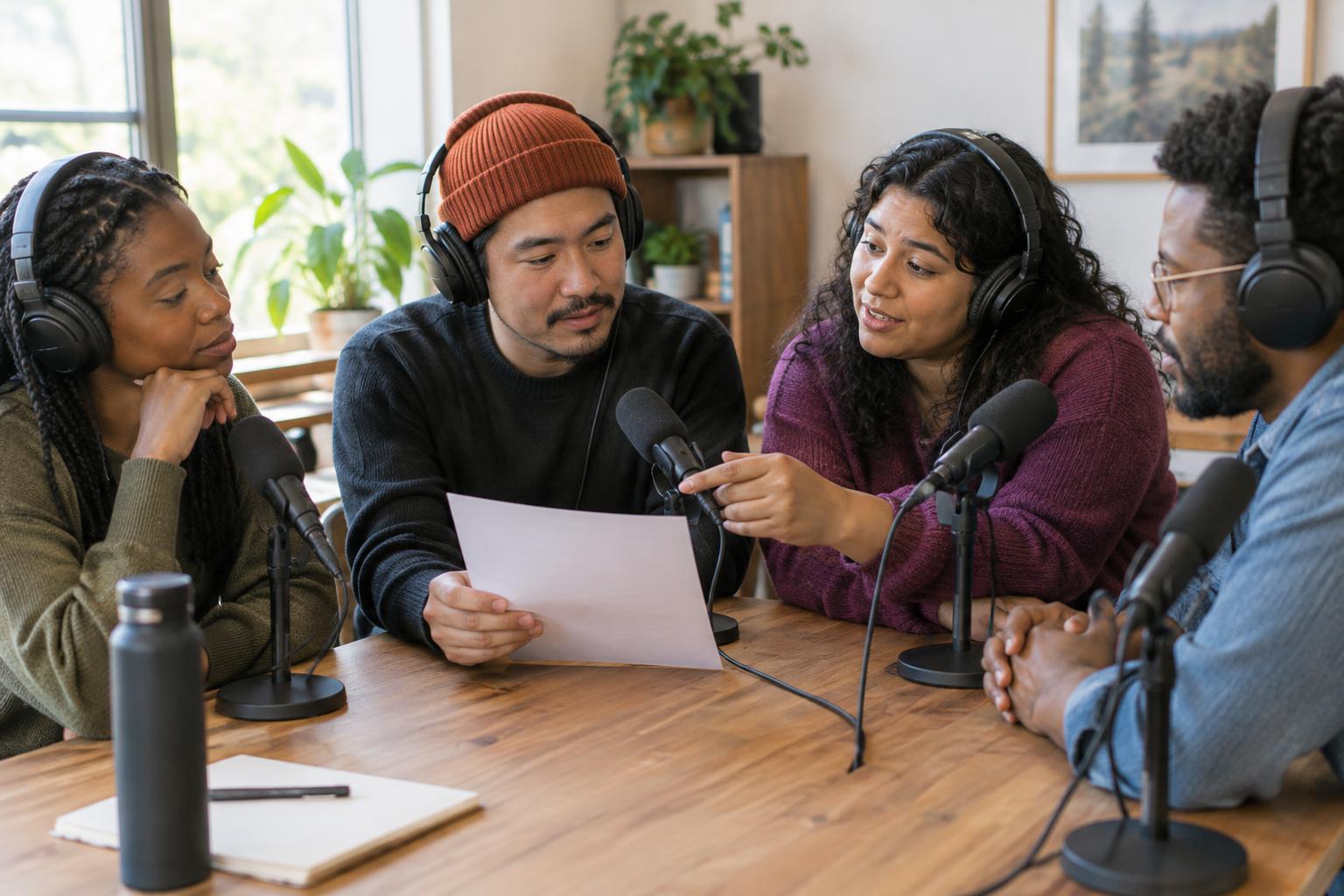
Invite people to speak in the language or mix of languages that lets them express themselves comfortably. Code-switching, accents and familiar local terms may carry meaning that a tidied-up script would lose. A recording plan can include prompts in multiple languages, an interviewer who understands the speaker or extra time to clarify a phrase afterward. Test the setup with a brief sample so that everyone can hear whether voices are clear and the space is comfortable.
Discuss recording permission before the microphone is on, and check again if the project changes direction. Explain whether you intend to use the original voice, a translated voiceover, subtitles or a transcript. A participant might agree to an interview but not want a sensitive passage shared, translated or attached to their name. Give them a clear way to raise concerns and avoid promising complete control over material once it has been publicly distributed.
Treat translation as an editorial choice
Translation is not a simple swap of words. Humor, tone, names and references may need context, while a literal rendering can make a speaker sound less precise than they were. Decide early what listeners need to follow the story. You might keep a speaker’s original voice prominent and add a brief narrated translation, or provide a translated transcript alongside the audio. Each choice affects pacing and whose voice the audience hears most.
Build time for a qualified language collaborator or a trusted reviewer to check important passages. If you shorten or paraphrase a statement, distinguish that from a direct translation. Let contributors review translations of their own words when practical, especially for names, personal stories and terms that do not have an easy equivalent. Credit translation and interpretation work with the same care you give to recording and editing, according to each collaborator’s preference.
Design the release for different ways of listening
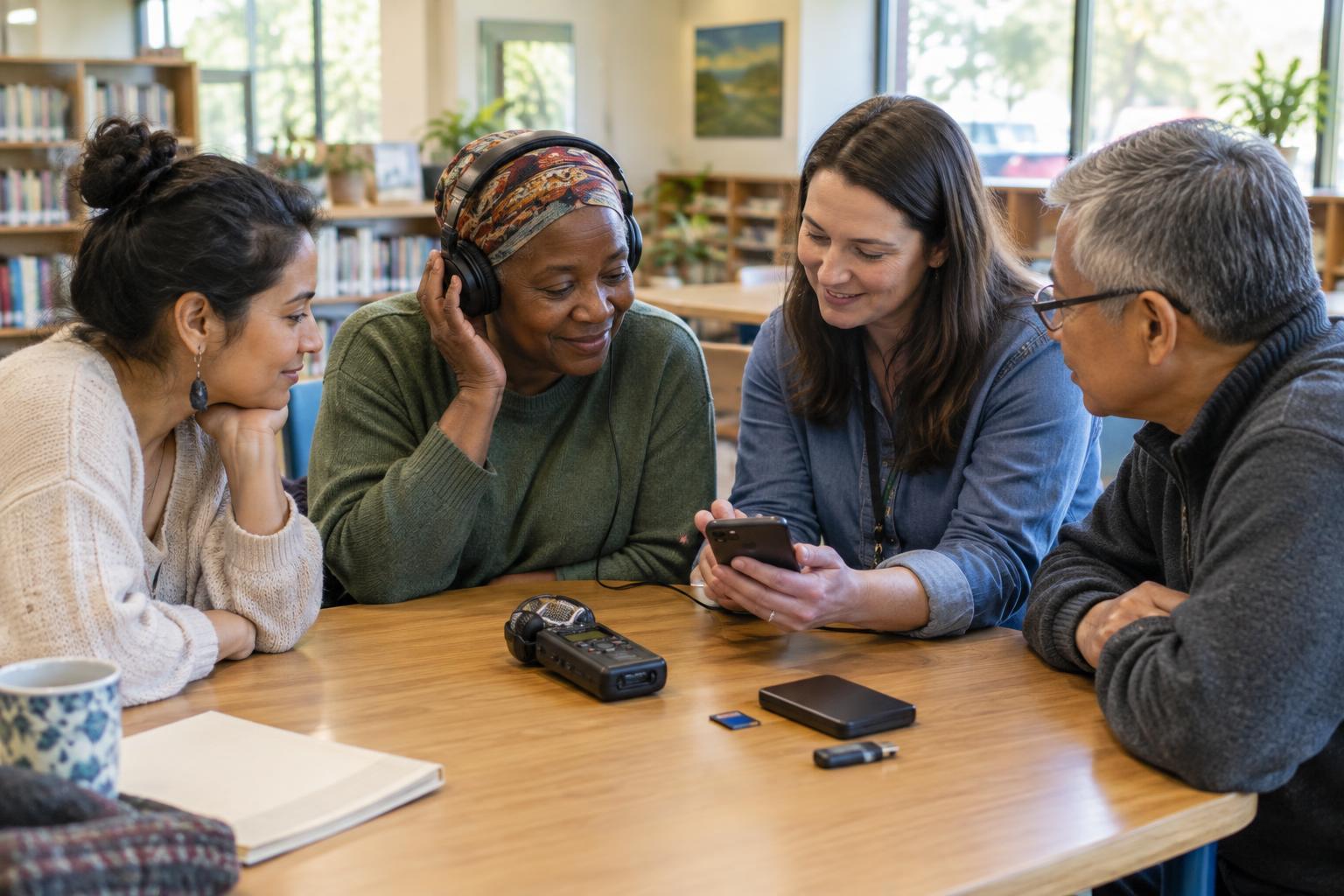
Before publishing, listen to a draft with people who have different levels of familiarity with the languages used. Ask where they lose the thread, where a pause would help and whether the context is sufficient without explaining away every cultural detail. A transcript can help people follow names and revisit a passage; clearly labeled translations can help them find the version they need. Check that transcript labels identify speakers consistently and that translations match the final edit.
Close the loop with contributors. Tell them when and how the piece will be shared, offer an accessible way to hear it and explain whom to contact about a correction. Afterward, ask what made participation easier or harder. Those answers can improve the next project’s invitation, schedule and editing process. Multilingual participation works best as an ongoing relationship, not a final layer added to an otherwise finished recording.