Listen for what makes a place distinct
A place has more than one sound. A café might contain cups touching saucers, a door opening, chairs moving and conversation. An audio story rarely needs all of them at once. Choose the sounds that help a listener understand where they are and what matters in the scene.
Before recording, pause and listen without speaking. Which sounds are constant, and which occur only now and then? A steady ventilation hum may describe the room’s texture, while a bell at the door suggests movement through it. Notice how sounds change when you move a few steps or turn a corner. Those differences can help you decide where the story’s action belongs.
Give each sound a storytelling job
Ambient sound is most effective when it does more than fill silence. It can orient the listener, reveal activity or mark a shift between scenes. Footsteps approaching a busy workshop, for example, might lead naturally into a conversation with someone working there. A quieter room tone afterward can signal that the story has moved into a more reflective moment.
Ask what a sound communicates before adding it. If a narrator already says, “We’re standing beside the kitchen sink,” running water may reinforce the setting, but it may not need a long introduction. If the location is unclear, a brief stretch of sound before the narration can give listeners a chance to form their own picture. Avoid using an attractive recording simply because it sounds good; a misplaced crowd or passing vehicle can imply activity that was not part of the scene.
Record a usable bed and a few details
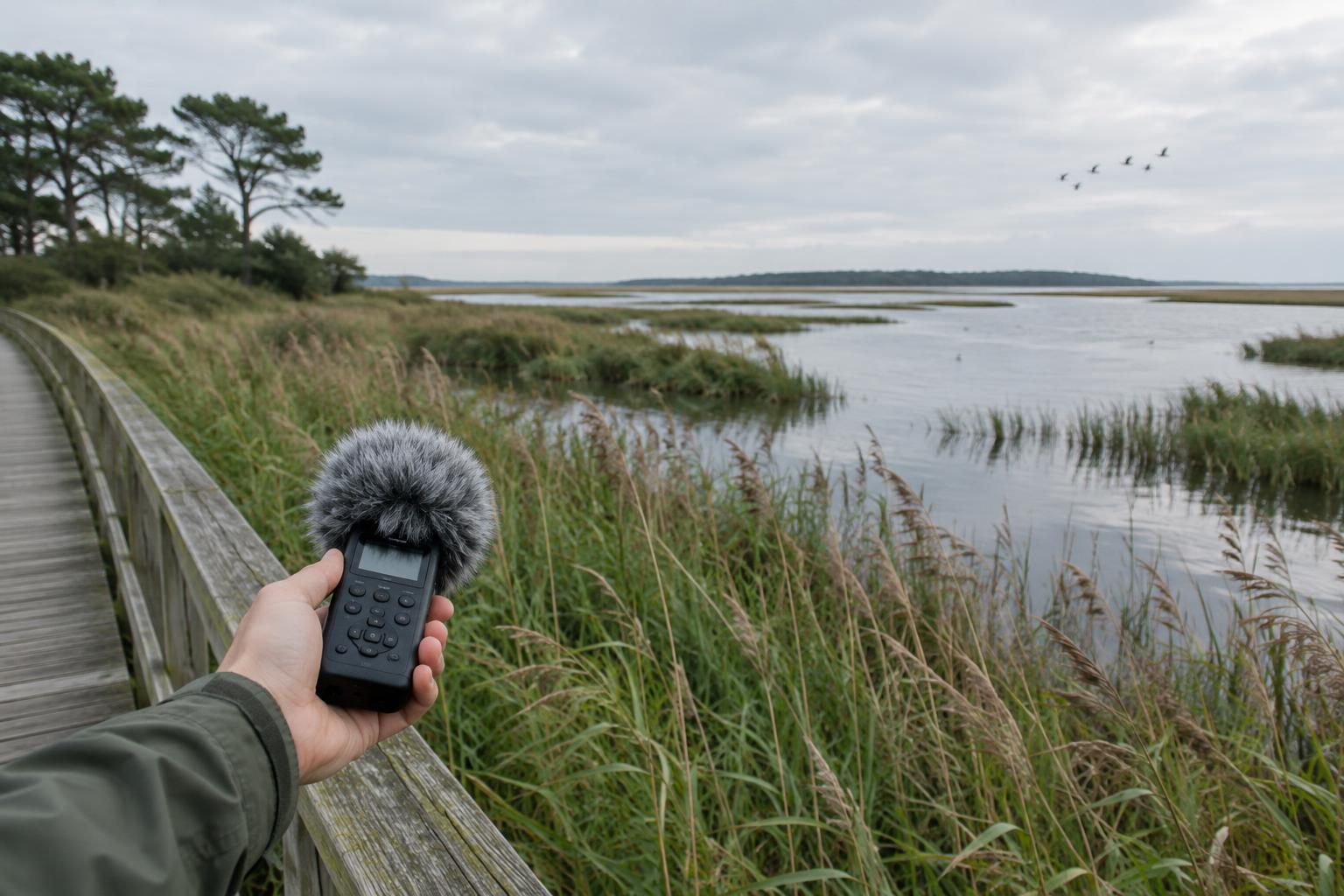
At each location, capture a stretch of uninterrupted background sound that could sit beneath speech. Hold the recorder still, keep your hands off its body when possible and let the scene continue long enough to provide choices in the edit. Record a second stretch if conditions change. A busy doorway and a quiet back room may need separate beds, even though they belong to the same location.
Then collect a few closer details: a latch turning, a tool being set down or shoes crossing a particular surface. Listen on headphones when practical so you can catch wind hitting the microphone, handling noise or a loud sound that masks everything else. If people are audible, consider whether their words or identities should be included. Seek permission when recording an identifiable conversation, and avoid treating a private exchange as anonymous background texture.
Build the scene without burying the voice
In the edit, begin with the story’s clearest material: the narration, interview or action the listener needs to follow. Add ambience around it rather than making the voice compete for space. You might open with a short moment of location sound, bring in the speaker and lower the background as they begin talking. Letting a distinctive sound return between lines can remind listeners of the place without keeping it prominent throughout.
Listen for abrupt changes. If the background disappears whenever an interview clip starts, the scene can feel patched together. A low, consistent bed may smooth a transition, but it should not disguise a meaningful change of location or time. Where two recordings genuinely differ, a brief pause or a line of narration may be clearer than forcing them to sound alike. Check the mix at a modest listening volume; if words are hard to understand, reduce or simplify the ambience.
Leave room for the listener
A useful soundscape gives listeners clues without explaining every one. The soft scrape of chairs and a burst of voices may be enough to suggest a gathering before someone names it. Once the scene is established, you can often use less background sound. Quiet is also a storytelling choice: it can make a voice feel close or allow an important idea to settle.
Before finishing, listen through without looking at your edit. Can you tell when and why the setting changes? Does each sound belong to the place and moment the story presents? Does it help you attend to the people at the center of the piece? If an ambient sound draws attention away from them, trim it, lower it or leave it out. Establishing place is not about proving how much you recorded; it is about giving listeners just enough to feel present.