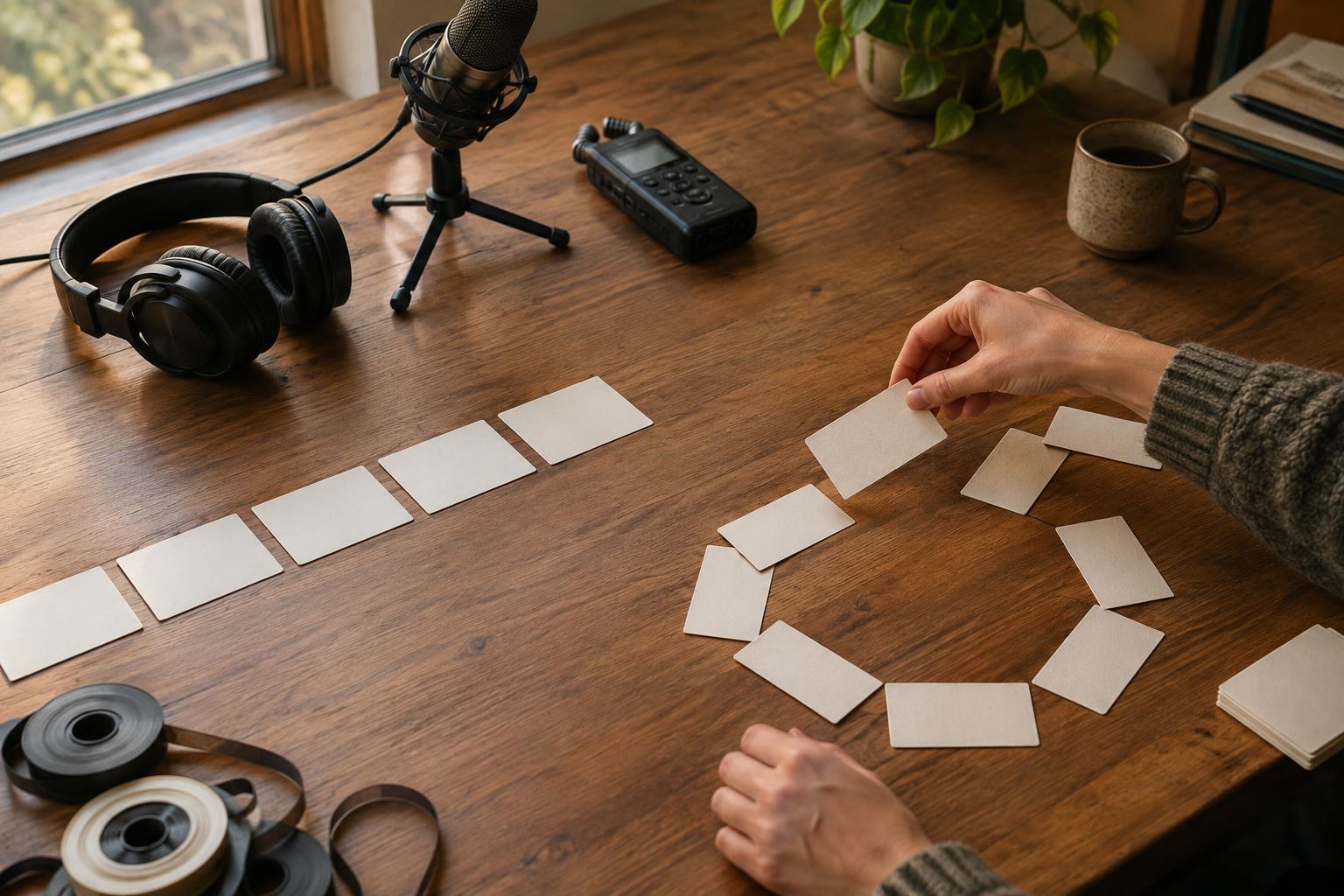
Silence is part of the story
Audio storytelling is often described in terms of voices, music, and sound effects. Yet a brief absence of sound can be just as expressive. A pause gives the listener room to imagine a place, consider a statement, or register that something has changed. It can also make the next sound more noticeable. Silence works best when it serves a clear purpose, not when it is added simply to make a piece feel dramatic.
It helps to think of silence as a change in the soundscape rather than a fixed effect. A room with quiet air and distant movement feels different from a completely muted track. Both may be useful, but they communicate different things. Before removing sound, ask what you want the listener to experience during the gap—and what will tell them the story is still moving.
Pause after an idea needs space
A pause can help after a revealing line, a difficult question, or a piece of information that changes how the listener understands a scene. If the speaker moves immediately to the next point, the moment may pass before it has landed. Leaving a little space lets the meaning emerge without adding an explanation. This is especially useful when a person’s own words already carry the weight of the moment.
Resist the urge to pause after every important sentence. Repeated gaps can make a story feel slow or tell listeners too insistently what they should find meaningful. Try reading the passage aloud and noticing where you naturally take a breath. Then listen to the edited sequence without looking at the script. If the pause helps you follow the thought, it is doing useful work; if you find yourself waiting for the story to restart, it may be too long.
Use absence to mark a transition
Silence can separate two places, times, or perspectives without a spoken announcement. For example, a busy street scene might end, hold briefly in quiet, and give way to a voice recorded indoors. The gap lets the first scene close before the next one begins. It can also set up contrast: a sudden stop in a familiar background sound may suggest that something in the scene has shifted.
Transitions still need enough context to be understood. If a cut to silence resembles a playback failure, the listener may reach for the volume control instead of leaning into the story. A clear preceding line, a recognizable change of ambience, or a decisive sound after the gap can help establish intent. When testing the edit, ask someone who has not seen your plan what they think happened at the transition.
Make room for people, not just effects
In interviews, pauses may reveal thought, hesitation, or the effort of finding the right words. Removing every breath and gap can make a conversation sound unnaturally hurried. Keeping a meaningful pause allows a speaker’s pace to remain part of their expression. At the same time, a long gap does not automatically add depth. Listen for what it tells the audience about the person or moment.
Handle vulnerable material with particular care. A pause after someone shares a personal experience can offer space without covering their words in music. But editing a hesitation into a different position, or stretching it to imply an emotion the speaker did not convey, can distort the exchange. Aim to preserve the sense of what happened while shaping the conversation so listeners can follow it.
Edit silence for the way people listen
The difference between a deliberate pause and an apparent mistake can be small. On headphones in a quiet room, a few seconds of near-silence may feel rich with detail. Through a phone speaker on a noisy journey, the same passage might seem to vanish. Check your draft at a comfortable volume on more than one kind of speaker. Notice whether the pause remains legible without asking listeners to strain.
When you edit, compare the moment with and without the gap. You can also try quiet room tone instead of complete digital silence, especially if the surrounding recording has a noticeable background texture. Avoid making a firm rule about pause length; its effect depends on the voice, pacing, and sounds around it. Keep the version that helps the listener understand or feel the moment more clearly. The strongest silence is rarely the longest one—it is the one that earns its place.