Start with a question, not a pile of tape
A short audio feature can follow a person, a place, an event or an idea. Whatever the subject, it needs a reason for listeners to stay with it. Before arranging clips, write down the question the piece will explore. “How does a neighborhood choir prepare for its first performance?” gives you a path to follow. “This choir is interesting” gives you a subject, but not yet a story.
The question does not have to promise a dramatic surprise. It might concern a choice, a change in understanding or a small obstacle. The important thing is that the opening makes listeners curious and the ending responds to that curiosity. Keep the scope narrow enough for the available runtime. A short feature about one rehearsal and what it reveals will usually have more room to breathe than one trying to explain the entire history of a choir.
Find the change that holds the piece together
A narrative arc is the movement from a starting situation to a different one. In a modest story, that change may be internal: a speaker becomes more confident, reconsiders an assumption or names something they could not explain at first. It may also be practical: a group solves a problem, attempts a task or discovers that its original plan will not work.
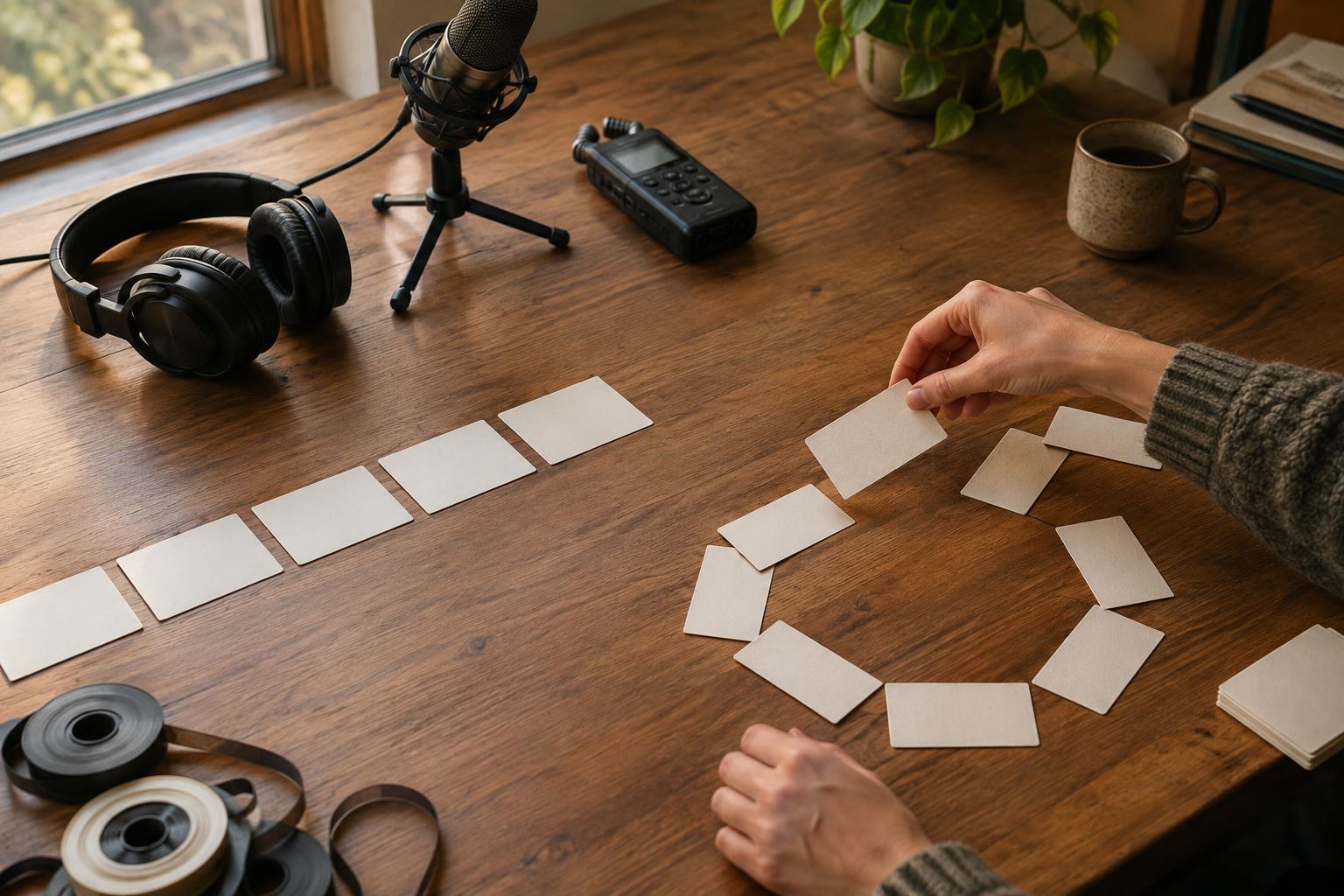
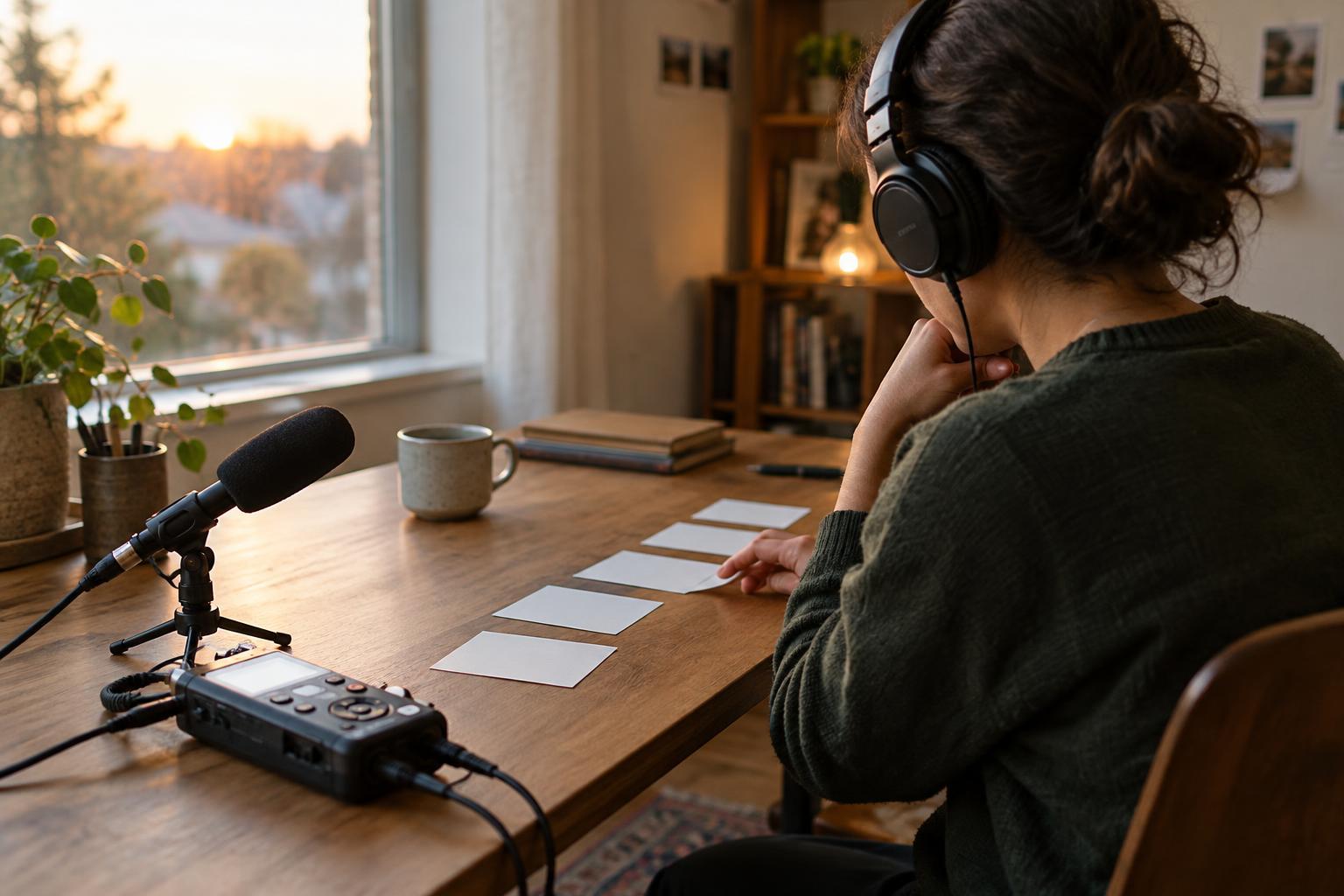
Sketch the arc in three sentences before editing: At the start, what is true? What complicates it? What is true by the end? If those sentences describe only topics, such as “first we discuss rehearsal, then equipment, then the performance,” look for a stronger connection. Perhaps the equipment problem changes how the group rehearses, and the performance reveals whether that adjustment mattered.
Do not force a transformation the recordings cannot support. If nothing is resolved, the feature can still end with a more precise understanding of the question. An honest, limited answer is more satisfying than a sweeping conclusion added for effect.
Build with scenes and clear turns
An outline helps you decide what listeners should hear at each step. A useful sequence is an opening moment, brief orientation, a developing challenge, a turn and an ending. The opening might place us inside a rehearsal just as someone stops the group to fix a missed entrance. Orientation then supplies only the context needed to understand who is there and what they are trying to do.
A scene earns its place when it advances the question, reveals character or changes what the listener expects. An interview clip can do this, but so can an exchange between people at work. Look for moments in which someone makes a decision, responds to another person or notices a detail. Between scenes, use short narration or a carefully chosen clip to make the connection clear. Listeners cannot glance back up the page, so identify speakers when needed and signal shifts in time or location.
When selecting material, ask what each passage adds that the previous one did not. Two clips making the same point may slow the feature even if both sound compelling. Save room for a pause after an important moment; constant explanation can prevent listeners from drawing their own conclusions.
Let sound carry information
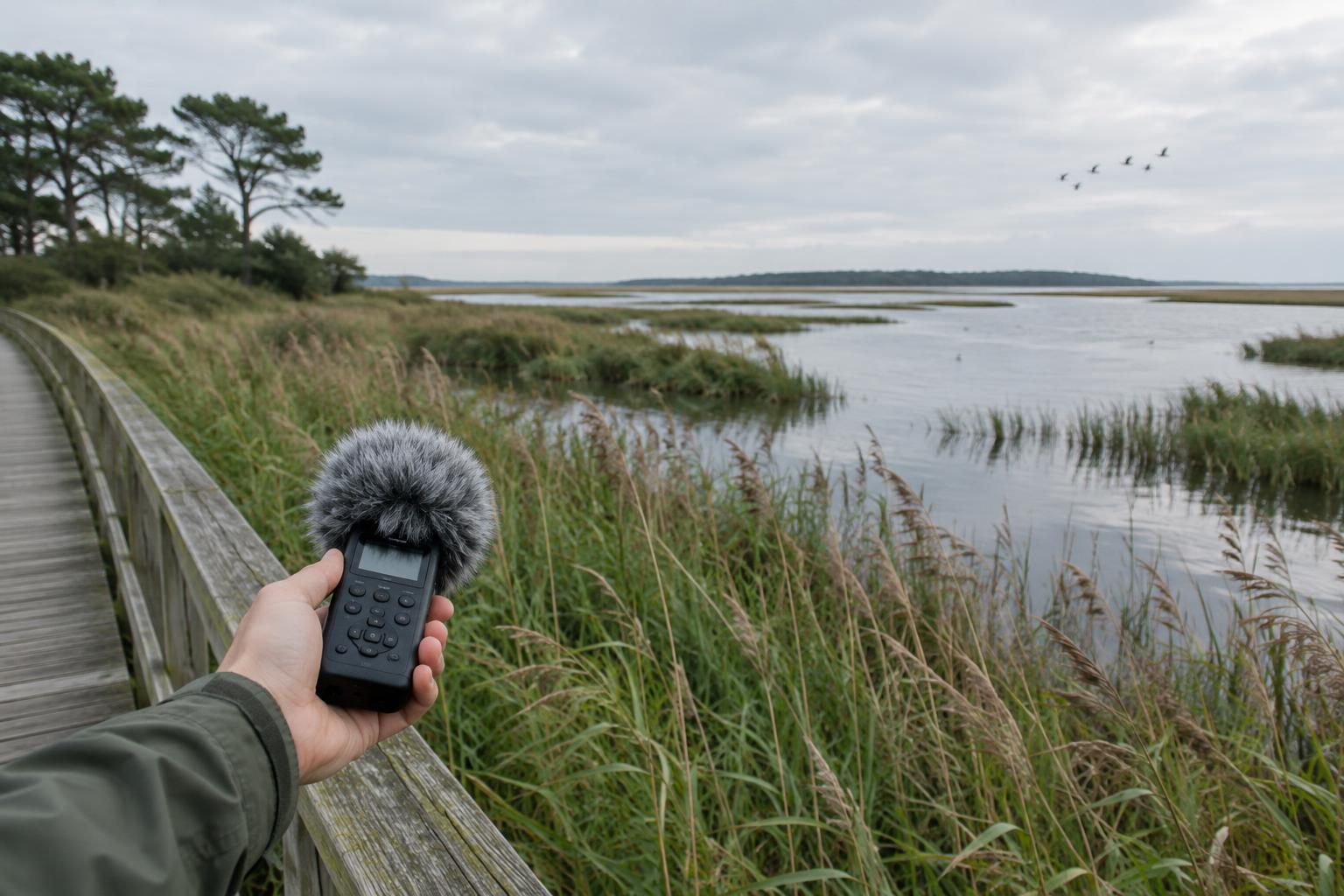
Audio can establish setting and reveal action without a narrator describing every movement. Footsteps entering a room, chairs being arranged or a voice calling for another attempt can help listeners follow a scene. Choose sounds because they clarify what is happening or deepen the experience, not simply because they create atmosphere.
Introduce an unfamiliar sound before relying on it for meaning. A listener may not know whether a scrape comes from moving furniture or adjusting a microphone. A few words of context can make the recording legible while leaving space for the sound itself. Keep speech understandable, and listen on ordinary speakers or headphones to check whether background audio competes with key dialogue.
Be careful with music and editing. Music can support a transition, but it should not imply a mood the participants did not express. Likewise, tightening an answer should not change its meaning or make separate moments seem like one continuous exchange. The arrangement should help listeners understand what happened, not manufacture a turning point.
End where the opening leads
Return to the question that started the feature. You might revisit the opening location, hear the result of a choice or let a participant reflect on what changed. The ending need not repeat the opening sound exactly; it should make the distance traveled audible or understandable.
Before finishing, play the piece without looking at your outline. Note where you lose track of a speaker, wonder why a scene appears or expect an answer that never comes. Then try summarizing the feature in one sentence. If the summary describes a journey rather than a list of subjects, the arc is likely doing its job. A short feature feels complete when every scene has helped listeners arrive at its final moment.