Give each segment a job
A repeatable segment is a recognizable part of an episode with a consistent purpose. It might be a brief opening question, a close listen to one sound, a listener-submitted story or a practical takeaway. The point is not to fill time. A good segment helps the audience know where they are and gives the host a useful way to approach new material.
Start with the promise of the show. If your podcast helps people discover music, a recurring segment could ask what drew a guest to a particular track. If it explores how people make things, a short account of one decision that did not work may be more revealing than a general interview question. Write one sentence describing what the listener should gain from each proposed segment. If two segments offer the same thing, combine them or give them more distinct roles.
Build a template with room to move
For each segment, define its entry, central action and exit. An entry tells the listener what is coming. The central action might be a question, a clip followed by discussion or a story told in stages. The exit connects what happened to the next part of the episode. This small template can make planning easier without requiring the host or guest to follow a script word for word.
Keep the format narrow enough to be recognizable but open enough to reward different answers. “Name one sound you noticed this week and tell us why it stayed with you” gives a guest direction while leaving space for surprise. A segment that demands a perfect anecdote, a funny answer and a lesson every time may feel strained. Note what is essential and what can change: the question might stay constant while the length, speaker or supporting audio varies.
Plan for the episode you actually have
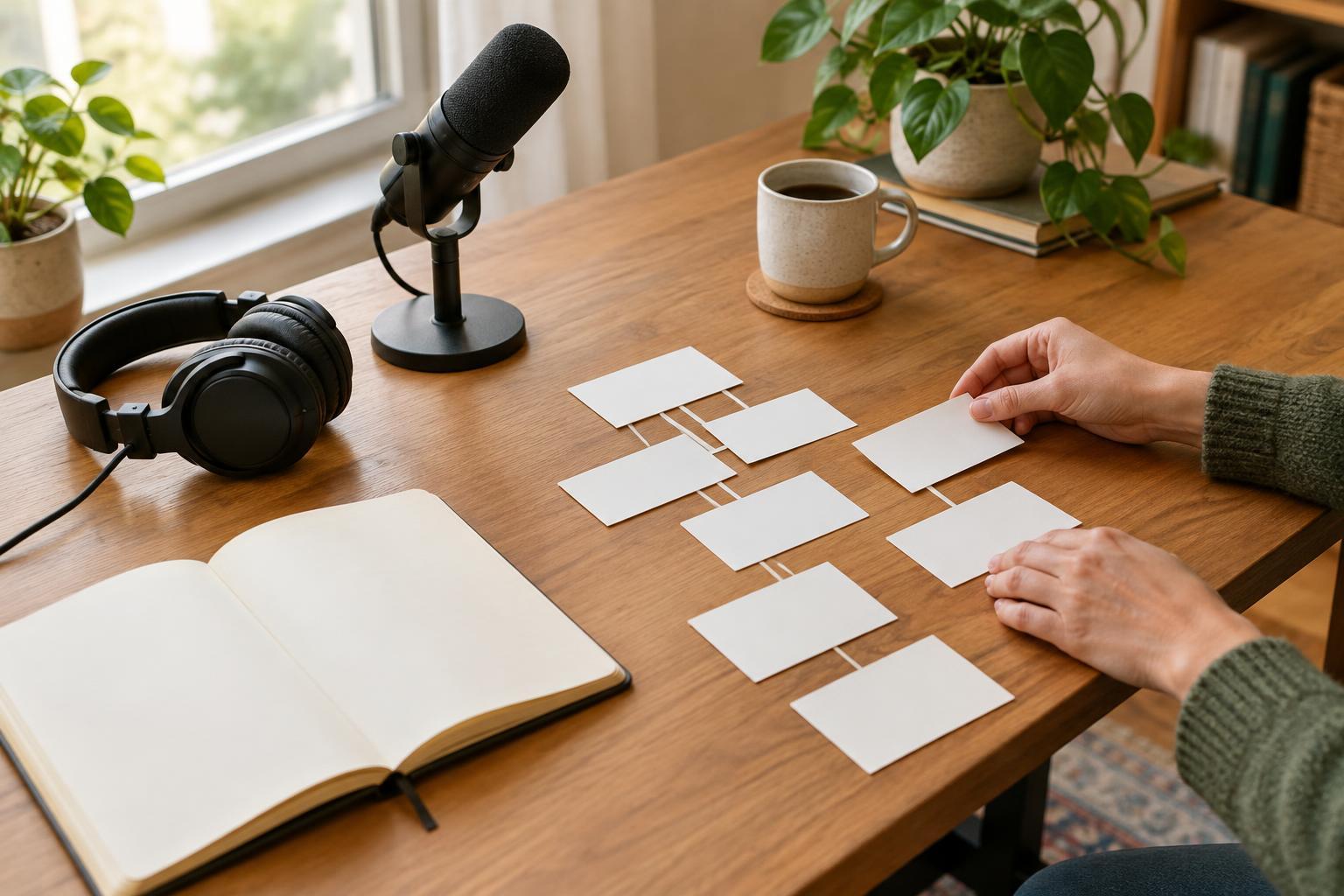
Sketch a sample episode before committing to a set of recurring features. Place each segment alongside the main interview, story or discussion, then ask whether it moves the episode forward. An opening feature should establish interest quickly; a middle feature can introduce a new angle; a closing feature should give the conversation a satisfying place to land. Repetition is most useful when it supports the episode’s arc rather than interrupting it.
Set an approximate time range for each segment, not a rigid deadline. A thoughtful answer may need another minute, while a thin one may work better as a brief exchange. Decide in advance which segments are core and which are optional. That choice gives you flexibility when a guest takes the conversation somewhere valuable, a clip needs more context or the main story is already complete. You do not have to include every planned feature in every release.
Make recurring audio easy to produce
A segment should work for the people making the show as well as for its listeners. Write a short planning note with its purpose, a sample introduction, the information needed beforehand and any editing requirements. If the feature relies on a guest bringing an example, explain the request before recording and prepare an alternative question in case they arrive without one. If it relies on submitted audio, decide what you can do when a usable submission is not available.
Think about sound as part of the design, too. A consistent pause, spoken cue or restrained piece of music can mark a transition, but the host should still be able to introduce the segment clearly without it. Keep cues at a level that does not compete with speech, and listen to transitions in the full episode rather than judging them in isolation. The aim is familiarity, not a collection of effects that calls attention away from the content.
Review the format without losing its identity
After recording a few episodes, listen for where a segment creates energy and where it slows things down. Does it invite a specific response, or does the host have to explain it at length each time? Does its ending lead naturally onward? Notes from recording and editing can reveal practical problems, such as a question that guests regularly misunderstand or an audio cue that leaves too little space for speech.
Change one element at a time when you can. You might shorten the introduction, replace a broad question with a concrete one or move a feature later in the episode. Keep the underlying purpose visible so the segment remains familiar even as its execution improves. The strongest repeatable segments give a show a dependable shape while leaving listeners curious about what this particular episode will bring.