Start with the shape of your idea
A limited series has a planned endpoint. It might follow one story across several episodes, answer a set of related questions or explore a subject from a handful of angles. An ongoing podcast has a premise that can generate new episodes without a fixed conclusion. Neither format is inherently more ambitious: a carefully edited four-part series can require more work than a simple weekly conversation.
Ask what a listener is expecting when they press play. If each episode builds toward an answer, a limited series may provide the clearest promise. If someone can enter at almost any episode and understand what the show is for, an ongoing format may be a better fit. This distinction matters more than the episode count. An interview show can be a limited series if its guests all contribute to one defined inquiry; a narrative show can continue if each season takes on a new, self-contained subject.
When a limited series makes sense
Choose a limited series when the material has boundaries you can describe before recording. You might examine how a local music space developed, document the making of one album or guide listeners through the steps of producing a first audio story. A defined scope helps you decide what belongs in the show and what to leave out. It also lets you plan an ending rather than continuing because you promised another episode.
The main planning challenge is knowing enough about the subject to outline a satisfying arc while leaving room for discoveries during interviews and editing. Sketch the question each episode will address and why a listener would move to the next one. Check whether the final episode can offer a meaningful conclusion, even if it cannot settle every question. A series does not need a dramatic twist; a clear progression of ideas can be enough.
A limited run can also suit a team with a fixed amount of time. You can estimate the research, recording and editing needed for the whole project before announcing it. The caution is that individual episodes may depend on material you have not yet secured. If one essential interview falls through, you may need to reshape the series rather than simply swap in a new topic.
When an ongoing show makes sense
An ongoing show works best when you have a repeatable editorial question and a realistic way to answer it again and again. “What can this song teach us about its scene?” is a more durable engine than “music we like.” A dependable structure gives listeners a reason to return while still leaving space for varied guests, sounds and viewpoints.
Before promising a release rhythm, list at least ten plausible episodes. If the list depends on the same few guests or repeats the same conversation, refine the premise. Then make a sample episode to see how much work the format takes in practice. Include the tasks that are easy to overlook: arranging interviews, reviewing recordings, writing introductions, checking permissions for audio you want to use and preparing episode descriptions.
Ongoing does not have to mean weekly or indefinite. You can publish in seasons, pause between batches and reassess the show’s direction. What matters is making expectations clear. A schedule you can sustain is more useful to listeners than a frequent schedule that leaves you rushing the reporting or editing.
Compare the work behind each format
For either choice, separate the work into preparation, production and release. A limited series often requires more preparation up front because episodes must fit together. You may need to map the full sequence, track recurring voices and avoid explaining the same background in every installment. An ongoing show may allow you to develop a workflow gradually, but it asks you to keep finding worthwhile subjects after the launch excitement fades.
Consider your collaborators, too. If one person handles booking, recording and editing, a complex format can quickly become difficult to maintain. A simpler structure is not a compromise if it helps you make thoughtful episodes consistently. Build a buffer where possible, and decide what can change when a guest cancels or an edit takes longer than expected.
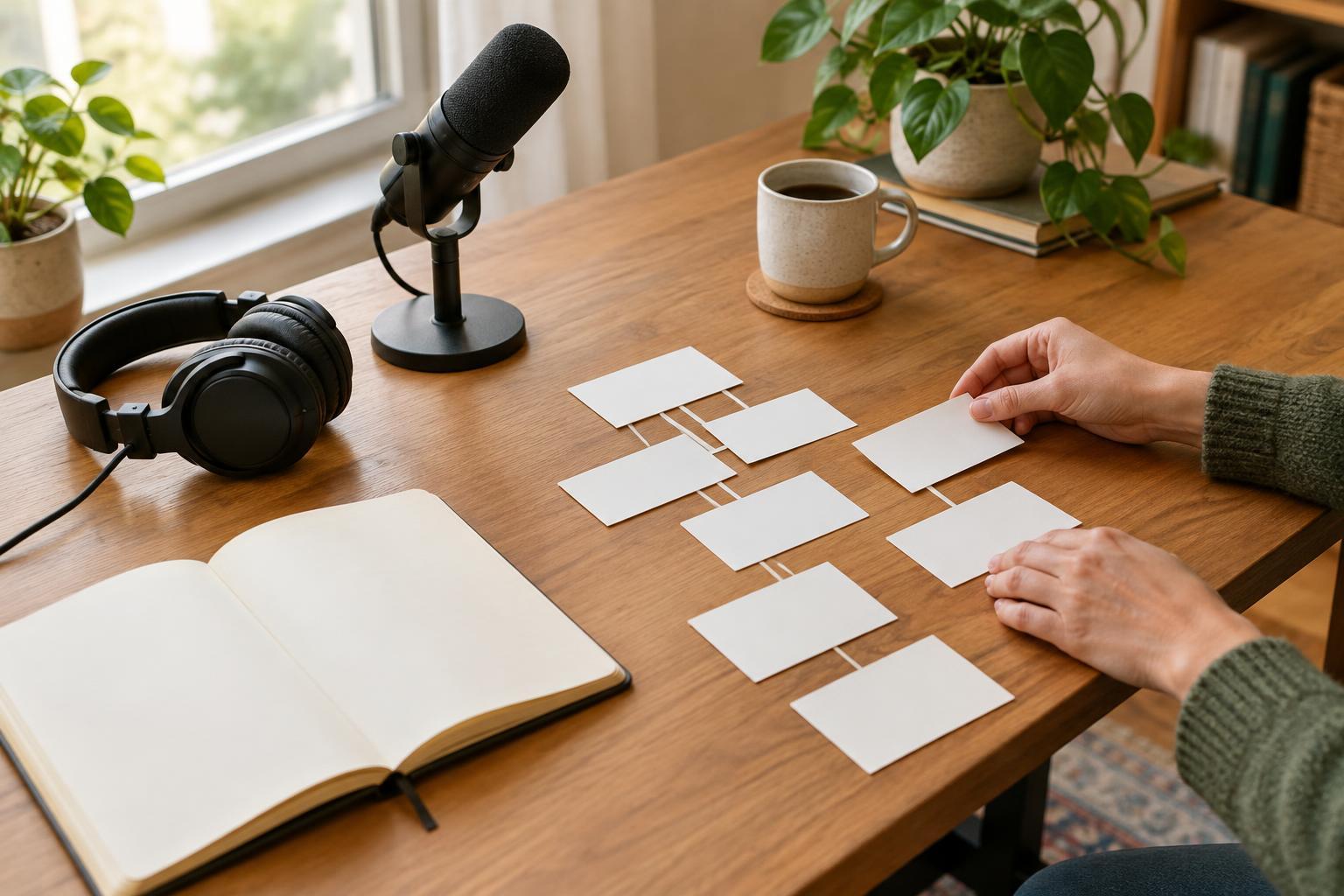
You can also test both possibilities without publishing either one. Outline a short series from beginning to end, then outline a season of repeatable standalone episodes. Which plan produces sharper questions? Which can you complete with the access, equipment and time you actually have? Those answers are more useful than choosing a format because it sounds impressive.
Make a promise you can keep
Write a one-sentence promise for the listener: what the show explores, how it approaches that subject and whether it has an endpoint. For a limited series, add the question the final episode should help answer. For an ongoing show, describe the recurring lens that will make future episodes recognizable. If you cannot explain the promise plainly, narrow the idea before recording more material.
Your first choice does not have to define every project that follows. A limited series can teach you which subjects deserve further exploration; an ongoing show can occasionally make room for a themed run. Start with the format that serves this idea and your present capacity. A clear, finished listening experience is a stronger foundation than an open-ended plan you cannot comfortably sustain.