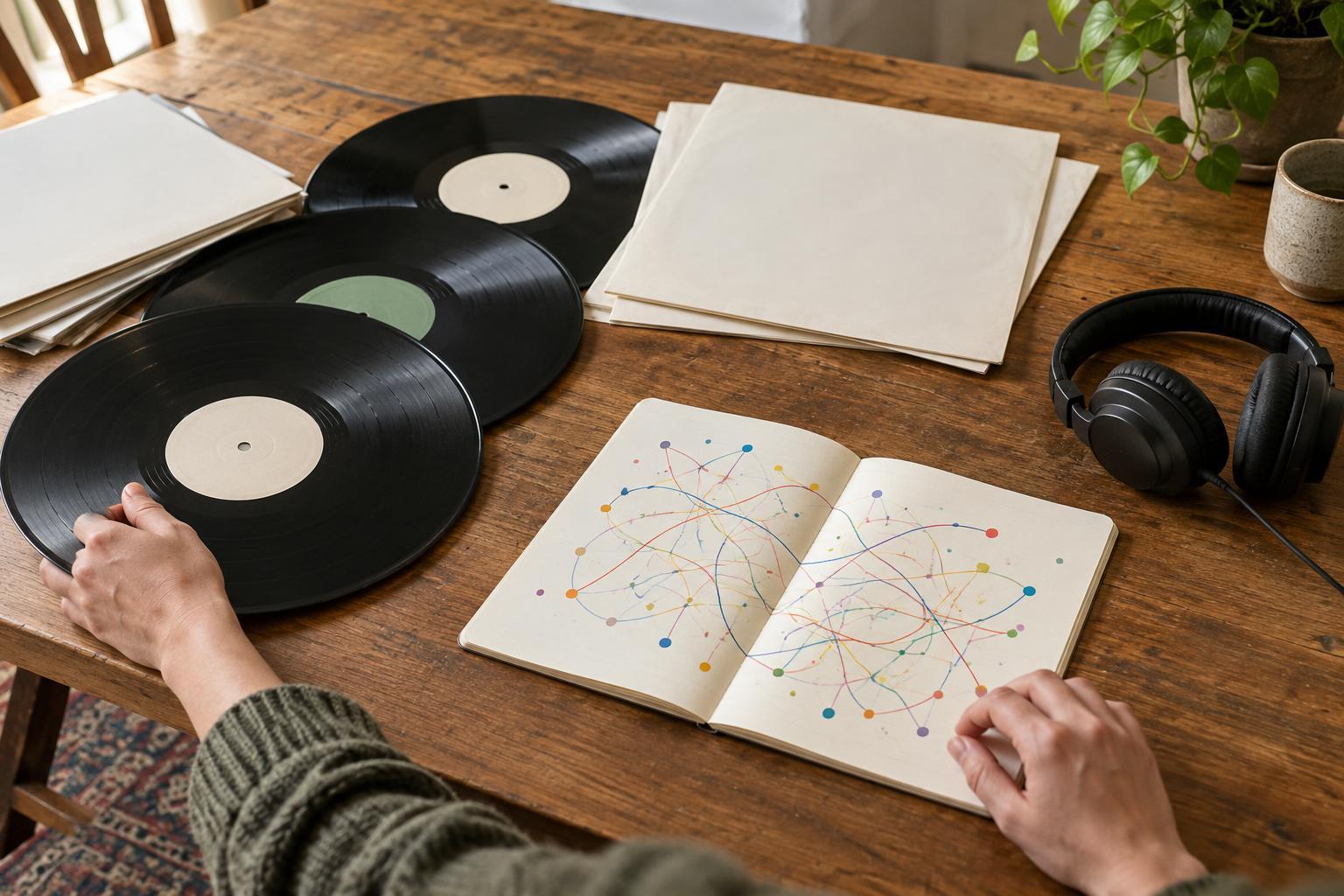
Start with a small set of favorites
Music discovery can feel overwhelming when every playlist offers another direction to go. Instead of beginning with everything you have not heard, begin with five to ten songs you already return to. Choose tracks you enjoy for different reasons: one you play while working, one you love for its lyrics, and one that makes you turn up the volume. Familiar songs give you a manageable starting point.
Write down the song and artist names, then add a sentence about why each track stays with you. Be specific if you can, but do not worry about using technical language. “The drums leave room for the voice” is more useful than “good production.” “The chorus feels like a release” tells you more than “catchy.” These notes become clues you can follow later.
Listen for qualities, not just genres
A genre label can point you toward a broad shelf of music, but it may not explain what you love about a particular song. Two tracks in the same genre can feel worlds apart, while songs from different traditions may share the quality that catches your ear. As you revisit your favorites, listen for pace, energy, vocal delivery, instruments, rhythm, texture, and mood. Ask whether you prefer a crowded arrangement or space between sounds, a steady pulse or a rhythm that shifts.
Notice what happens over the course of each song, too. Perhaps you like quiet openings that build, melodies that repeat with small changes, or performances that sound intimate rather than polished. Lyrics may matter most to you, or you may be drawn to the sound of a voice even when you do not understand every word. There is no need to rank these preferences. The aim is to give yourself more ways to describe them.
Look across your notes for two or three recurring qualities. You might find that your favorites share warm-sounding instruments, unhurried tempos, and strong storytelling. That combination is a more useful discovery prompt than a single genre name.
Turn your notes into a discovery map
Think of each favorite song as a starting point with several possible paths. One path follows the artist: try a different album or an earlier release. Another follows the people involved, such as a featured performer, producer, or songwriter when that information is available. A third follows a sound: look for more music with a similar instrument, vocal style, or rhythmic feel. Each path tests a different idea about what you enjoy.
Take small steps rather than collecting dozens of recommendations at once. If you love a song’s bass line, try one new track because its bass seems prominent. If that works, follow the thread; if not, note what was missing. Maybe the bass mattered less than the way it interacted with the drums. A discovery map is not a fixed portrait of your taste. It is a set of guesses you can improve by listening.
Leave room for a surprising path as well. A musician you like may mention an influence, cover an older song, or collaborate with someone whose work sounds quite different. Following those connections can lead you beyond the obvious “similar artists” route without making the search feel random.
Keep a listening trail you can actually use
Save promising finds somewhere simple: a playlist, a notebook, or a note on your phone. For each track, record what led you there and one thing you noticed. You might write, “Found through the drummer; love the loose groove, but want a clearer vocal.” This small amount of context helps you remember why a song caught your attention and where to go next.
Give unfamiliar music a fair chance without making listening feel like homework. Try a track in more than one setting if you are curious but unsure; a quiet song may land differently when you can give it your full attention. You can also decide that something is interesting without wanting to hear it again. That distinction sharpens your map just as much as an instant favorite does.
Let your map change with you
Your first map is a starting point, not a boundary. Once you can name what you like, try changing one element at a time. Keep the intimate vocals but explore a different rhythm. Keep the energetic drums but try a gentler melody. This approach makes unfamiliar music approachable while still leaving space for unexpected favorites.
Every so often, return to your original list. You may notice a preference you missed or find that a new song has changed what you listen for. Music discovery is less about proving you have consistent taste than about paying attention. A useful map helps you choose where to listen next, and it stays open enough to be redrawn.