Start with the moment, not the best line
An interview can contain the pieces of a scene even when it was recorded at a kitchen table or over a call. A person may describe entering a room, making a decision, or noticing that something had changed. Your job is to help listeners follow that experience, not to make the recording sound as though it took place somewhere it did not.
Before editing, listen to the full answer and the questions around it. Note what the speaker knows firsthand, what they learned later, and where their account is uncertain. Then write a one-sentence description of the scene you hope to build: who is present, what changes, and why the listener needs this moment. If the tape cannot support that description, narrow the scene or gather more material. A striking sentence is not enough if removing its context changes what it means.
Give the listener a clear path through time
Scenes work best when listeners can tell whether they are hearing an event unfold, a person recalling it, or a narrator explaining it afterward. Use a brief introduction to establish the place and circumstances before playing a memory that depends on them. If the speaker jumps between earlier and later events, you can arrange excerpts for clarity, but make the timeline apparent in narration. Do not join separate moments so tightly that they seem like one continuous action.
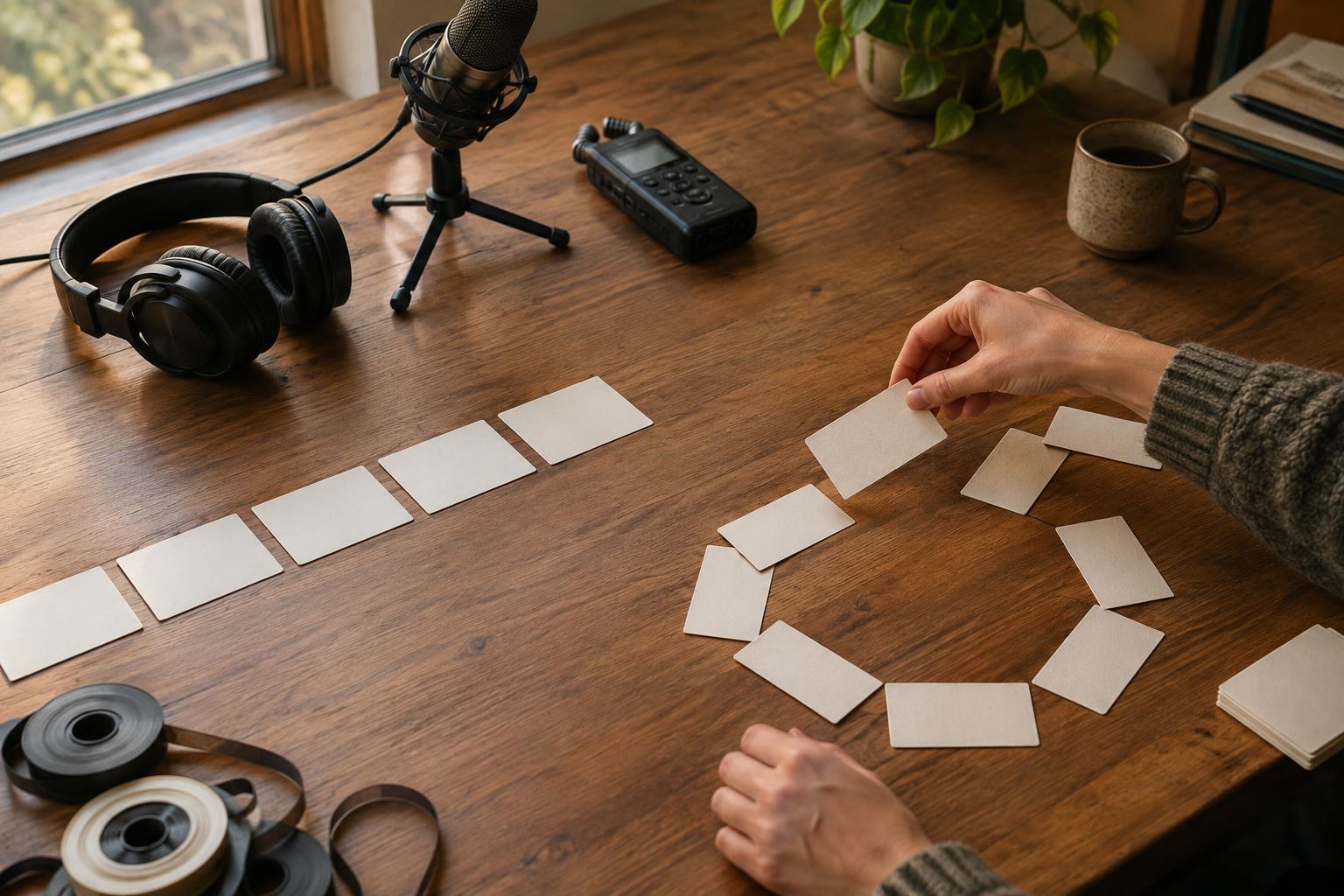
A useful planning tool is a simple tape map. For each candidate clip, record the question that prompted it, the event it describes, any qualifications, and what comes immediately before and after it in the original recording. Put clips in a proposed order and listen for gaps. A listener should not have to infer a cause that the speaker never established. Sometimes one plain sentence of narration does more honest work than another dramatic cut.
Edit for pace without editing away intent
Removing a long pause or a repeated phrase can make an answer easier to hear. Removing a hesitation that signals doubt can make it sound more certain. The distinction depends on meaning, not just rhythm. Keep words such as “maybe” or “as far as I remember” when they limit a claim. Be especially careful with a sentence that begins as a confident statement and ends with a correction: the correction belongs to the thought.
Listen across every edit, including a few seconds on either side. Check pronouns, tense, and tone as well as the literal words. A reply taken from one question can sound like an answer to another after rearrangement. If a cut creates that impression, restore context or use narration to explain the transition. Keep the original recording available so you can compare the finished sequence with what the person actually said.
Use sound to orient, not to invent
Room tone can smooth an edit, and a recorded environment can help establish a place. But sound also makes claims. Footsteps, a closing door, or a crowd placed beneath an interview may suggest that listeners are hearing the event itself. If those sounds were recorded at another time, consider whether they clarify the account or falsely imply access to the moment being described. When their origin matters, identify it.
Music can guide attention, but it can also turn uncertainty into suspense or ordinary frustration into triumph. Try the scene without music first. If you add a score, listen again to the speaker’s words and ask whether the emotional cue matches the account rather than pushing the audience toward a stronger conclusion. Silence, a natural breath, or a clean transition may leave more room for the listener to understand the speaker.
Review the scene as a claim about reality
Once the scene is assembled, write down what a listener is likely to believe happened. Compare that impression with the full interview and any other material you are using. Check whether the sequence fairly represents the speaker’s role, the order of events, and the limits of their knowledge. This review is different from asking whether the scene is engaging: an engaging sequence can still be misleading.
Read the narration aloud beside the clips. Give necessary context in direct language, and distinguish what someone remembers from what you can independently establish. Where a consequential detail remains unclear, say so or leave it out rather than filling the gap with atmosphere. The strongest scenes do not hide the seams of understanding. They let listeners feel close to a moment while knowing how the story was told.