Give narration a job the tape cannot do
Recorded voices and sounds can convey hesitation, excitement, conflict, and place in ways a narrator rarely needs to describe. If an interviewee says the rehearsal room was crowded, a line announcing that the room was crowded adds little. Narration earns its place when it supplies something the recording cannot: when the scene happened, why a decision mattered, how two moments connect, or what a listener needs to know before the next voice arrives.
Before writing a line, ask what question a listener might have at that exact point. Who is speaking? What has changed since the previous scene? Why are we hearing this detail now? If the tape already answers the question clearly, consider cutting the line. If it does not, write the shortest bridge that lets the recording make sense. The goal is not to narrate less at any cost; it is to make each sentence useful.
Build a map before you write transitions
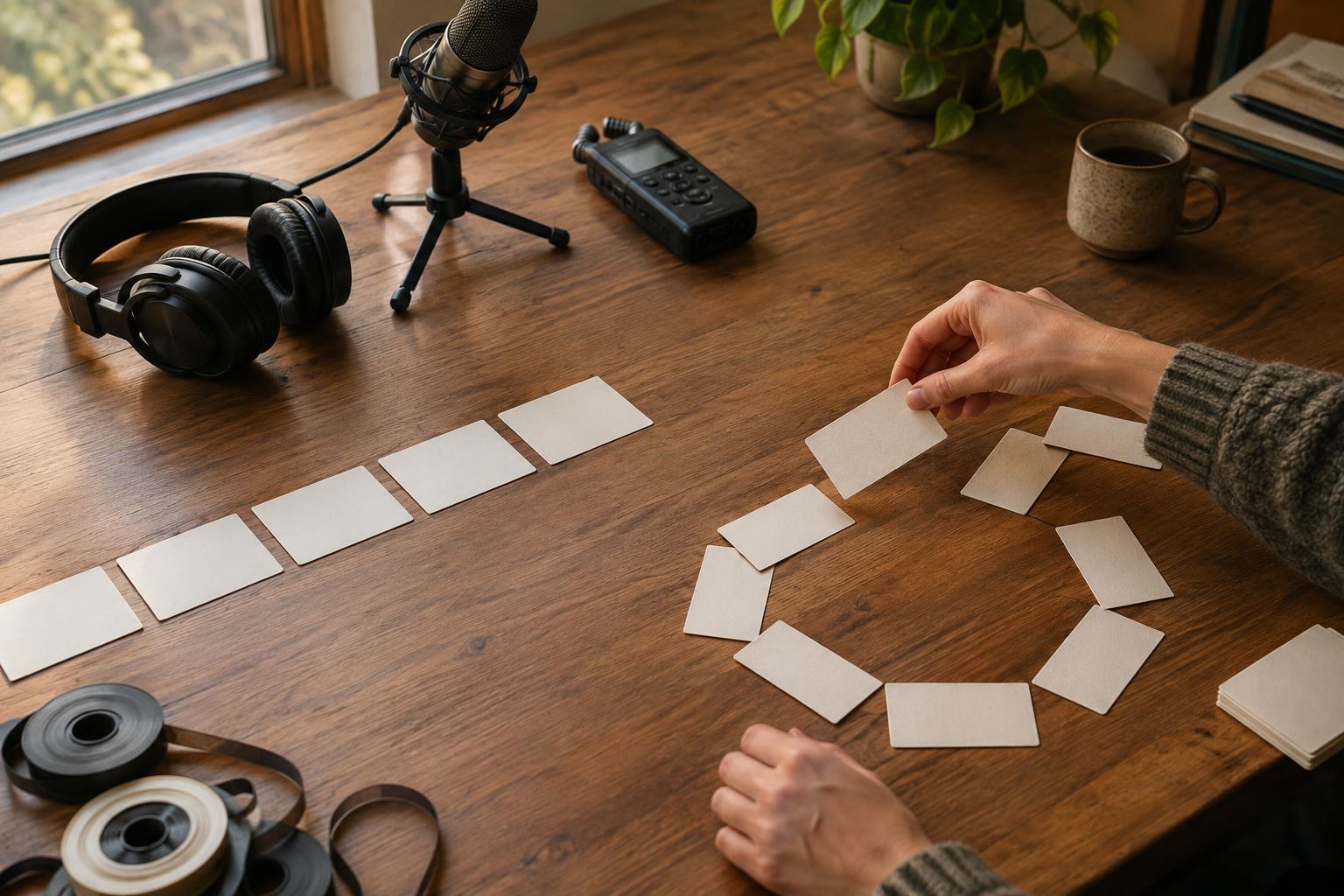
Start by placing your strongest clips and scenes in a rough order. Beside each one, note what it establishes and what remains unclear. An interview clip might show a musician’s frustration with a difficult performance but leave out the practical reason the performance mattered. That gap may call for a sentence of background before the clip. Another clip may explain itself perfectly once listeners know the speaker’s name.
This map helps separate missing information from repeated information. It also reveals when a narration problem is really an editing problem. If three clips make the same point, another spoken summary will not create momentum; choosing the clearest clip might. If a scene seems to require a long explanation of events you could not record, consider whether the story can move through that gap honestly rather than trying to make it sound continuous.
Set up the stakes, then let the moment land
A good introduction to a clip tells listeners enough to hear its significance without revealing everything it contains. Imagine a producer has tape of a neighborhood choir discussing its first rehearsal in a new space. Narration might establish that the group had been practicing in borrowed rooms. The choir members can then describe what changed when they had a place to meet. A setup that lists all their reactions first would leave them little to contribute.
The same restraint matters after a clip. Avoid immediately restating its strongest line in different words. Use the next sentence to move forward, complicate the idea, or mark a shift in time. Sometimes no sentence is needed: a brief pause, room tone, or the start of the next scene gives listeners space to absorb what they heard. Listen to the edit before deciding that every clip needs a narrated conclusion.
Make context clear without flattening people
Narration can clarify a speaker’s role, the order of events, or a term unfamiliar to the intended audience. Keep those explanations concrete. Instead of a broad claim that a disagreement divided a community, identify the decision people disagreed about and introduce the perspectives the story can actually support. If a point comes from one person’s account, do not present it as an uncontested fact simply because it appears in the narrator’s voice.
Be especially careful when compressing someone’s experience. A neat summary can unintentionally assign motives or resolve a tension the speaker has left open. Check that your setup does not tell listeners how they must feel about the person they are about to hear. Where uncertainty matters, say what you know and leave the rest uncertain. Clear narration guides attention; it does not need to speak for everyone in the story.
Test the script with your ears
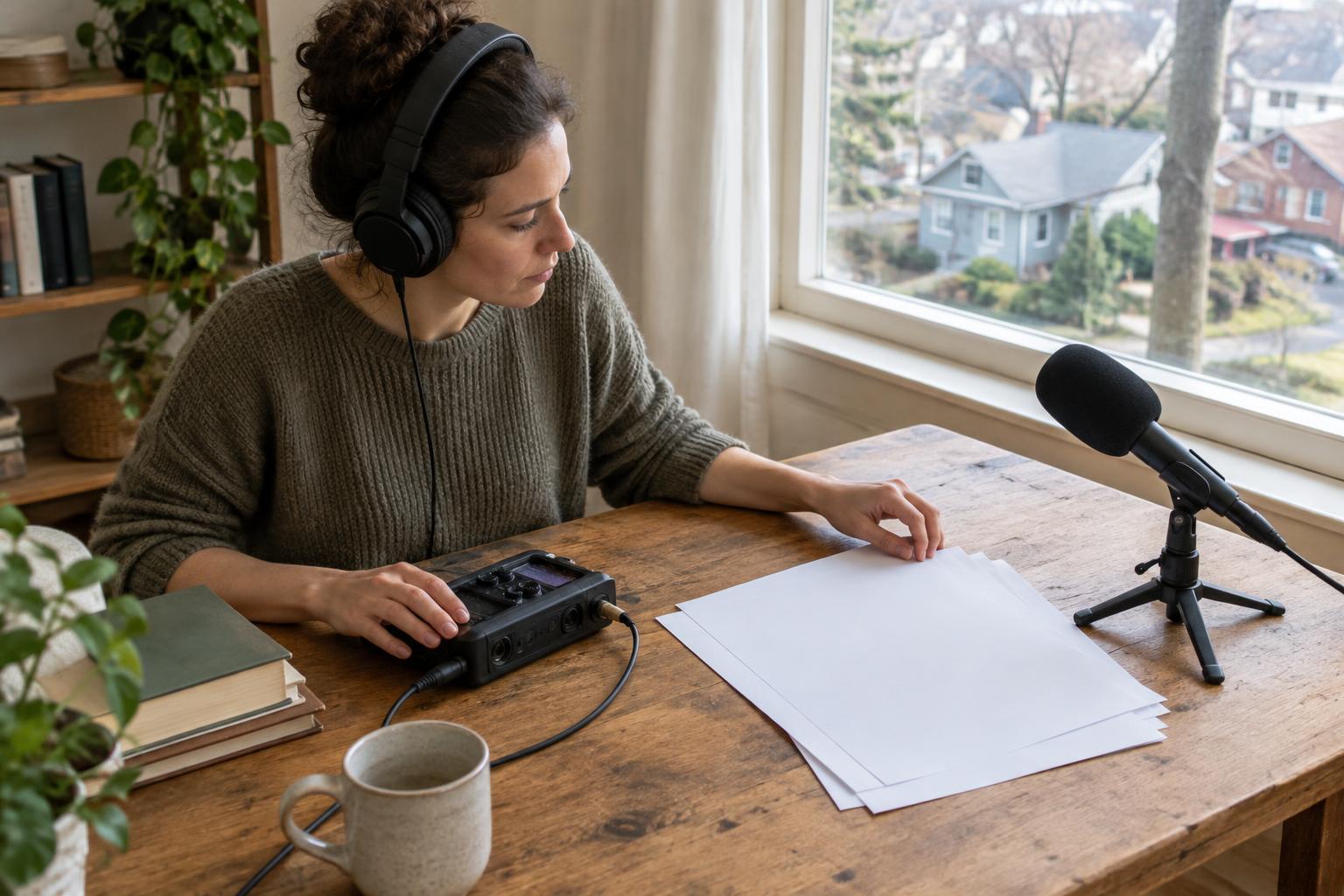
Read the narration aloud alongside the actual clips, not as a separate page of prose. A sentence that looks efficient may be hard to follow when a listener hears it once. Replace dense explanations with familiar words, and give names, places, and changes of time enough space to register. Listen for repeated phrases across the narrator and the interviewee; repetition is easier to miss when you edit the two tracks separately.
On a final pass, try muting each narration line in turn. Does the listener lose necessary orientation, or does the tape carry the point without it? Keep lines that answer real questions and revise lines that merely announce what is about to be obvious. The result should feel like a thoughtful guide through the recording: present when context is needed, quiet when another voice or sound can tell the story better.