Start with the listener’s reason to press play
An episode idea often begins as a subject: a local music venue, a recording technique or a conversation with an artist. A subject gives you territory, but it does not yet tell a listener why this episode deserves their time. Turn it into a one-sentence promise: “By the end, listeners will understand how this venue shaped a particular scene,” or “Listeners will be able to choose a quieter place to record an interview.” The promise can offer insight, a useful skill or an engaging story. What matters is that it is specific enough to guide the episode.
Then ask who would care and what question they would bring. “People who like music” is broad; “listeners curious about how small venues help new bands find an audience” gives you a clearer direction. If you struggle to name a listener and a question, do not discard the idea immediately. Try narrowing it until the appeal becomes easier to explain.
Check what you can actually put on tape
A strong premise needs material that can carry it. List what you already have and what you would need: a willing guest, a firsthand account, a demonstration, a sequence of events or sounds you can record yourself. For an interview, note the questions that might draw out examples rather than general opinions. For a solo episode, identify the explanations or comparisons that will give listeners something to follow.
Consider what the audience would hear, not just what you know. A conversation about recording in a busy room might benefit from a brief demonstration of microphone placement. A story about a community choir might need vivid descriptions and participants’ perspectives if recording a rehearsal is not possible. Avoid making an episode depend entirely on access you have not secured. If the material is thin, the idea may need a different angle, a shorter format or more preparation.
Give the idea a shape and a boundary
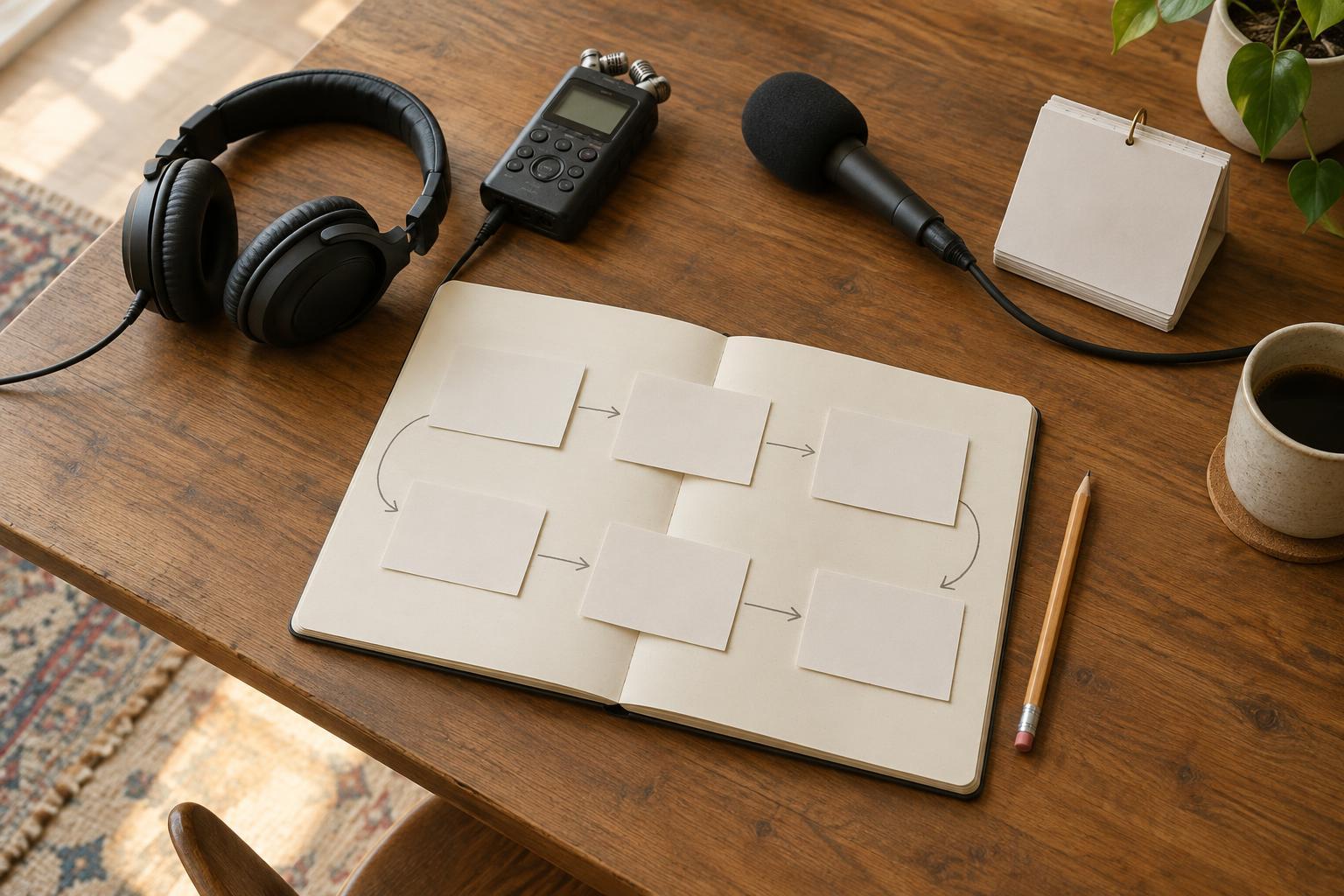
Before committing, sketch a beginning, middle and end in a few lines. The beginning introduces a question or situation. The middle explores it through examples, scenes or a conversation. The ending leaves the listener with a clearer understanding than they had at the start. This is not a script; it is a test of whether the idea has movement. If every point feels interchangeable, look for a decision, contrast or change that could provide a natural path.
Set a boundary as well. “The history of music discovery” is too large for one focused episode, while “how one person builds a weekly listening habit” offers a manageable entry point. Boundaries can come from a place, a process, one person’s experience or a single question. Keep enough room for surprise, especially in an interview, but know what belongs in the episode and what can wait.
Test the effort against the value
Some ideas are exciting but difficult to produce with the time, equipment and permissions available. Make a rough production list: whom you need to contact, where you would record, what you must verify, and how much editing the format is likely to require. Include practical risks such as a guest cancelling or an essential recording turning out unusable. These are planning concerns, not reasons to avoid ambitious work.
Ask whether a simpler version would preserve the listener promise. You might replace a location recording with a carefully structured conversation, or divide a sprawling idea into two distinct episodes. Do not simplify away the element that makes the story worth hearing. The aim is to choose a version you can finish well, rather than one whose demands overwhelm the time you have.
Use a quick decision sheet
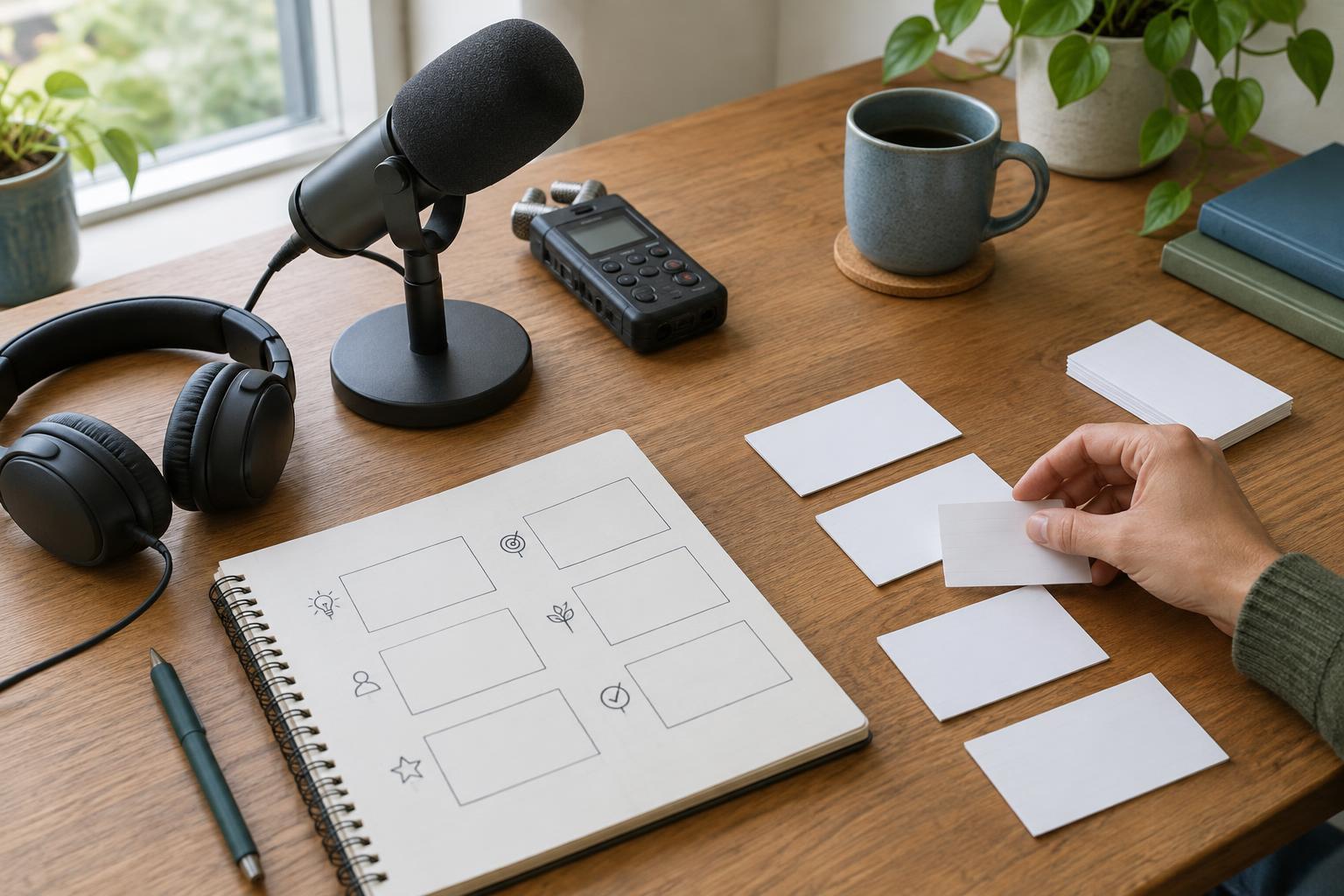
Write each candidate idea on a separate line and rate it as strong, uncertain or weak in four areas: listener promise, available material, clear shape and production feasibility. Add one sentence explaining any uncertain or weak rating. This is not a contest in which the highest total automatically wins. It is a way to see why you feel confident about one idea and hesitant about another. A weak material rating may call for a research or guest-outreach step; a weak promise may call for a sharper angle.
Finally, compare the promising ideas with your show’s purpose and recent episodes. An idea can be good on its own but repetitive in the current run, or better suited to a different format. Choose one to develop, give another a specific next step, and keep the rest in an idea bank. Revisiting a saved premise later is easier when you have recorded both its appeal and what was missing.