Start with the work, not the release date
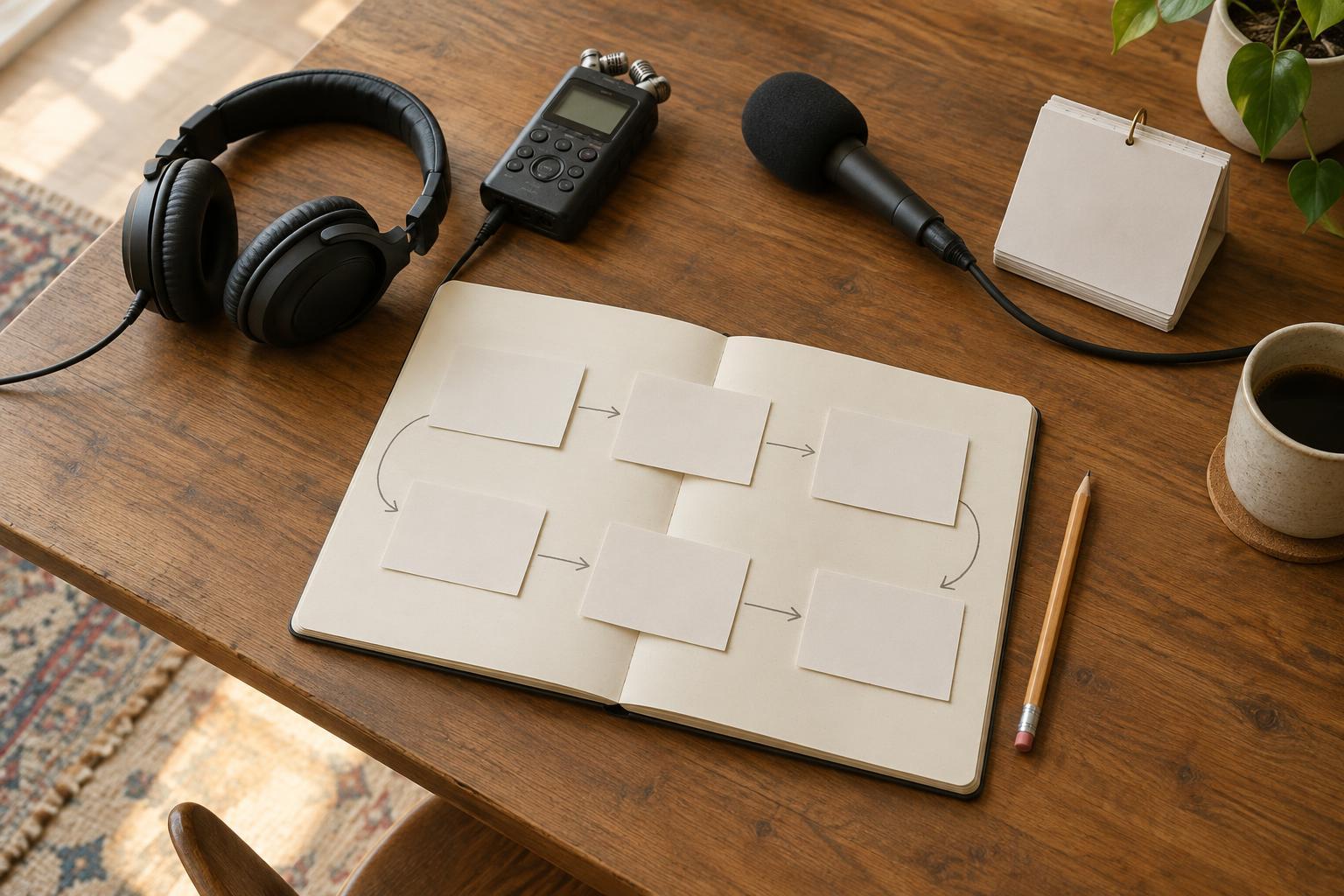
It is tempting to announce a weekly podcast because weekly releases sound familiar and easy to remember. But a publishing schedule should begin with the work each episode requires. A short conversation that needs light editing is different from a reported story with several voices, music choices and careful scripting. Before choosing a cadence, map the steps between an idea and a published episode: preparation, booking, recording, editing, review, writing the description, making artwork if needed and uploading the finished file.
Estimate how much time those steps take for a typical episode, then compare that total with the time you can regularly give the show. Use an ordinary week as your guide, not a week when everything goes smoothly. If you work with guests or collaborators, include the time spent waiting for replies and arranging schedules. The goal is not to make every hour productive; it is to find a pace that leaves enough room to make an episode you are comfortable sharing.
Choose a cadence that matches the format
A publishing cadence is simply the pattern listeners can expect. Weekly, every other week, monthly and limited-series releases can all work. A weekly schedule may suit a focused show with a repeatable format and a dependable recording routine. A more involved narrative show may need longer between episodes. If your topic is seasonal or you want to explore one subject at a time, releasing a short series and then taking a planned break may be more useful than promising episodes indefinitely.
Separate your recording rhythm from your publishing rhythm. You might record two interviews in one afternoon but release them weeks apart. Equally, recording well ahead may not suit a show built around timely conversations. Choose the arrangement that fits your material. Consistency helps listeners know when to look for a new episode, but it does not require you to publish as often as possible.
Build a workflow with breathing room
Work backward from each release date to create small internal deadlines. Decide when the outline should be ready, when recording must finish and when the edit needs a final listen. Give the tasks owners if more than one person makes the show. A simple shared checklist can prevent a finished audio file from sitting unpublished because nobody wrote the episode description or checked the title.
If your format allows it, prepare a small buffer of completed or nearly completed episodes before announcing a regular schedule. That buffer gives you options when a guest cancels, an edit takes longer than expected or life interrupts your recording time. It does not have to be large. Even one episode ready ahead of the next deadline can reduce pressure. For episodes that cannot be made in advance, build spare time into the production calendar instead.
Decide what ‘ready to publish’ means for your show. Your checklist might include a clear opening, intelligible audio, permission to use any contributed material, a final listen and an accurate description. A repeatable standard makes it easier to finish an episode without endlessly adjusting details that most listeners will never notice.
Make your promise clear and manageable
Tell listeners what you can actually deliver. ‘New episodes on the first Tuesday of each month’ is a more useful promise than ‘new episodes soon’ if you can meet it. If you prefer flexibility, describe the show as a limited series or say that episodes arrive in batches. Avoid presenting an aspiration as a fixed schedule while you are still testing how long production takes.
A planned break is not a failure. If you know you will pause between seasons, say so at the end of the current run and, when possible, explain where listeners can find updates. If an unexpected delay happens, a brief, straightforward message is usually better than silence or a rushed episode. You do not need to share private details; simply let listeners know that the next release will be later than planned.
Review the schedule after a few releases
Treat your first schedule as a trial rather than a permanent rule. After several episodes, look at the process: Which tasks repeatedly slipped? Did recording feel manageable while editing became a bottleneck? Were you making space for fresh ideas, or only trying to meet the next deadline? These observations can tell you whether to simplify the format, share tasks differently or publish less often.
A sustainable schedule supports both the show and the people making it. It gives listeners a dependable expectation while leaving enough time for thoughtful preparation and careful listening. If a slower cadence lets you make episodes you are proud of without constant last-minute work, that is a stronger plan than a faster one you cannot comfortably keep.