Start with the job your calendar needs to do
An editorial calendar is a shared plan for what your podcast will make, why each episode belongs in the show and when the work needs to happen. A list of publication dates is useful, but it will not tell you whether you have enough time to book a guest, shape a story or edit a recording. The best calendar for your show is the simplest one that helps you make those decisions.
Before filling in episode slots, write down your show’s purpose and the people it serves. What questions should listeners be able to bring to it? What kinds of stories fit your voice? A music discovery show might mix artist conversations with episodes about scenes or listening habits. A spoken-word series might organize episodes around recurring questions. These boundaries give you a way to judge ideas without making every episode sound alike.
Choose a release rhythm you can sustain
Work backward from the time an episode takes to produce, not forward from an appealing release date. Include research, outreach, preparation, recording, editing, review, artwork, descriptions and publishing. If interviews depend on other people’s availability, allow space for cancellations or delayed replies. If you are making the show alone, account for the fact that these tasks compete for the same hours.
A season, a short series or a slower recurring schedule can all work if listeners know what to expect. Consider preparing more than one episode before announcing a regular cadence. That buffer gives you room to improve a difficult edit or respond to an unexpected gap. Put both target release dates and internal deadlines on the calendar, and treat the internal dates as prompts to check progress rather than reasons to rush an unfinished story.
Give every episode slot a clear purpose
Build an idea bank before assigning dates. For each idea, note its central question, intended listener, likely format and what you still need to find out. Then group ideas into broad themes or recurring formats. This makes it easier to spot a run of episodes that repeats the same conversation, as well as gaps where a different perspective or a lighter format could help.
When an idea moves onto the calendar, add a brief editorial promise: what will the listener understand, hear or consider by the end? Keep it specific enough to guide production, but open enough for reporting and recording to change your assumptions. For a guest episode, that promise might describe the topic you hope to explore rather than predict what the guest will say. For a narrative episode, it might identify the question driving the story rather than commit to a conclusion.
Track the work, not just the episodes
A spreadsheet, shared document or project board can all hold an effective calendar. Useful fields include a working title, format, owner, status, release window and next action. You can also track guest contact, recording plans, permissions, edit reviews and supporting materials where relevant. Avoid adding fields nobody will update; an incomplete elaborate system is less helpful than a modest one the team trusts.
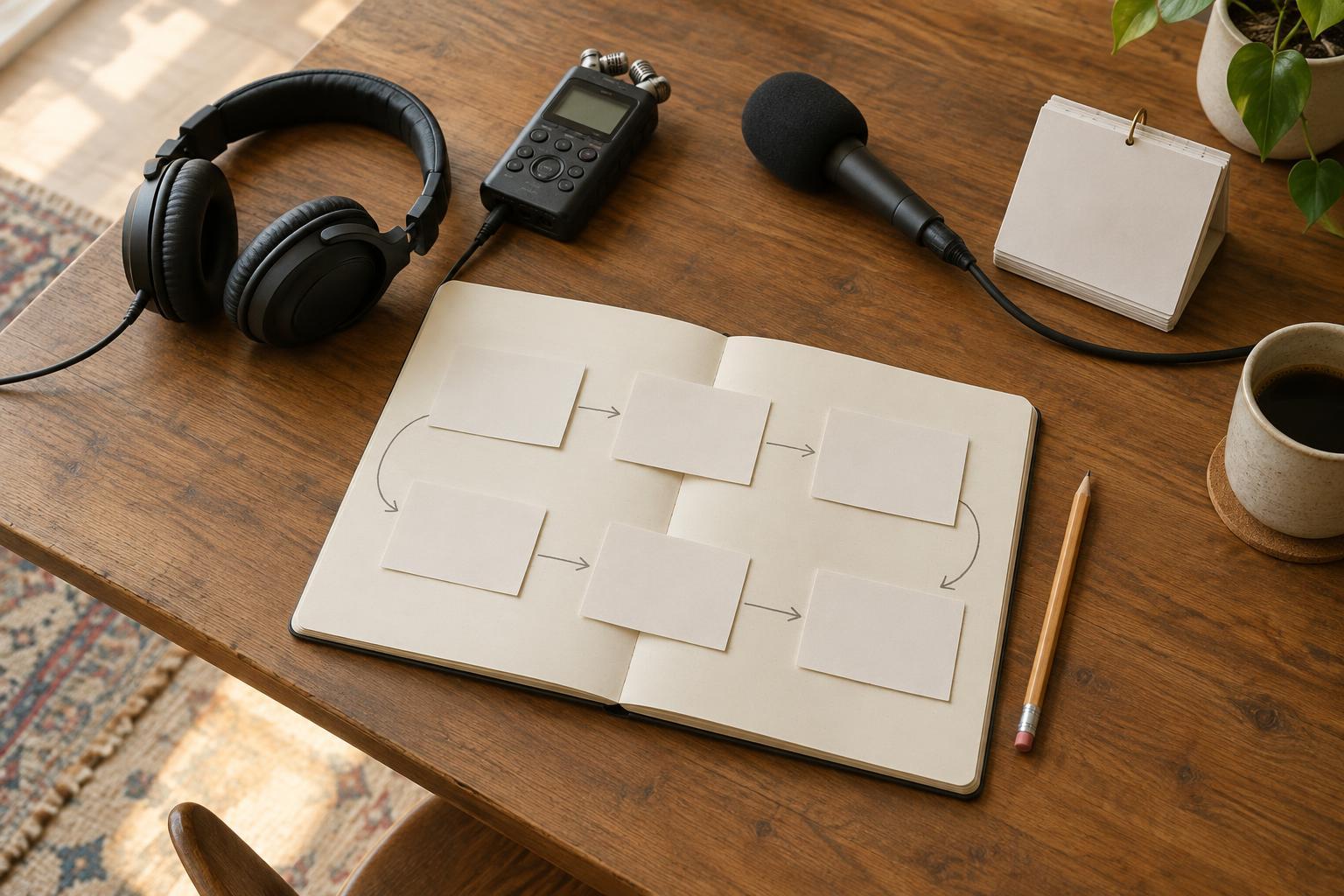
Break each episode into a few visible stages, such as idea, outline, booked, recorded, editing, review and ready to publish. Assign responsibility for the next step, especially when several people contribute. Note decisions that could affect timing, such as waiting for a guest confirmation or deciding whether a recorded conversation has a strong enough focus. This helps a planning meeting address actual obstacles instead of simply asking whether an episode is on schedule.
Review the plan without becoming trapped by it
Set a regular moment to look ahead at upcoming episodes and back at recently finished ones. Ask whether the mix still serves the show’s purpose, whether deadlines reflect the work involved and which ideas need more development. Listener responses can suggest questions worth exploring, but they do not have to determine every choice. Your calendar should help you make deliberate decisions, not turn every suggestion into an obligation.
Leave a few slots flexible when possible. An interview may reveal a stronger angle, an episode may need another recording session or a planned topic may no longer feel useful. Moving a slot is easier when the calendar records the reason for the change and the next workable step. Over time, that record also shows which formats take the most effort and where your process tends to slow down. A good editorial calendar is not proof that every plan will hold; it is a practical way to keep making thoughtful episodes when plans change.