Start with the season’s promise
Before listing episodes, write one sentence that describes what listeners will gain from the season. It might promise a guided introduction to a music scene, a set of conversations about making things together, or a practical exploration of a single question. Keep the promise specific enough to guide decisions, but broad enough to support several distinct episodes. “Stories about music” leaves too many possibilities open; “how local music spaces shape the people who use them” gives you a direction.
Then define the intended listener. Consider what they may already know, why they would press play, and whether they need episodes in a particular order. A beginner-friendly season may need to introduce terms and context early. A season for an established community may be able to begin with a more detailed discussion. This does not mean imagining one perfect listener; it means making deliberate choices about what each episode should explain.
Build a list of episode questions
Brainstorm more episode ideas than you expect to produce. Phrase each as a question the episode can answer, rather than a broad subject it will mention. “Rehearsal spaces” is a topic; “What makes a rehearsal space welcoming to new musicians?” suggests a conversation, possible contributors, and a direction for the edit. If several ideas answer essentially the same question, combine them or give each a sharper angle.
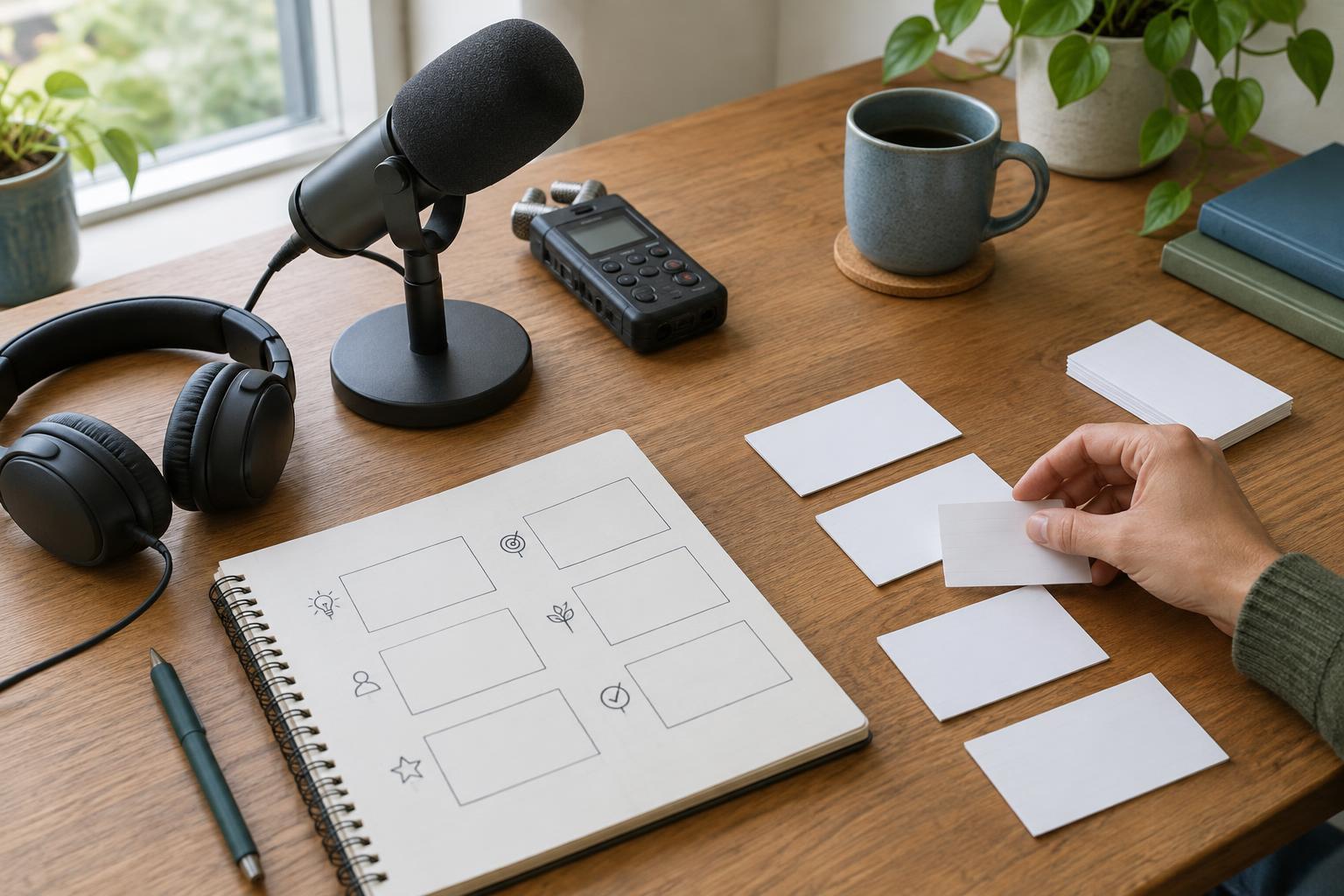
Make a simple card for every promising episode. Include its central question, the likely format, the voices or sounds it needs, and the one idea listeners should carry forward. Add a note about what could make it difficult: an interview that has not been agreed, a location that may be noisy, or an explanation that could take too long. These cards are planning tools, not scripts. Their purpose is to reveal gaps before production begins.
Arrange a journey, not just a playlist
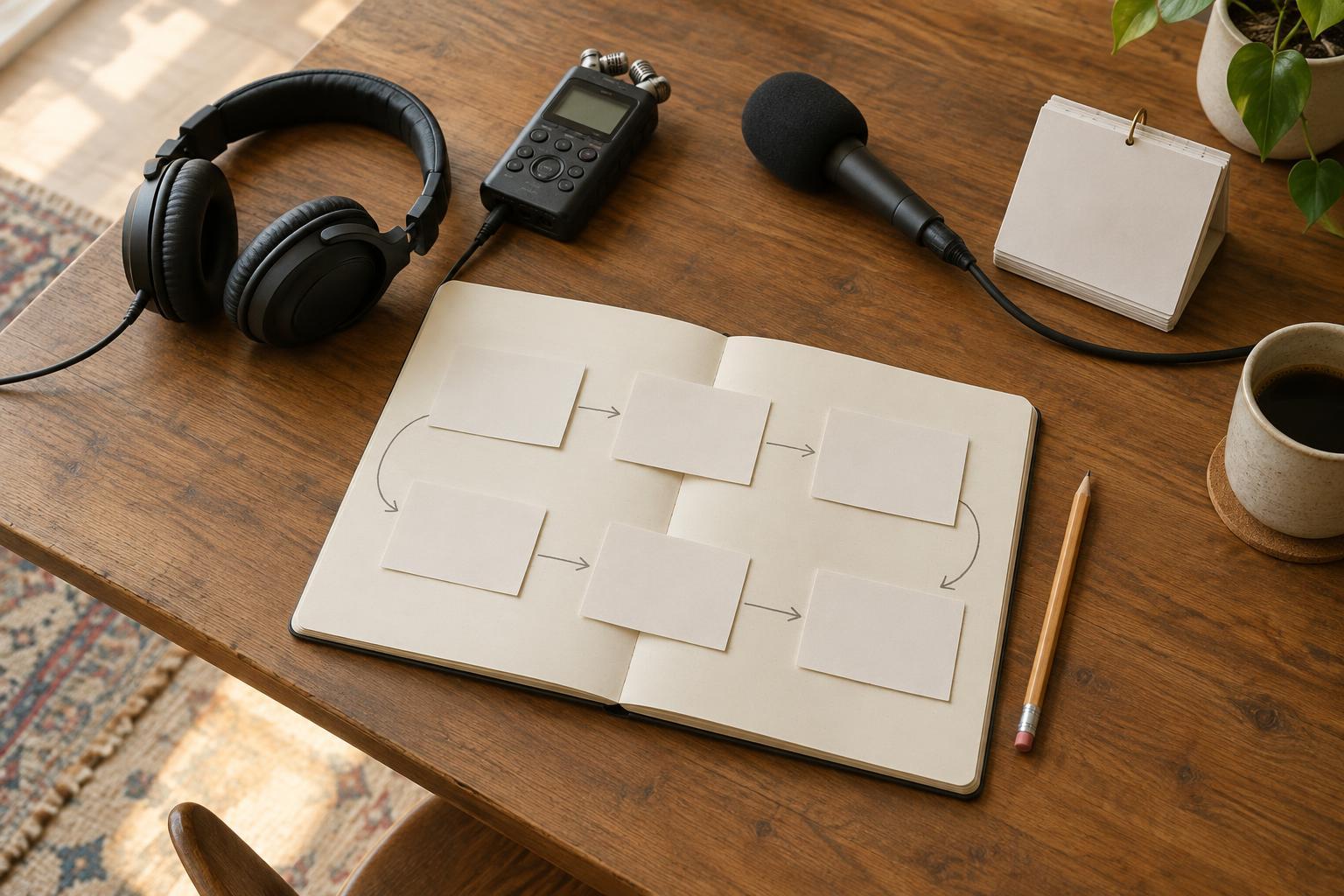
Lay the cards out and look for a progression. An opening episode should give listeners a reason to care and enough context to follow what comes next. Middle episodes can deepen the subject, test an assumption, or bring in contrasting experiences. A final episode can draw connections and leave listeners with a useful perspective. The ending need not settle every question, especially if the subject is personal or open to interpretation.
Check what a listener needs to know at each step. If episode three depends on an idea explained in episode five, reorder them or add a brief explanation. Listen for repetition, too: three interviews with similar guests may work better if each has a different question or storytelling role. For a series that people may discover out of order, make each episode understandable on its own while keeping the wider journey rewarding.
Match the map to production reality
A season plan is also a resource plan. Estimate the work behind each episode: preparation, booking, recording, transcription or note-taking, editing, review, and publication materials. An episode built around one focused conversation may require a different process from one assembled from several locations and archival material you have permission to use. If every planned episode is unusually demanding, vary the formats or reduce the season’s scope.
Identify dependencies early. Which episodes require particular contributors? Which can be recorded with equipment and spaces you already have? Where will you need clean room tone, music clearance, or a backup recording plan? You do not have to solve every detail now. Marking the unknowns helps you decide what to confirm first and gives you alternatives if an idea becomes impractical.
Keep the map useful as the season changes
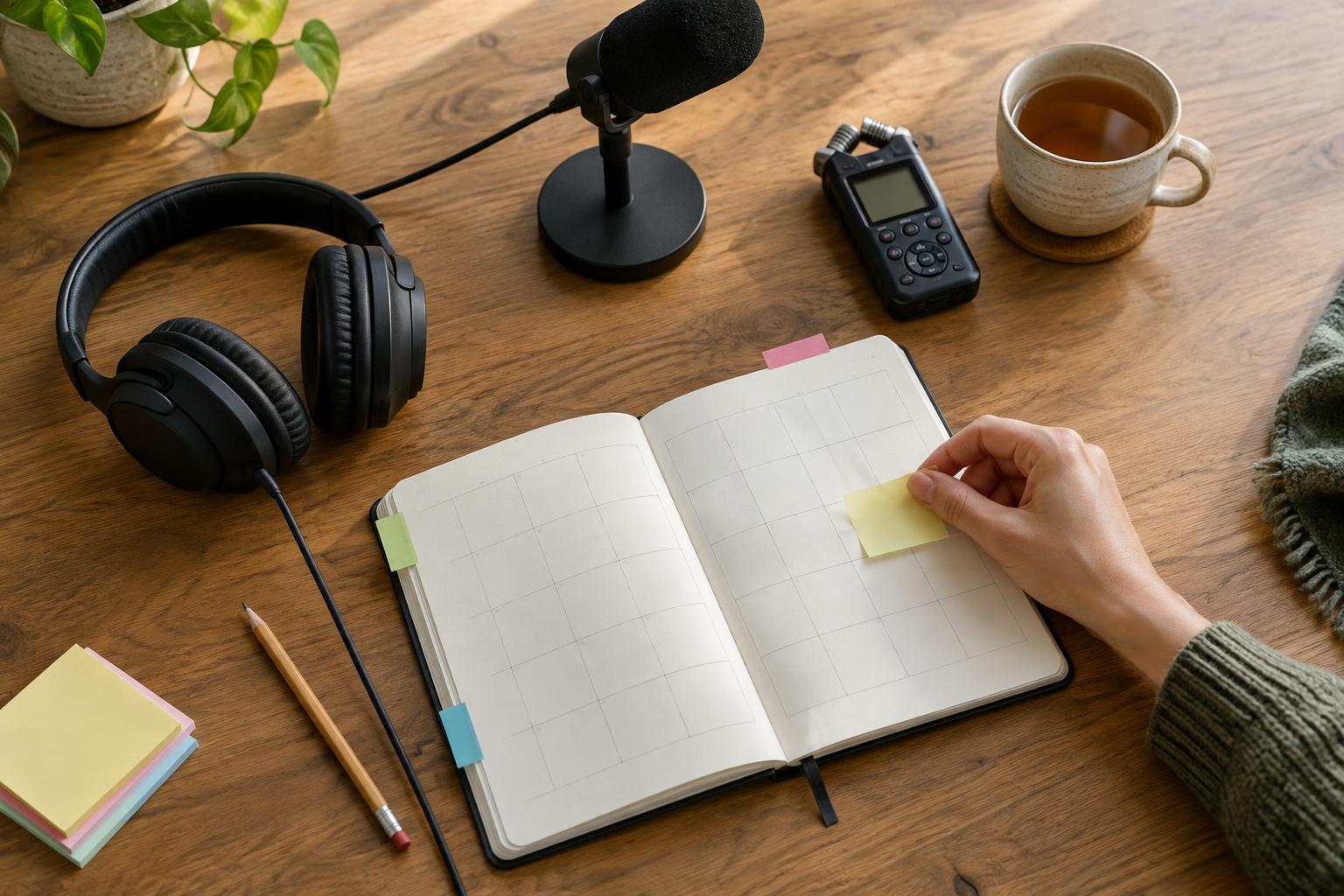
Put the plan in one place that everyone working on the show can read. For each episode, record its working title, question, intended listener takeaway, required material, current status, and next decision. Separate confirmed details from possibilities. A season map becomes less helpful when a tentative guest or untested recording idea looks like a firm commitment.
Revisit the map after early recordings. A conversation may reveal a stronger question, or two planned episodes may turn out to belong together. Use the season’s promise to judge changes: does the new direction serve listeners better without making the rest of the sequence confusing? Mapping ahead gives the work shape; allowing careful revisions helps the finished season sound discovered rather than forced.