Start with the experience you want to create
Community audio can be a conversation, a shared listening experience, or a collection of individual perspectives. Before choosing equipment or inviting contributors, decide what you want people to do together. Are you trying to explore a question in real time, respond to a piece of audio, or gather stories from people who cannot meet at once? The answer will point toward a format.
Also decide who the audio is for. A private recording that helps a group reflect may need little editing. A piece intended for a wider audience needs more context: listeners should understand who is speaking, what prompted the discussion, and why different voices appear together. You do not have to publish a recording for the gathering to be worthwhile.
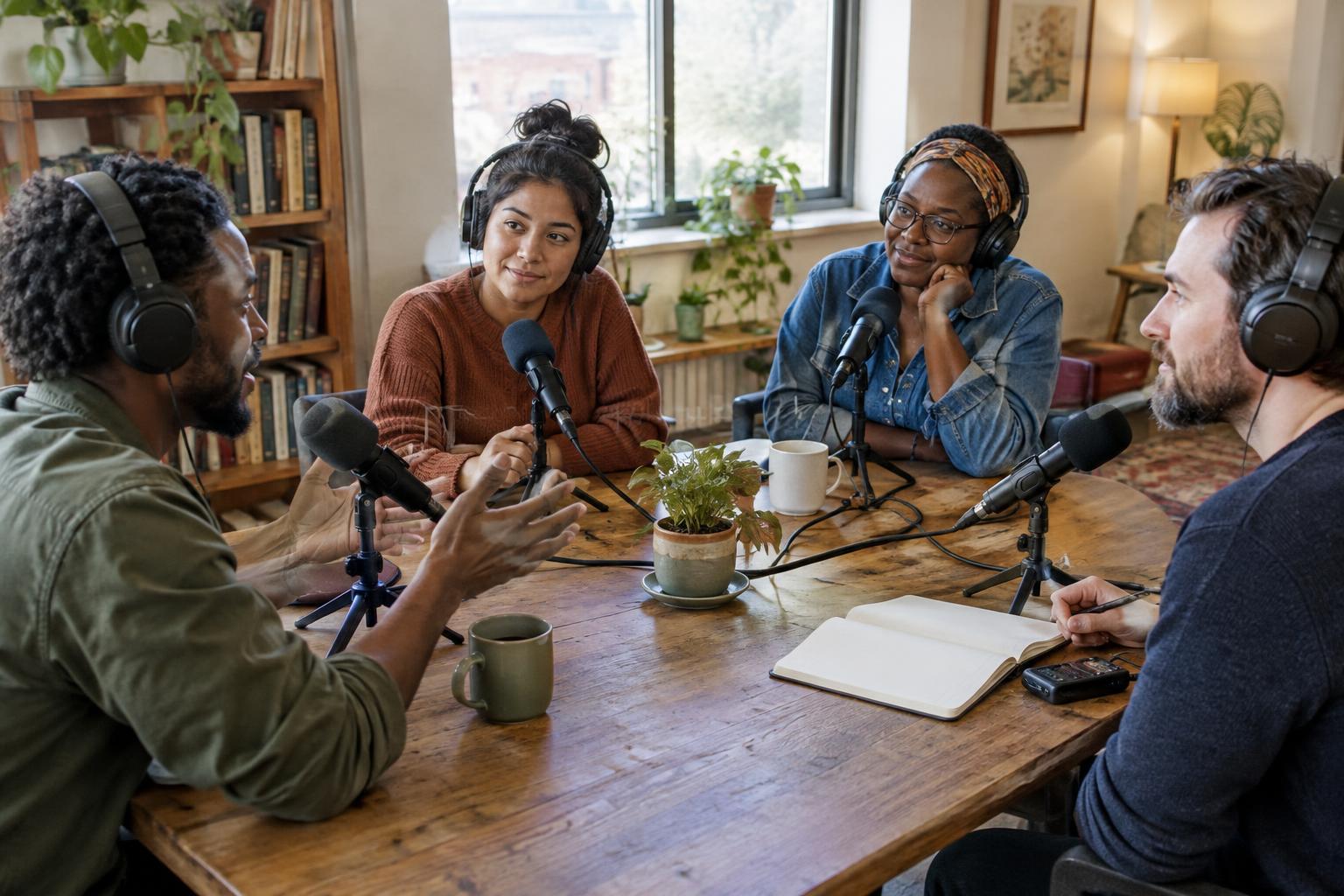
Choose a roundtable for a focused exchange
A roundtable brings several people into one conversation, guided by a host or facilitator. It suits a topic that benefits from people building on, questioning, or contrasting one another’s ideas. For example, neighbors planning an oral-history project might discuss what places they hope to remember and where their accounts differ. The value is in the interaction, not in collecting perfectly polished statements.
Keep the invitation specific enough that participants can prepare, but open enough to allow surprise. A short set of prompts and an agreed speaking order can help quieter guests enter the conversation. If you plan to record, explain how the recording might be edited and shared before anyone begins. Roundtables can become difficult to follow when many people speak at once, so a small group and a facilitator willing to pause or redirect are often more useful than a crowded panel.
Use a listening circle to make room for response
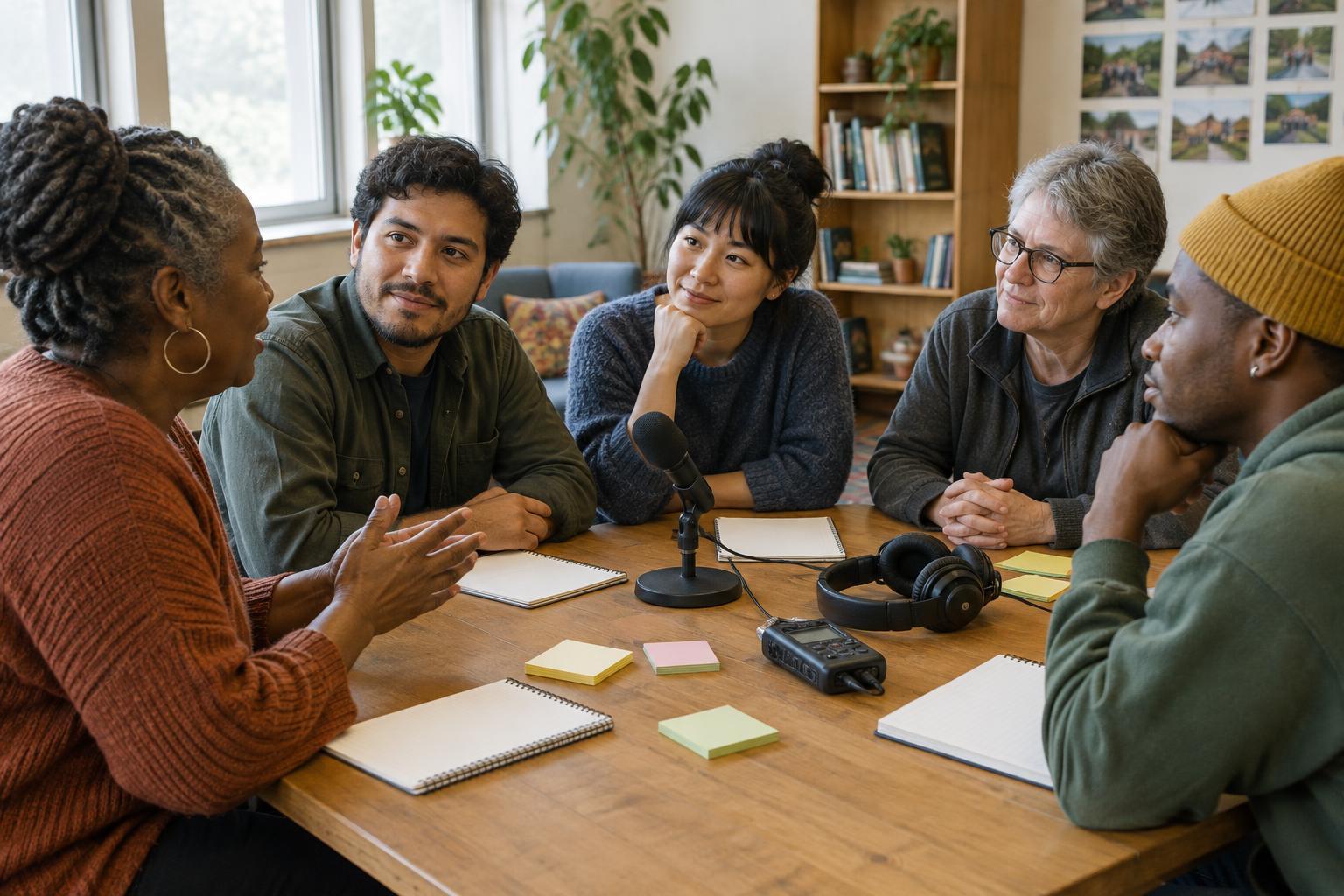
In a listening circle, a group hears the same short audio piece and then responds. That piece might be a community member’s recording, a soundscape, or a draft episode. Unlike a roundtable, the shared audio is the starting point. This format works well when you want to learn what people noticed, how they interpreted a story, or what questions it raised.
Choose an excerpt that leaves time for conversation, and tell participants what kind of response you are inviting. You might begin with observations before moving to opinions, giving everyone a chance to describe what they heard. If the audio includes someone’s personal story, ask that person what they are comfortable having discussed and whether they want to be present. A listening circle need not be recorded; notes agreed on by the group may be a better outcome when candid feedback matters more than a publishable conversation.
Collect voice notes when people need flexibility
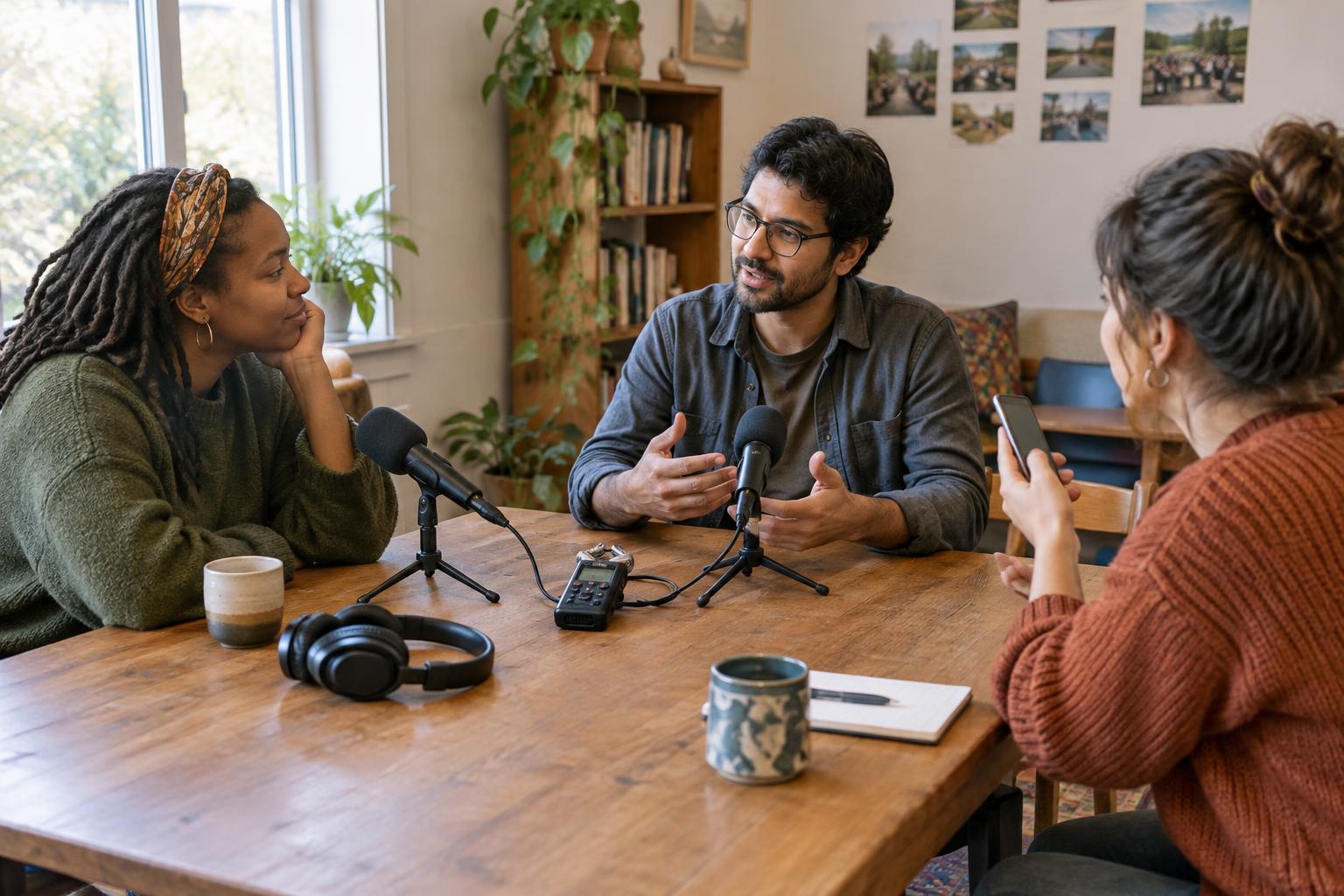
A voice-note collection lets contributors record separately, on their own schedules. It can include people who cannot attend a gathering or would rather think through an answer privately. The format is particularly useful for collecting brief memories, local sounds, or responses to one clear question. You can arrange the recordings into a short audio piece, or keep them as an archive if contributors agree.
Make the request easy to follow: give people a prompt, a suggested length, a submission method, and a deadline. Explain whether background sound is welcome and ask contributors to say their name only if they want it used. Separate recordings may vary in volume and clarity, and editing them into a coherent sequence takes time. Resist trimming a person’s answer so tightly that its meaning changes; when a contribution is unclear, follow up rather than guessing.
Match the format to your capacity and your promises
To decide, compare three practical questions. Does the topic need live exchange? Choose a roundtable. Does everyone need to encounter the same material before speaking? Try a listening circle. Do contributors need different times or places to participate? Ask for voice notes. You can combine formats, but each addition creates more coordination and editing. A small first project is easier to finish and easier to learn from.
Whatever you choose, tell participants whether you will record, who may hear the result, and how they can ask for a correction or removal before publication. Set a plan for handling sensitive details and for checking that people named in a story are treated with care. If you share the finished audio, a brief written description or transcript can make it easier to access and understand. The strongest format is not necessarily the most elaborate one; it is the one your community can participate in comfortably and your team can carry through responsibly.