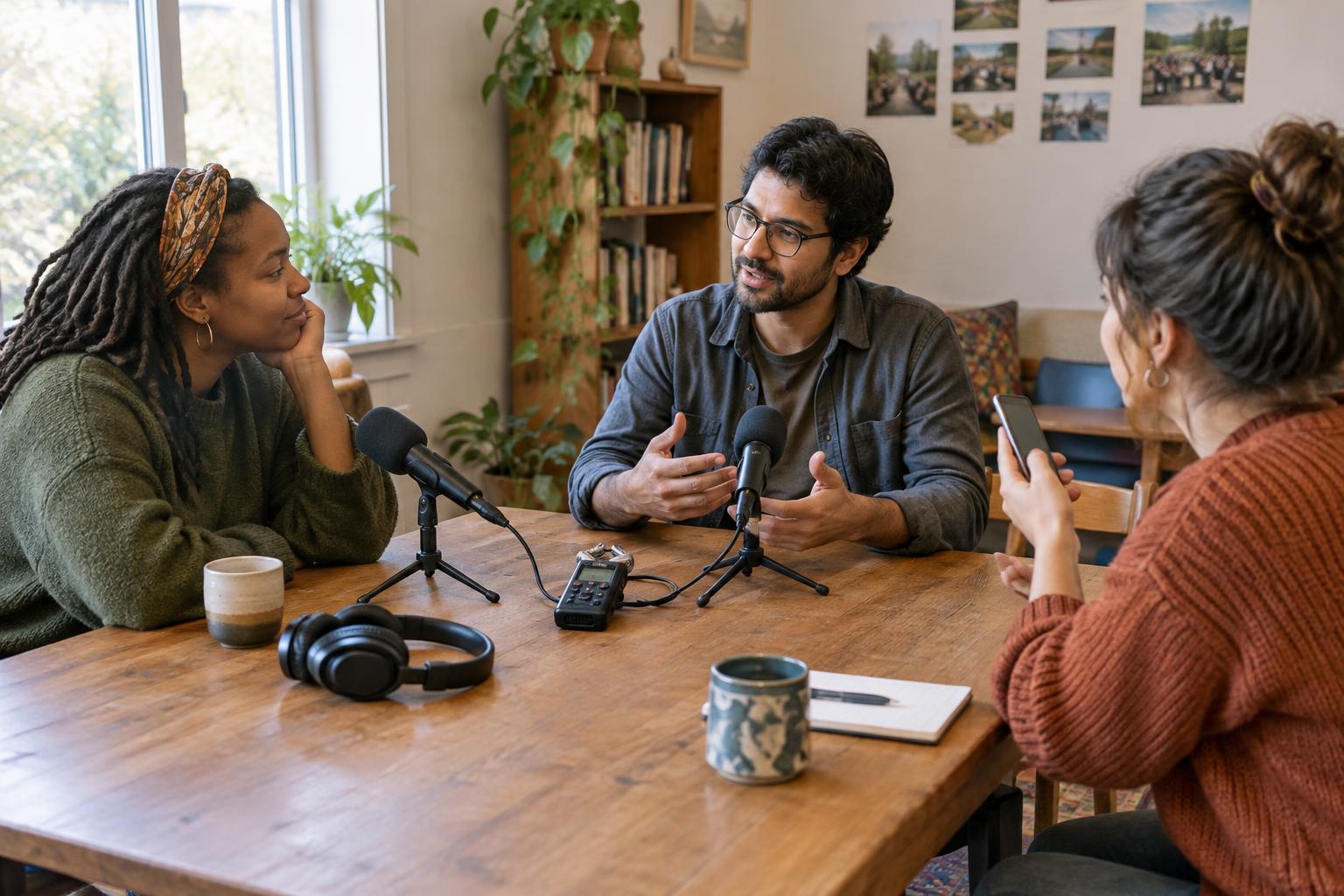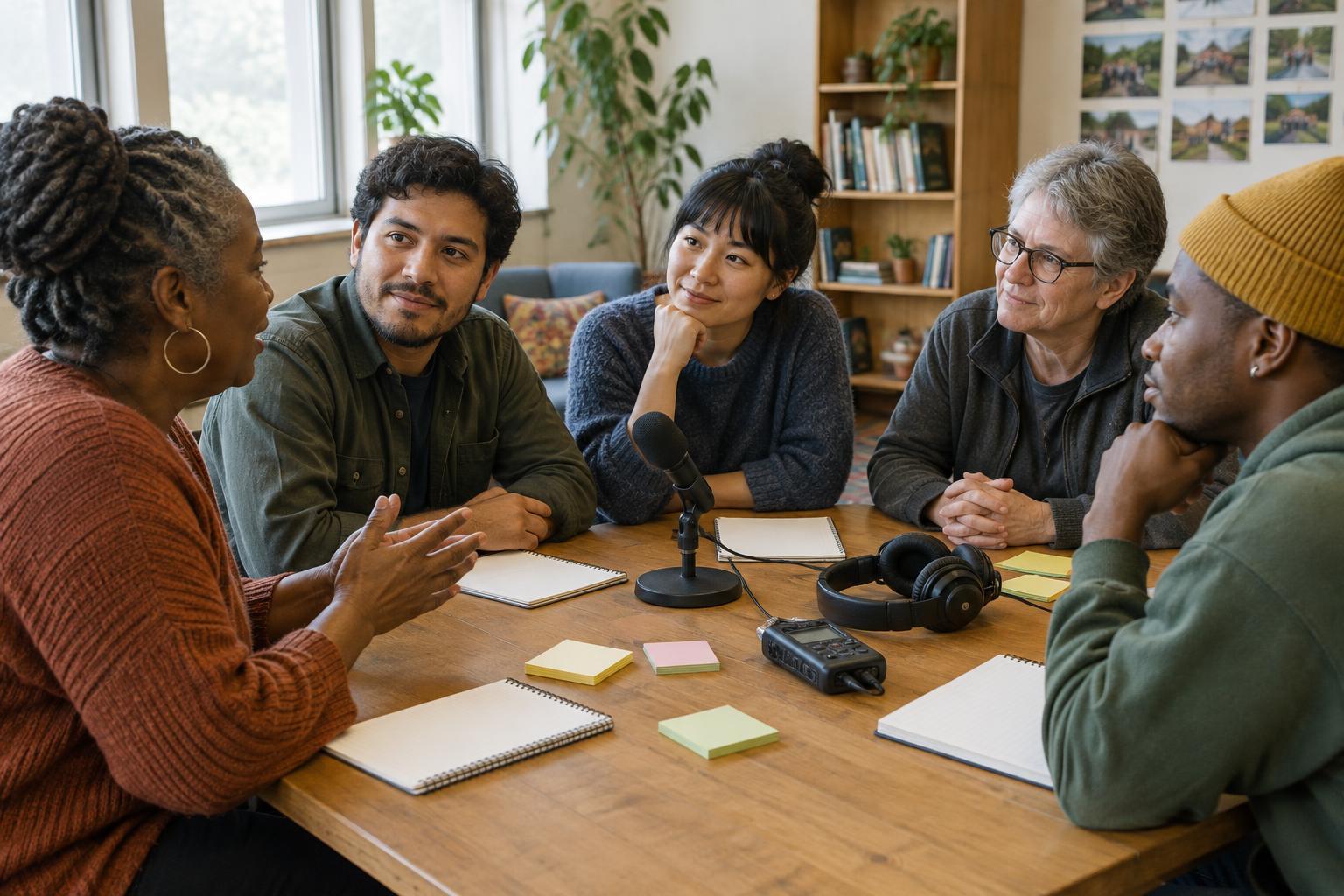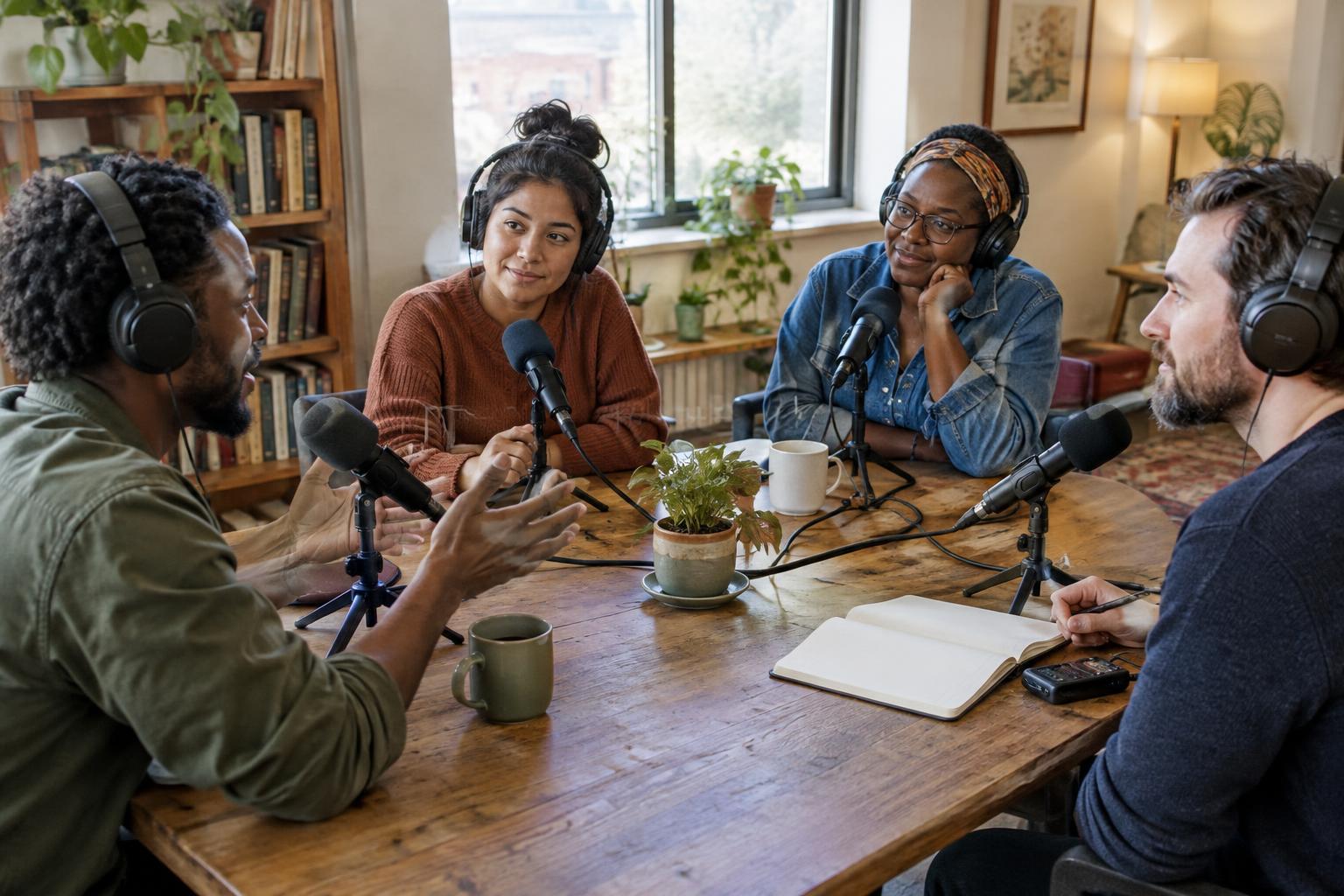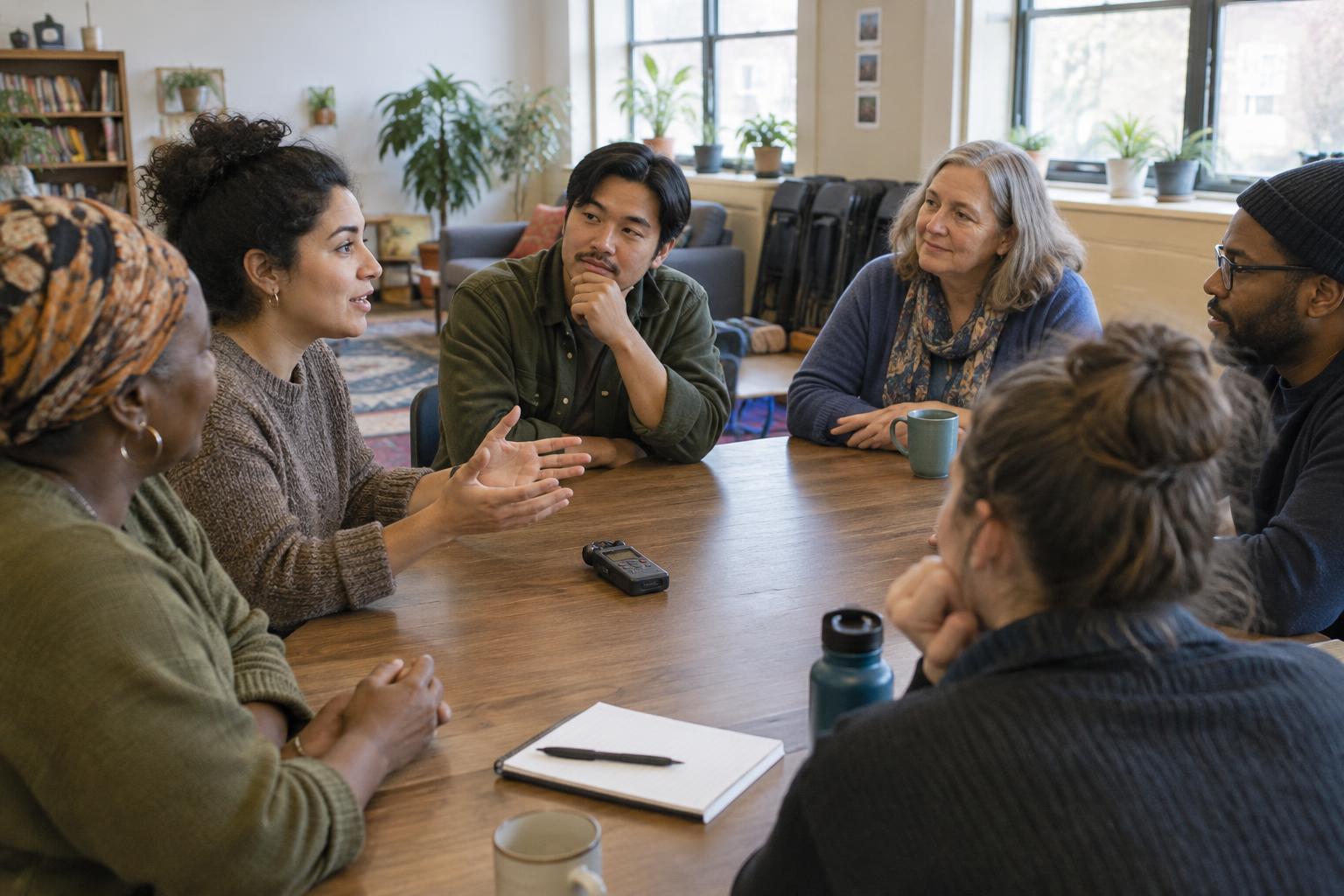
Notice who your current invitation reaches
It is natural to begin an audio project with friends, colleagues, or people who already follow your work. They may be happy to test an idea and forgive a rough first recording. But if every invitation travels through the same contacts, the project may keep hearing similar perspectives. Reaching beyond that circle starts with a simple question: who could have something to say about this topic but would never see the invitation you usually post?
Think about where people already gather around the subject, online or in person. A project about neighborhood sounds might connect with a walking group, a library activity, or people who work locally at different hours. The aim is not to collect a voice from every group. It is to find relevant places to extend an invitation without assuming that one person can speak for an entire community.
Make the invitation easy to understand
A broad call for “stories” can be hard to answer. Say what the project is about, what kind of contribution would help, how long it might take, and what you plan to do with the recording. A specific prompt, such as “Tell us about a sound you associate with arriving home,” gives people a starting point while leaving room for different experiences. Explain whether you are seeking a short voice note, a conversation, or help choosing questions.
Use ordinary language rather than production terms. State whether contributors need any equipment, whether their name will be used, and whether you can offer an alternative to speaking on tape. If you contact a group or organizer, ask whether they are willing to share the invitation; do not treat access to their members as automatic. A clear, low-pressure request is easier to pass along and easier to decline.
Offer more than one way to take part
Not everyone is comfortable with a live interview. Some people may prefer to send a phone recording, answer questions in writing, suggest sounds to capture, or help review an outline. Others may want to talk first without recording. These options can make participation possible for people with different schedules, communication preferences, or levels of confidence.
Keep the technical barrier low. For a voice note, you can suggest a quiet room and a phone placed nearby, then offer to guide the person if they want help. Avoid making polished audio a condition for being heard. If the project truly needs a particular recording quality, explain why and offer practical assistance rather than leaving contributors to solve the problem alone.
Build trust before pressing record
A new participant may not know you, your audience, or how editing works. Give them enough information to make a comfortable choice: where the finished piece is expected to appear, whether clips may be shortened, and whom to contact with questions. Ask permission before recording and again before using material gathered during an informal conversation. If someone declines or changes their mind before publication, respond respectfully.
Trust also depends on the questions themselves. Invite people to describe what they know or have experienced, but do not push them toward personal disclosures to make a piece more dramatic. Check how they want to be identified, and do not promise anonymity unless you can reasonably protect it. When a contribution concerns a shared place or group, leave space for differences of opinion rather than presenting one account as the whole story.
Make participation a relationship, not a one-time request
After someone contributes, tell them what happens next. Let them know when the piece is ready, thank them in the way they prefer, and make it easy for them to hear or share the result. Where practical, give contributors a chance to flag a mistaken name or a misleading edit before publication. Listening to this feedback can improve the piece without requiring every participant to agree with every editorial choice.
Finally, notice which invitations worked and which did not. If you heard only from people who could respond quickly online, your next round might allow more time or use a different route. If a group helped you connect with contributors, keep in touch even when you are not seeking recordings. A wider circle grows through clear choices, reliable follow-through, and genuine interest in what people want to say.