Start with the voice and the room
A microphone captures more than a voice. It also picks up some combination of reflections, ventilation, traffic, keyboard taps and movement. For spoken-word recording, the most useful microphone is not necessarily the one that captures the most detail. It is the one that helps you make a clear, consistent recording in the space and setup you have.
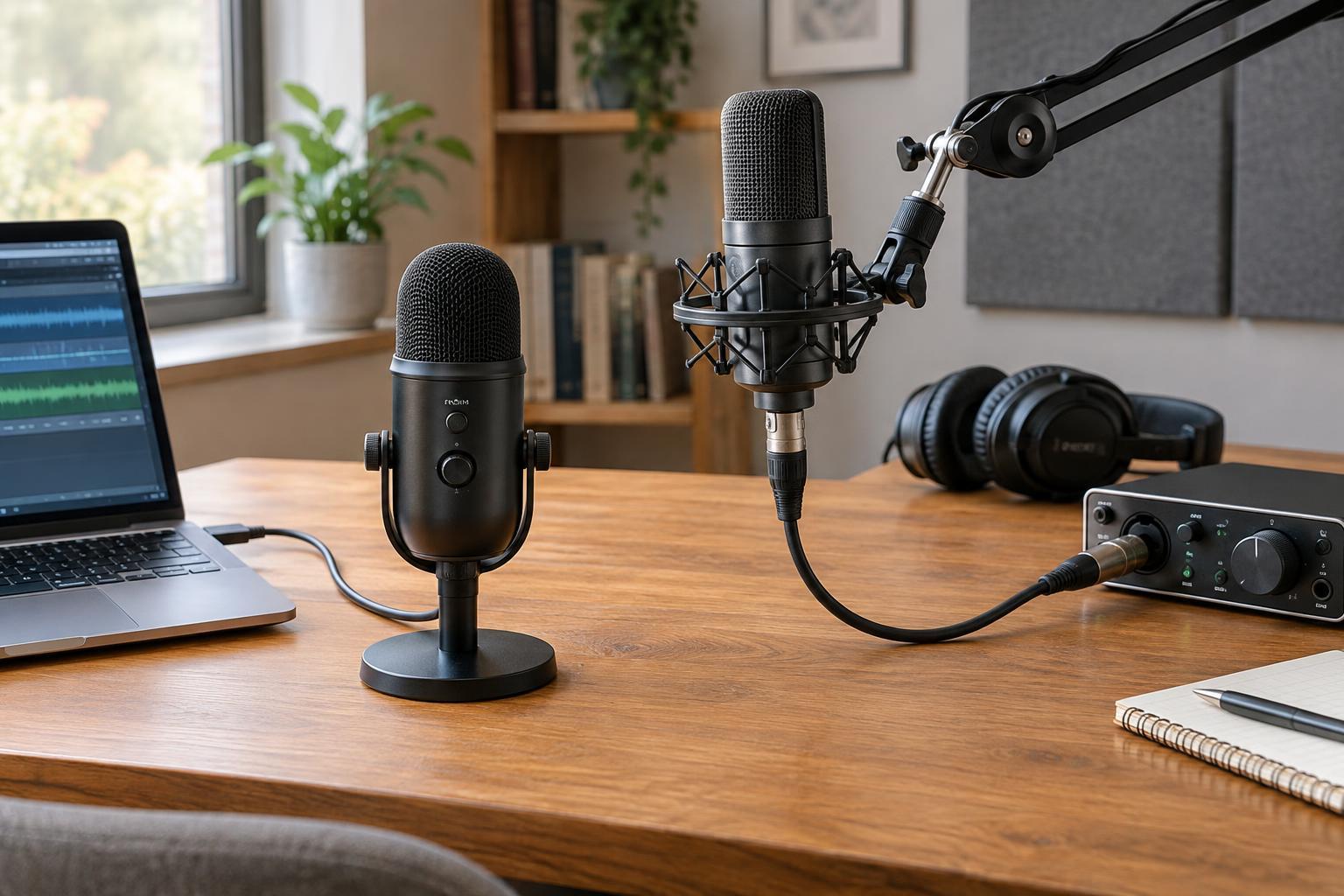
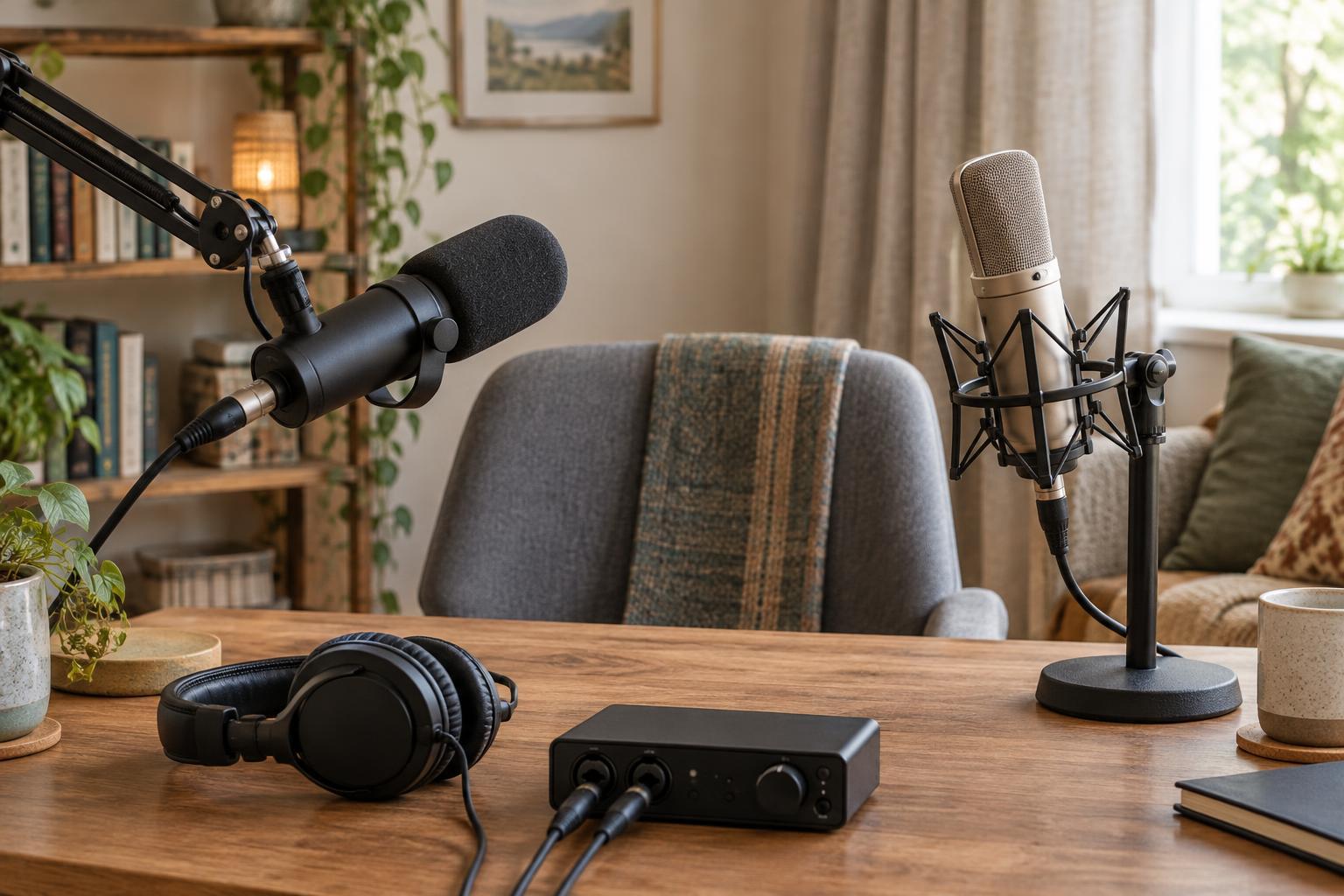
Dynamic and condenser microphones are two common choices for podcasts, narration and interviews. Both can produce excellent speech recordings. Their differences matter, but microphone position, the room and the speaker’s technique often make a larger difference than the label on the mic. Think of the choice as a match between equipment and working conditions, not a ranking from “basic” to “professional.”
What each type does
A dynamic microphone uses a moving coil attached to a diaphragm to turn sound into an electrical signal. Many spoken-word dynamic mics are designed to be used fairly close to the mouth. This makes them convenient when a speaker can stay in position and wants their voice to stand out against a less-than-ideal room. They generally do not need phantom power, although some dynamic microphones contain active circuitry and have different power requirements.
A condenser microphone uses a charged capsule and requires power for its circuitry. Depending on the model, that power may come from an audio interface, a battery or a USB connection. Condensers can capture subtle changes in a voice and may be comfortable to use a little farther away. That can suit a seated narrator who wants room to move naturally, provided the recording space sounds good. Neither microphone type has a single sound: capsule design, pickup pattern and placement all affect the result.
Why room noise is more complicated than sensitivity
You may hear that dynamic microphones “reject background noise” while condensers “pick up everything.” That shorthand can be misleading. A microphone does not know which sounds are wanted. If two mics have similar pickup patterns and are placed the same distance from a speaker, both can record unwanted sound. What often helps in a noisy room is close placement: the voice reaches the microphone more strongly relative to distant sounds. Many dynamic mics are well suited to that way of working.
Pickup pattern matters too. A cardioid microphone is most responsive toward its front and less responsive behind it, though it does not erase sounds from other directions. Aim the front toward the speaker and, where possible, point its less-sensitive side toward a steady noise source. Then listen for reflections. A bare desk or hard wall can make speech sound hollow even when outside noise is low. Soft furnishings, a quieter corner and a different mic position may improve the recording before any equipment change does.
Match the microphone to your recording routine
Choose based on how you actually speak. If you record alone, can sit close to a mic and work in a room with noticeable noise or echo, try a dynamic microphone first. If you have a quiet, controlled space and want to capture gentle changes in delivery without staying quite so close, try a condenser. For interviews, consistency may matter more than matching everyone to the same mic type. Each speaker needs a workable position and a chance to hear a test recording.
Check the rest of the setup before buying. An XLR microphone needs an audio interface or recorder with a suitable input; a condenser may also need phantom power. A dynamic mic can require more clean gain than some interfaces provide at a comfortable speaking distance. USB microphones simplify connections but may offer fewer routing options for multi-person sessions. If you already own equipment, read its power and input requirements and test the full signal chain rather than judging the microphone in isolation.
Make a short test and listen back
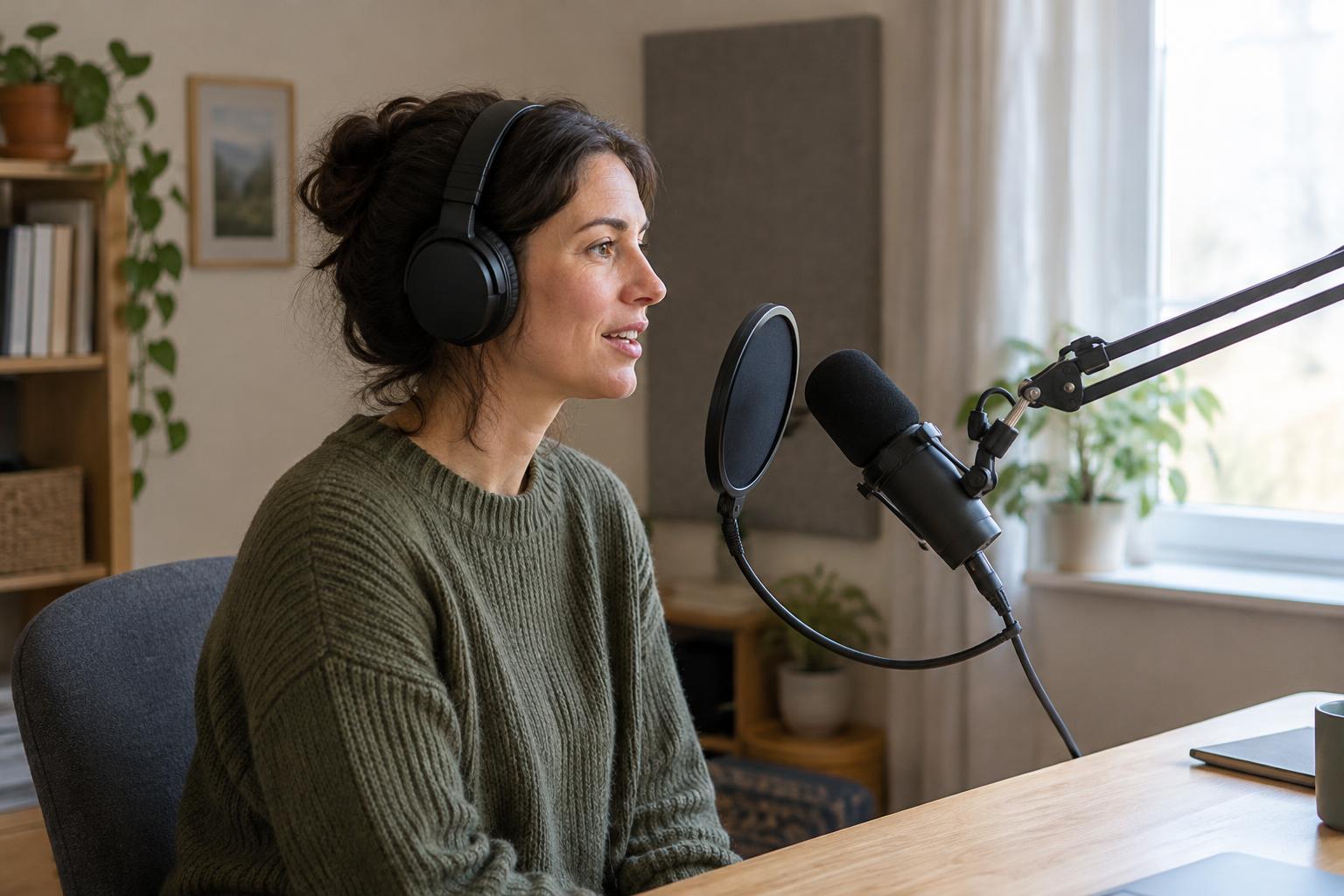
Record the same paragraph with each available microphone in your normal room. Use your usual speaking volume and keep each mic at a sensible distance for its intended use. A pop filter or foam windscreen can help with bursts of air on sounds such as “p” and “b.” Positioning the mic slightly to the side of your mouth, rather than directly in the airflow, can help as well. Avoid turning up gain to compensate for sitting much farther away than planned.
Listen on headphones at a consistent playback level. Notice whether words remain clear, whether breaths and mouth sounds distract you, and whether room echo or background activity competes with the voice. Move the mic, adjust your distance and repeat before drawing a conclusion. The better choice is the one that lets you record comfortably and repeatably, with less work needed to make the spoken story easy to follow.