Start with a sound you can recognize
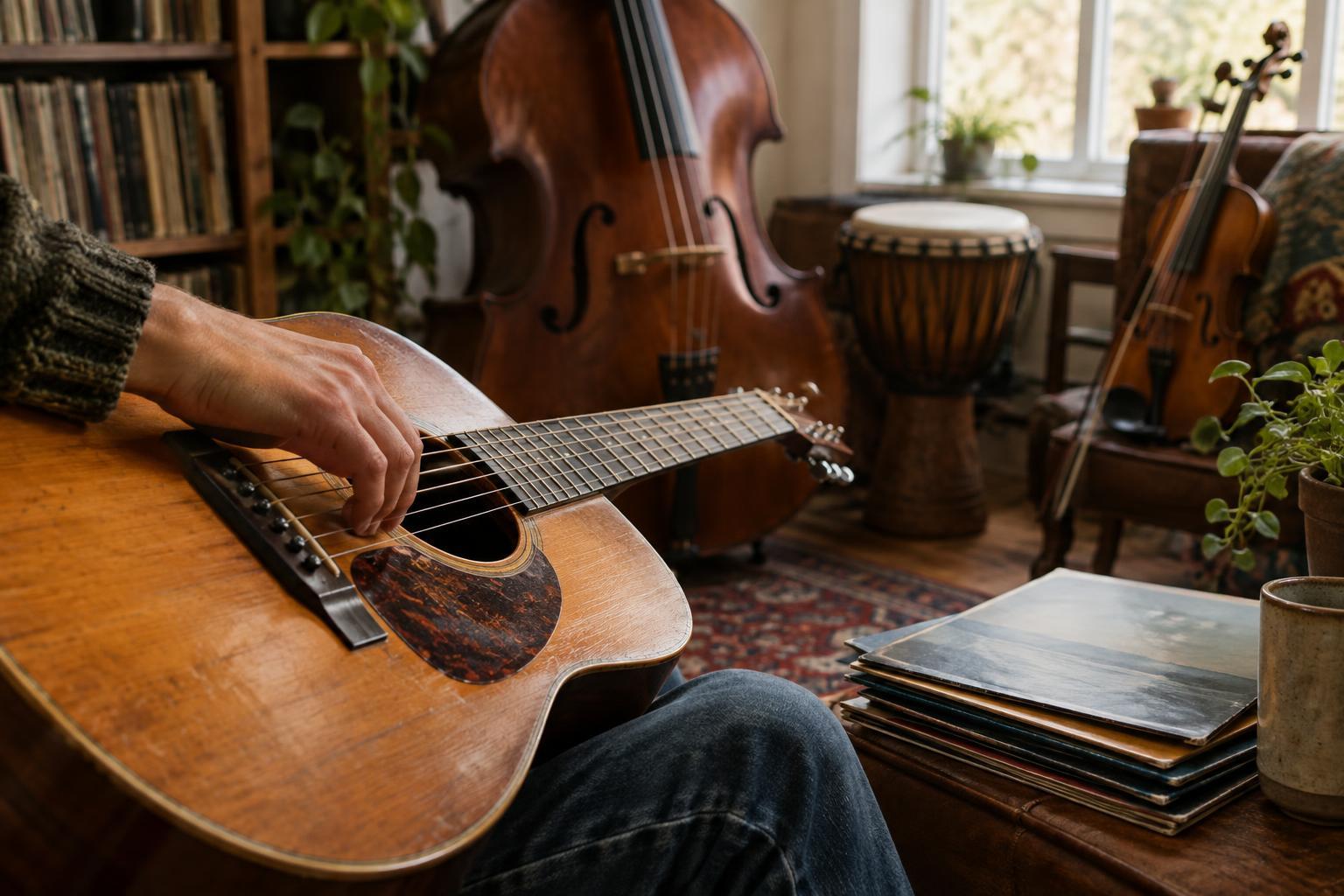
Genre is a useful way to begin a search, but it can also keep you close to what you already know. An instrument offers another starting point. If you love the sound of a piano, trumpet, hand drum, or electric guitar, you can follow it into recordings whose genre labels might not otherwise catch your eye. The goal is not to become an expert in the instrument. It is to use a familiar sound as a bridge to unfamiliar music.
Choose one recording you already enjoy and listen for what draws you in. Is the instrument playing a melody, keeping a pulse, or adding texture behind a singer? Do you like its bright attack, its sustained notes, or the space between phrases? Naming even one quality gives you a more useful search direction than simply looking for more songs with the same instrument.
Change one part of the setting
Keep the instrument constant while changing one other element. If your starting point is a solo piano recording, try piano in a small ensemble, then piano accompanying a voice. If you like a guitar riff, listen next for guitar used as a quiet rhythmic layer. This approach makes differences easier to hear: you have one familiar thread while the arrangement around it changes.
You can also follow the instrument into a different musical tradition or performance setting. A drum may organize a dance piece in one recording and add subtle accents to a ballad in another. Approach each new setting on its own terms rather than expecting it to serve the same role as your starting track. When a sound surprises you, pause before deciding whether you like it. Ask what the musician is doing and how the rest of the music responds.
Listen to the relationship, not just the instrument
An instrument rarely tells the whole story by itself. Its effect depends on what surrounds it. A low, steady note can feel calm beneath a sparse melody and tense beneath a busy one. A sharp guitar tone can stand at the front of a recording or blend into a dense group sound. Paying attention to these relationships can reveal why two tracks featuring the same instrument feel entirely different.
On a second listen, follow one short passage. Notice when the instrument enters, whether another part answers it, and what changes when it stops. Then shift your attention to the other sounds in that passage. This is a practical way to hear arrangement rather than treating the featured instrument as an isolated attraction. It may also lead you to a new favorite sound you had not planned to explore.
Build a trail you can retrace
Keep a small list of the recordings that make you curious, along with a brief note about each one. A note such as “soft percussion behind the vocal” or “guitar answers the horn” is more helpful than a rating you will not remember. Save tracks that show different uses of the instrument, not only those that resemble your original favorite. That variety turns a collection into a path you can follow.
If you hit a dead end, return to the track that last caught your attention and choose a different detail. Perhaps the instrument itself was not the main appeal; perhaps you liked its rhythm, the room-like feel of the recording, or the way it paired with a voice. Following that detail can open a fresh route without forcing you to start over.
Let your taste change along the way
You do not need to finish a survey of an instrument or settle on a favorite style. A useful discovery trail can move from fascination to indifference and back again. Some recordings will reward repeated listening; others will simply help you understand what you prefer. Both are worthwhile outcomes.
After a few sessions, revisit your starting track. You may hear its familiar instrument differently because you have encountered other ways it can be played and arranged. That is the quiet advantage of following a sound across music: each new recording can change not only what you find next, but how you hear what you already love.