Start with what the episode promises
An episode should be long enough to deliver what its title and introduction promise, but not so long that it starts repeating itself. Before choosing a duration, write one sentence describing what a listener will understand, feel or be able to do by the end. A focused question may need a short explanation and one example. A personal story may need room for scenes, reflection and a satisfying ending.
Separate the main idea from material that is merely interesting. If the episode is about how a musician built a particular sound, a brief introduction to their work may help. A full account of their career might belong in another episode. This distinction gives you a more useful guide than aiming for a number of minutes before you know what the episode contains.
Let the format shape the first estimate
Different formats use time differently. A solo explainer can often move quickly because one person controls the structure. An interview needs space for guests to think, answer and occasionally take a revealing detour. A reported story may need transitions, recorded scenes and enough context for listeners to follow the people involved. None of these formats has a required length; the point is to allow for the kind of listening experience you are making.
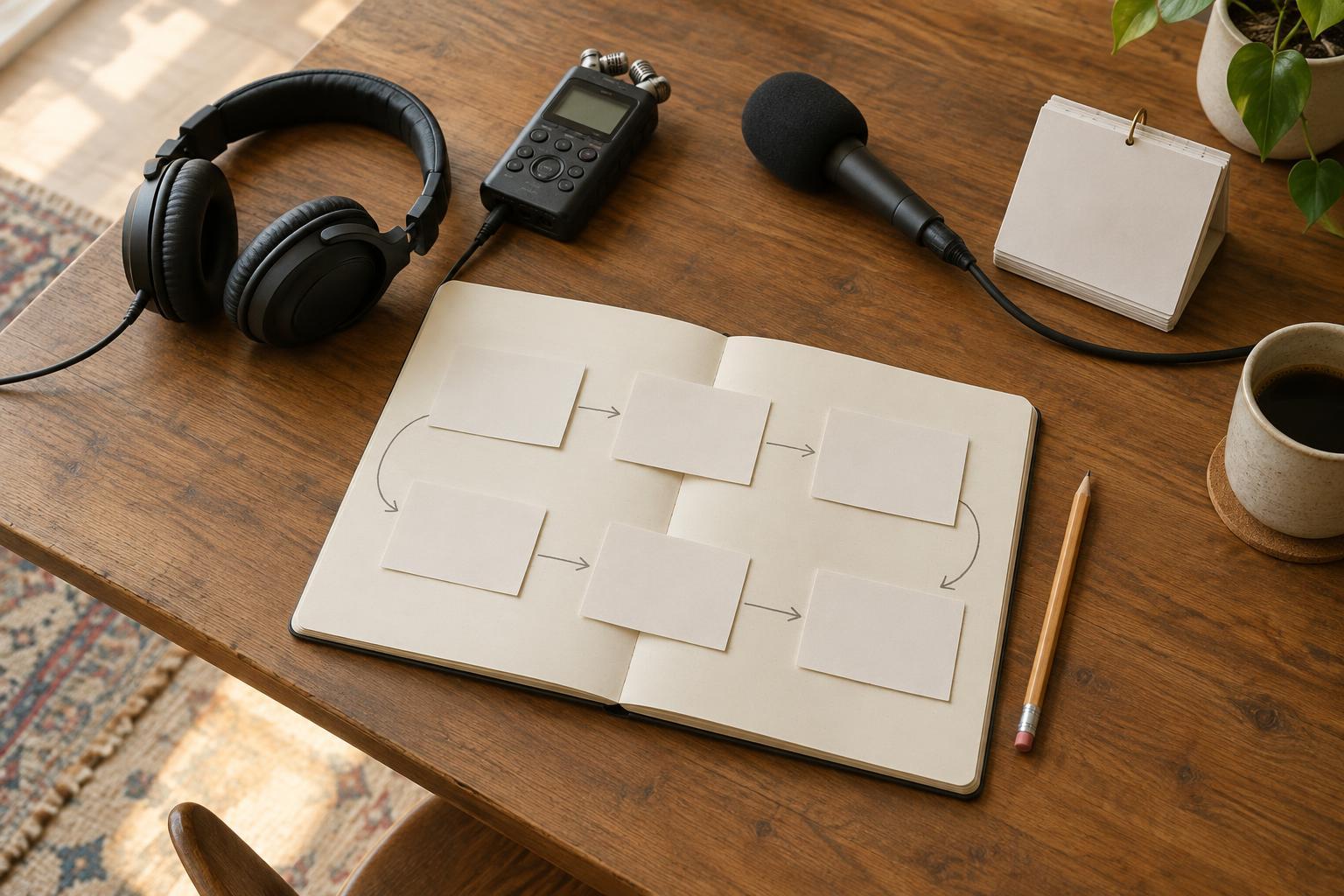
Sketch an outline and assign a rough time allowance to each part: opening, context, main conversation or story, and close. Add the allowances to get a working estimate, not a deadline. If your outline suggests a much longer episode than you intended, look at the structure before asking everyone to speak faster. You may have two episodes, an unfocused question or an introduction doing too much work.
Consider the listener without guessing their schedule
It is tempting to choose a length based on an imagined commute, workout or lunch break. Listeners have different routines, however, and many can pause and return later. A better question is what kind of attention the episode asks for. A dense tutorial may benefit from shorter sections and clear recaps. A relaxed conversation can afford more breathing room if the exchange remains engaging.
Consistency can still be helpful. When episodes usually fall within a familiar range, listeners have a sense of the commitment before pressing play. Treat that range as an expectation you can explain, not a rule you must obey. A special episode may run longer because the story needs it; a brief update should not be padded to match the usual runtime.
Test the length in the edit
Record or assemble a draft, then listen for the moments when the episode moves forward. Does each segment add a new idea, example, question or change in perspective? Notice where a point is explained twice, an answer wanders away from the topic or a transition repeats what listeners already know. Cutting those passages often improves the episode more than tightening every pause.
Give important moments enough space to land. A thoughtful answer may need a quiet beat afterward, while a complex instruction may need a simple example before you continue. If the edited episode feels rushed, check whether it needs more explanation rather than more minutes in general. If it feels slow, look for material that no longer serves the central promise. Length is an outcome of those decisions.
Build a flexible rule for future episodes
Once you have produced a few episodes, compare their outlines and edited versions. Which sections regularly earn their time? Which ones tend to shrink or disappear? Use those observations to create a practical planning range for your show. It can guide recording sessions and help you decide when a proposed topic is too broad for one installment.
Leave room to revise that range as your format develops. An interview with unusually concise answers may be complete sooner than expected. A story with an essential second perspective may need longer. Rather than asking whether an episode has reached its target length, ask whether it has fulfilled its promise and whether the next minute gives listeners a reason to stay.