Community audio starts with shared purpose
Community audio is sound made with, for or about a group of people who share a place, experience or interest. It might take the form of a neighborhood listening walk, a collection of family stories, a local music conversation or a short series about a community garden. The defining feature is not the format or the equipment. It is the opportunity for people to influence what is heard and how it is presented.
That makes community audio different from simply interviewing people for a project you have already planned in full. Participation can happen at many points: choosing questions, suggesting sounds to capture, conducting interviews, reviewing an edit or deciding where the finished piece belongs. Not everyone needs to hold a microphone. A person who listens closely and notices whose perspective is missing can make an important contribution.
Begin by listening, not recording
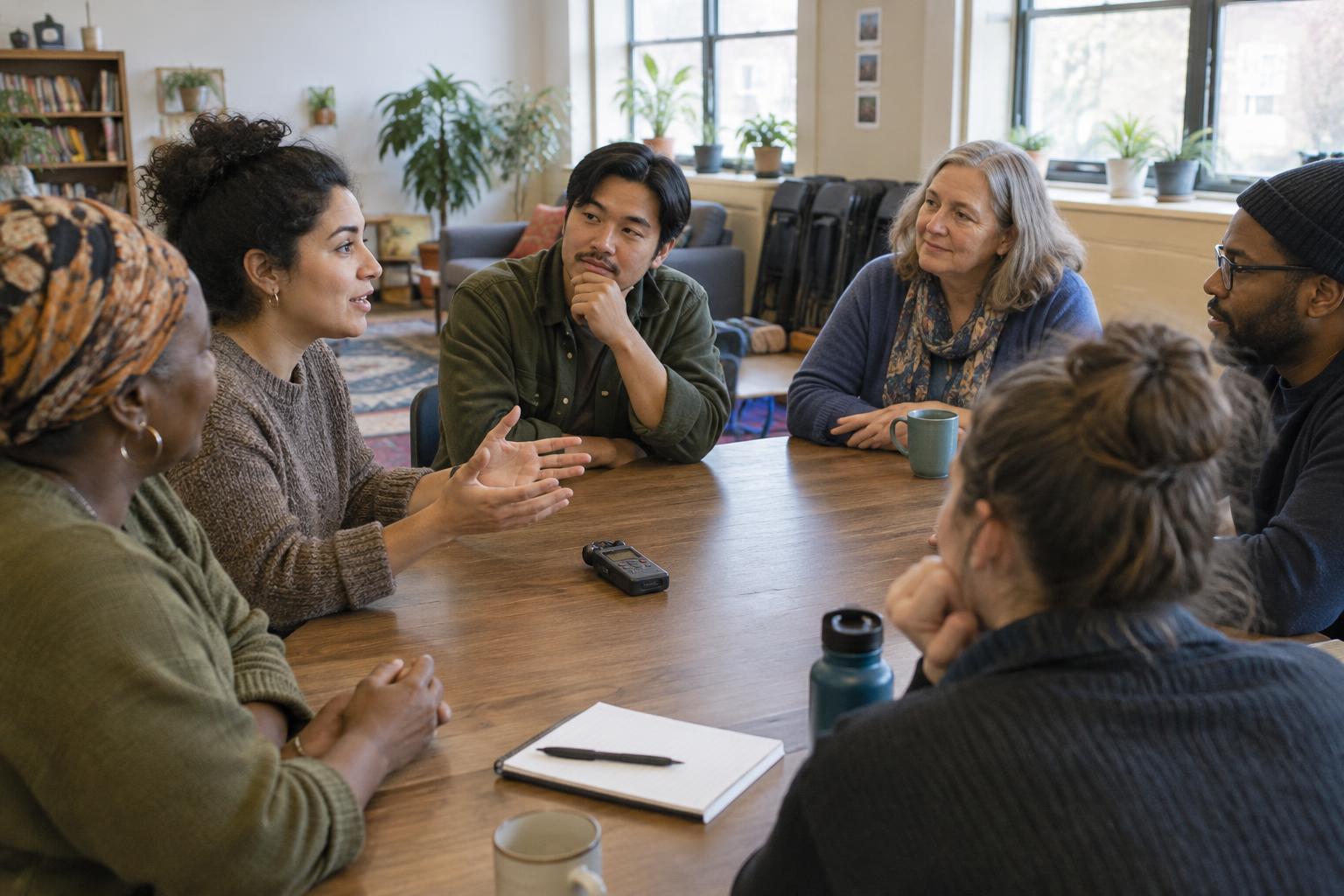
Before proposing a show or asking for stories, find out what people would actually like to hear. A small listening session can be enough to begin. Play a short, relevant audio piece or invite participants to bring a sound that matters to them. Ask open questions: What felt familiar? What surprised you? What would you want someone outside this group to understand? Give people the option to respond in conversation, in writing or later, after they have had time to think.
Listening also helps set the project’s boundaries. A group may be excited to document everyday sounds but reluctant to discuss personal experiences on a public recording. Treat that distinction as useful guidance, not an obstacle to overcome. Agree on a manageable purpose, such as creating five brief sound portraits of a shared space. A focused first project leaves more room to learn, revise and finish.
Make participation possible at different levels
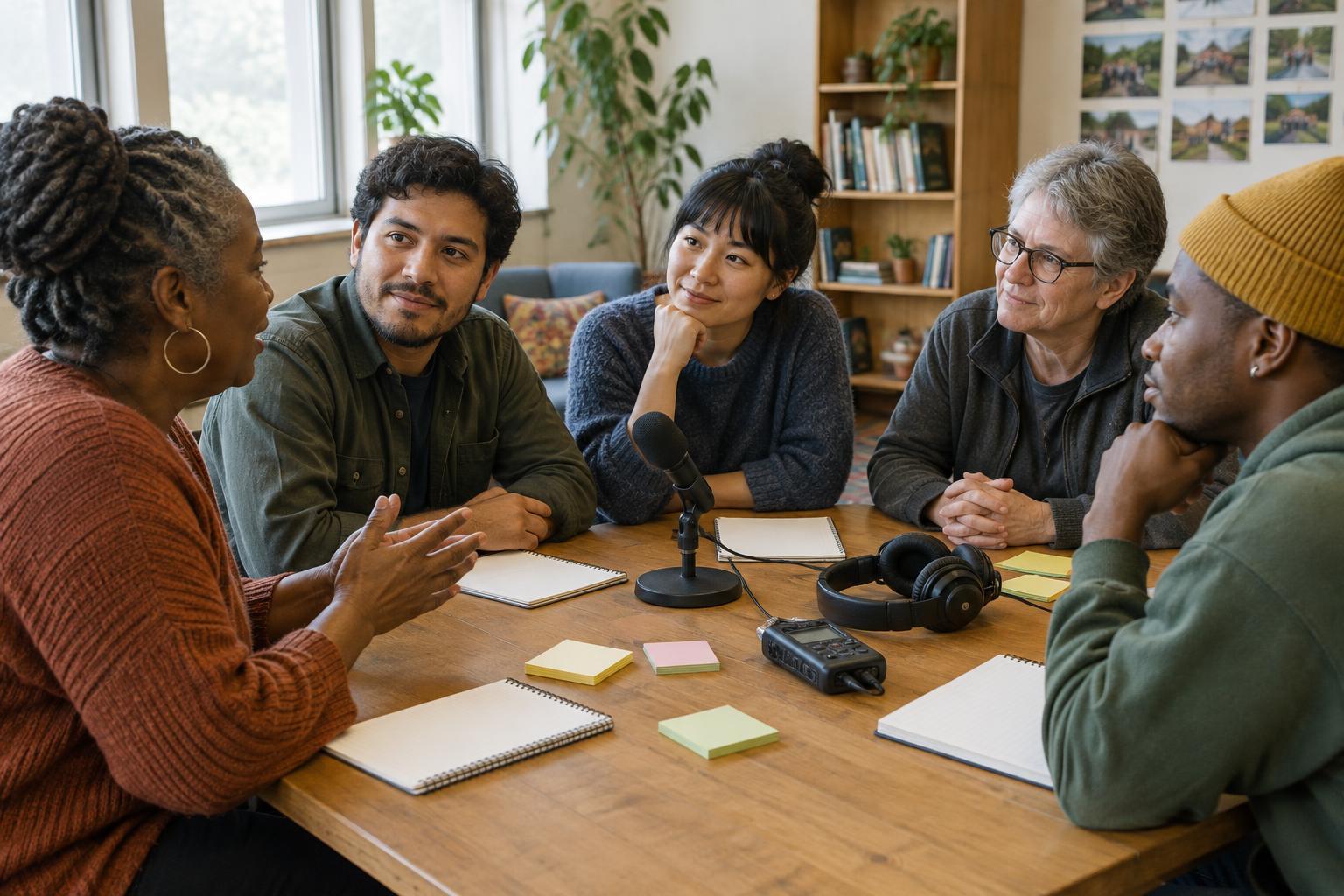
People have different amounts of time, confidence and access to recording tools. Offer roles that do not all depend on speaking on mic. Participants might suggest topics, collect ambient sound, help write introductions, translate questions, check a transcript or join a private review session. Explain what each role involves and let people decline or change their minds without pressure.
Consider practical barriers early. Choose an accessible meeting place or offer a remote way to contribute when possible. Share questions in advance, allow pauses during recording and avoid assuming that everyone is comfortable with the same language or conversational pace. If you plan to publish a transcript, review it for clarity while preserving the speaker’s meaning. These choices can make the work more welcoming and improve the finished audio.
Record simply and edit with care
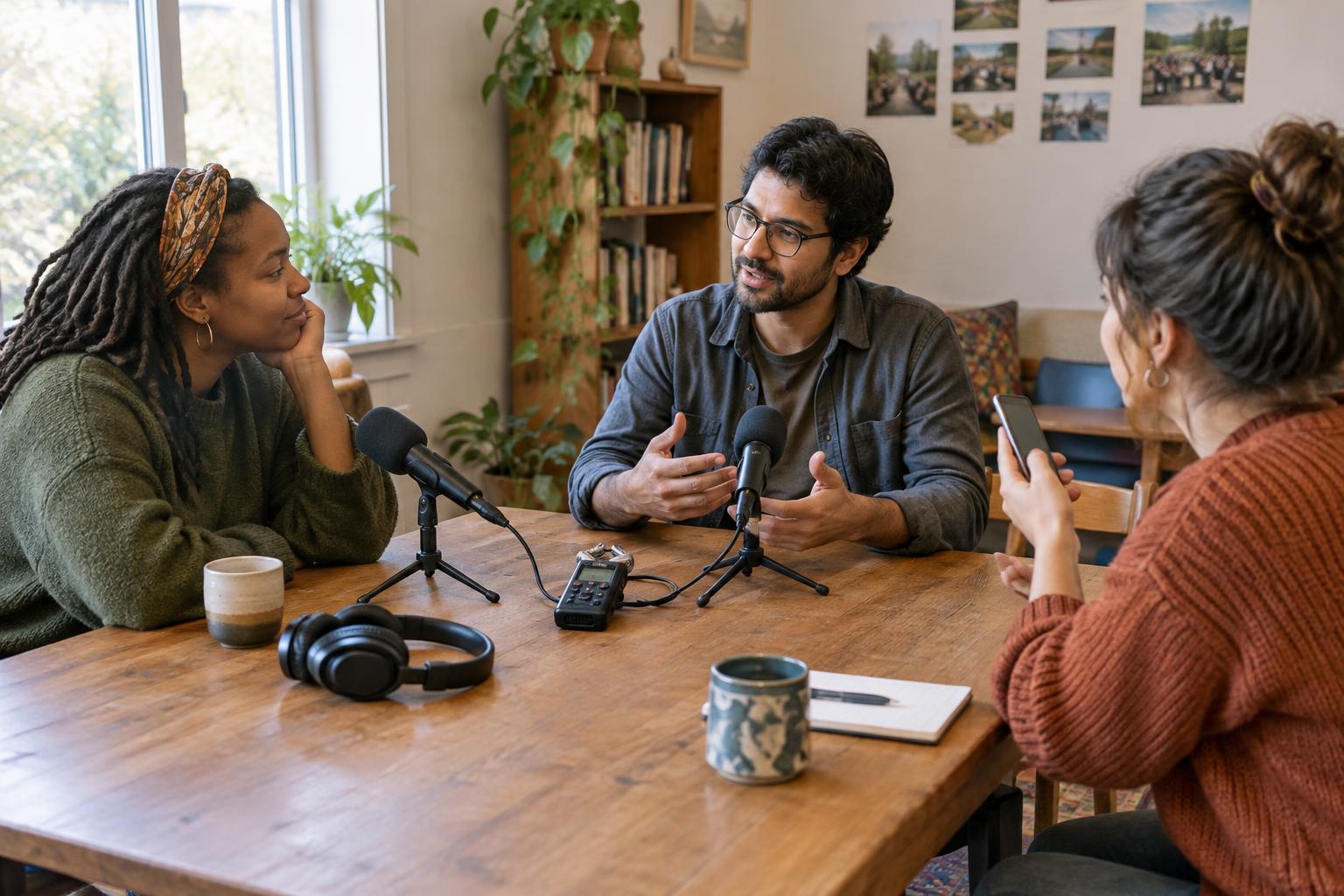
A phone or basic recorder can be enough for a first project. Record in a reasonably quiet place, place the microphone close enough to hear speech clearly and capture a short test before the conversation begins. Gather a little sound of the setting as well: footsteps, a door opening or the ordinary activity of a room can help listeners understand where a story takes place. Avoid recording bystanders unintentionally, particularly when a space feels public but the conversation is personal.
Editing is more than removing mistakes. The order of voices, the amount of context and the choice of background sound all shape meaning. Keep a clear record of who contributed what, and ask speakers for permission to record and for the intended uses of their contributions. Explain whether the audio may be shared publicly, within the group or only at a listening event. Before release, offer contributors a chance to flag factual errors, sensitive details or edits that misrepresent what they meant.
Share the work and keep the conversation open
A finished piece does not have to go on a podcast feed. Depending on the group’s wishes, it could be played at a gathering, shared privately with contributors or made available for broader listening. Tell participants where it will appear, how they will be credited and whom they can contact with a concern. If public sharing is the goal, a short description and a readable transcript can help more people decide whether and how to listen.
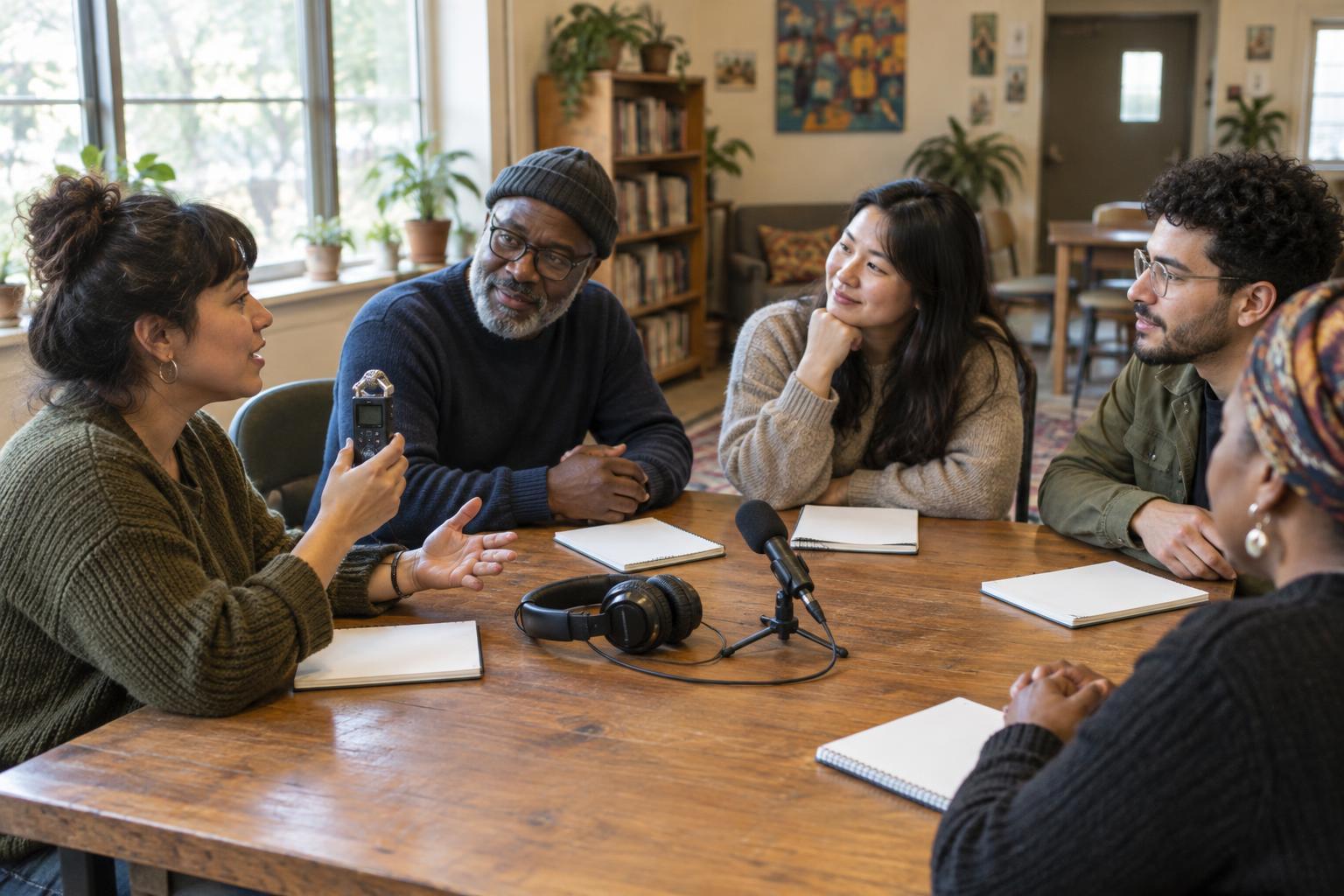
Afterward, ask what the process felt like, not just whether people liked the result. Who had room to shape it? What was difficult to hear or say? Would the group make different choices next time? Community audio is strongest when production is treated as an ongoing relationship rather than a one-time request for material. Starting small, listening carefully and making decisions together gives that relationship a practical foundation.